
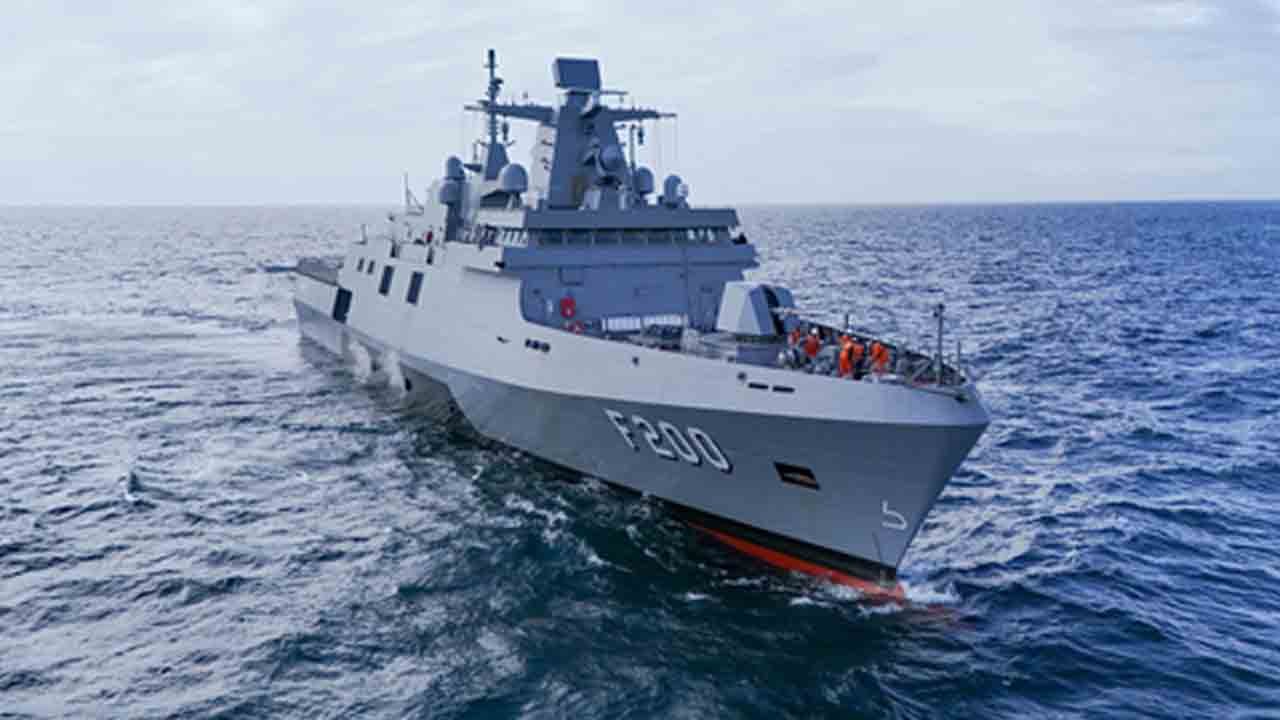
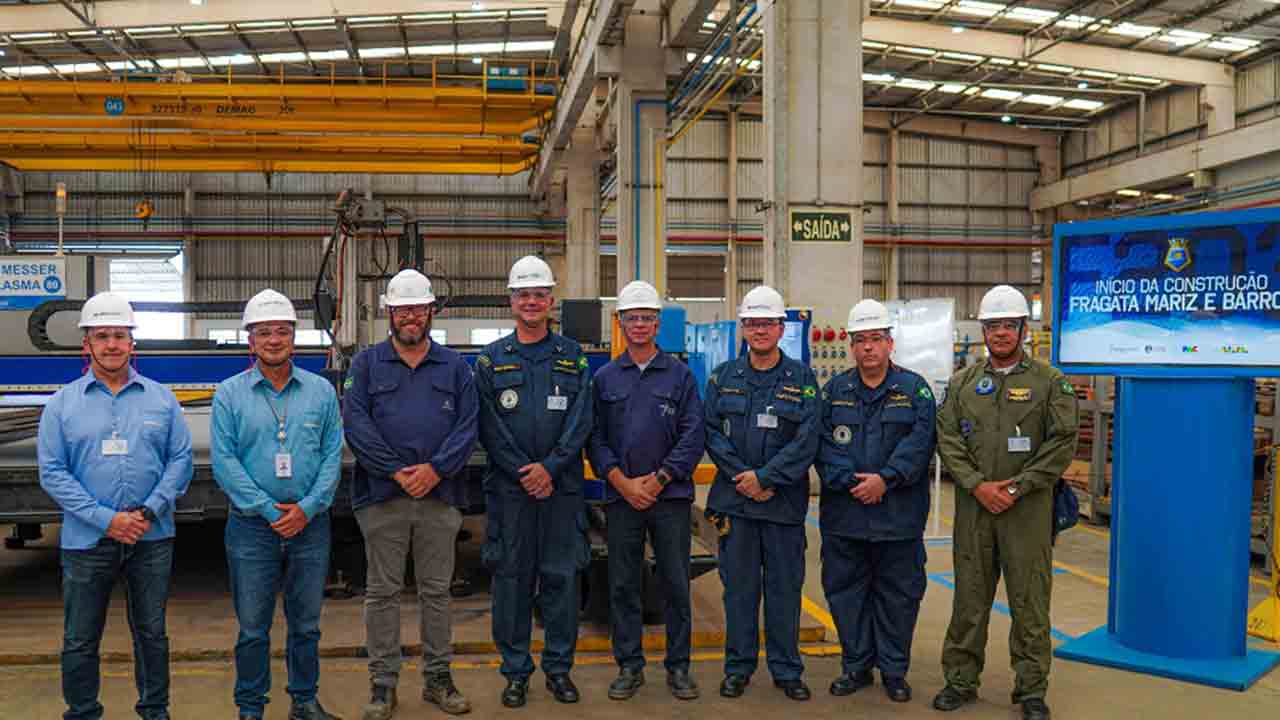
The Brazilian Navy has begun construction of the fourth Tamandaré-class frigate, F203 Mariz e Barros, through a first steel-cutting ceremony held at the Estaleiro Brasil Sul shipyard in Itajaí, Santa Catarina state.
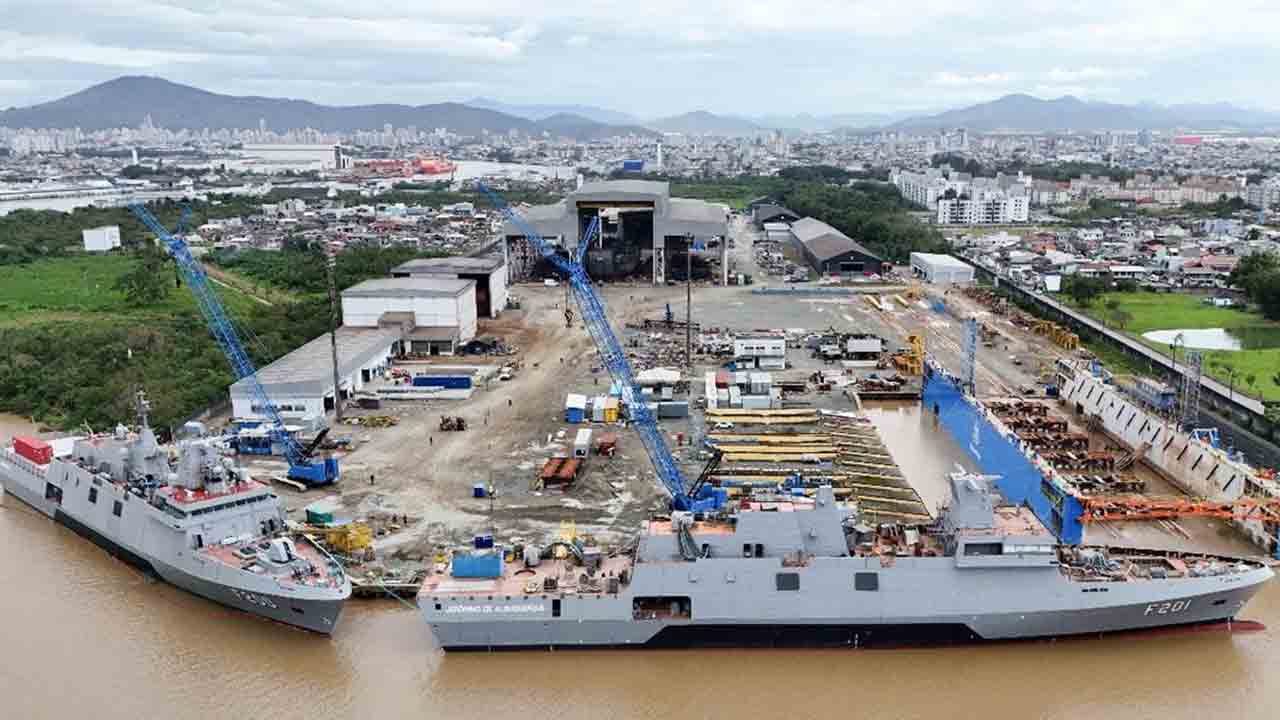
The shipyard is owned by the German company TKMS and operates in Brazil through Estaleiro Brasil Sul.
The event was announced by Brazilian Navy and was attended by the Navy’s Director of Program Management, Vice Admiral Marcelo da Silva Gomes, who activated the cutter, thus symbolizing the formal start of the construction of the new frigate at TKMS-varvet in Itajaí.
+ Baltic Workboats delivers modernized patrol boat Barta to Latvia
According to the program schedule, the F203 will be launched in 2027 and enter service in the Brazilian Navy in 2029. With the start of construction of the fourth vessel, Estaleiro Brasil Sul reaches its highest production capacity, with the first four frigates under simultaneous construction in the country. At the same time, the program’s localization rate has already reached 40 percent.
The lead ship of the class, Tamandaré (F200), was launched in August 2024, completed its sea acceptance tests between August and December 2025 and is expected to be transferred to the fleet operational staff in the first half of 2026. The second unit, F201 Jerônimo de Albuquerque, is expected to begin sea trials in mid-2026, while the third, F202 Cunha Moreira, is scheduled to be launched in July 2026.
Tamandaré-class frigate
In March 2020, following an international procurement process launched in 2013, the Brazilian Navy signed a contract worth 9.1 billion reais for the construction of four ships in the Tamandaré program, initially classified as corvettes and later reclassified as frigates. The project is based on the MEKO A100 design presented by TKMS.
The Tamandaré class frigates have a standard displacement of 3,380 tons and a maximum displacement of up to 3,500 tons, with a length of 107.2 meters, a beam of 16 meters and a draft of 5.2 meters. Propulsion consists of two axles, driven by four MAN 12V 28/33 DSTC diesel engines, each with an output of 7,320 hp.
The planned armament includes MBDA Exocet MM40 Block 2 or 3 naval target robots, alternatively the national one MANSUP– the robot; a 12-cell vertical launcher for the MBDA Sea Ceptor air defense system with CAMM medium-range robots; one 76mm/62 Leonardo OTO Melara Super Rapid naval gun; a 30 mm remotely controlled Rheinmetall Sea Snake 30 cannon; two remotely controlled FN Herstal Sea Defender 12.7 mm machine guns; two six-barreled 7.62 mm M134 machine guns; as well as two triple 324 mm SEA TLS-TLT submarine-hunting torpedo tubes.
On board there is also a hangar and flight deck for the permanent operation of a submarine hunting helicopter, either Sikorsky S-70B Seahawk or Westland Super Lynx Mk 21Bwhich significantly strengthens the ship’s anti-submarine and maritime surveillance capabilities.
Source and images: Brazilian Navy. This content has been created with the help of AI and reviewed by the editors.
