
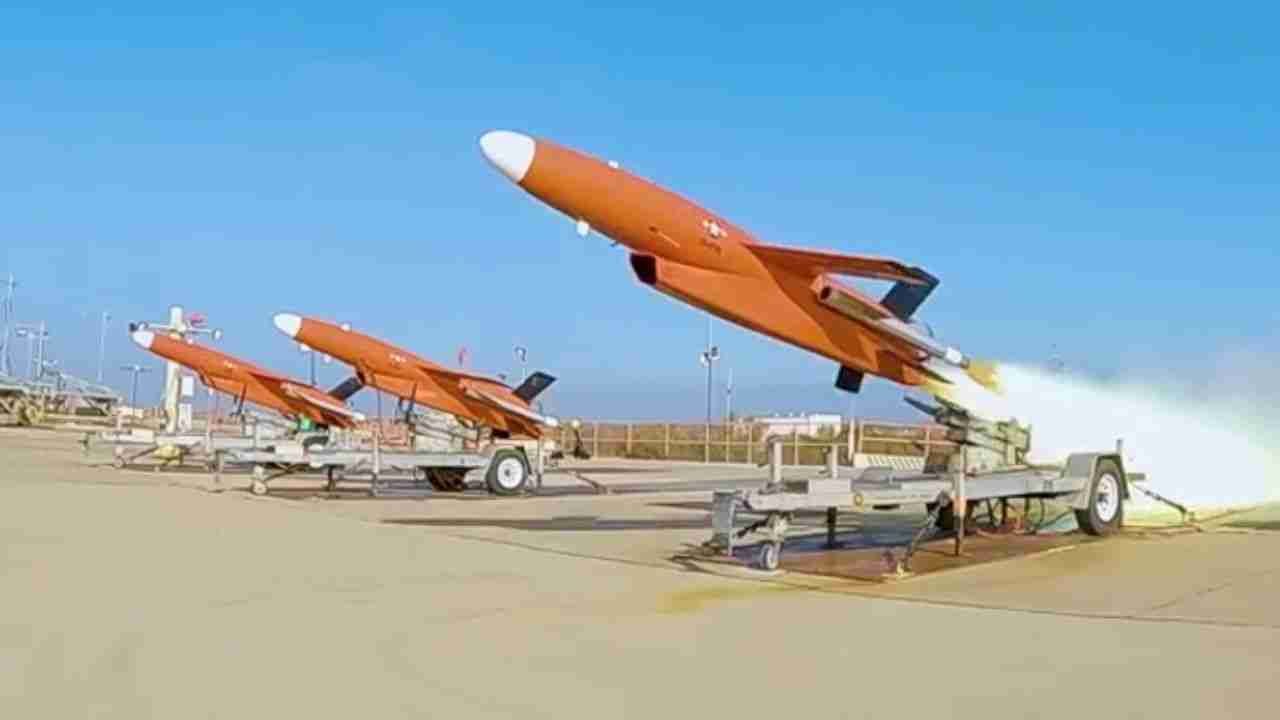
The United States Navy has completed a new demonstration of the BQM-177A target drone equipped with Shield AI’s Hivemind artificial intelligence software, reinforcing advances in the concept of collaborative combat aircraft (CCA).
The test took place in December 2025, in California, and simulated joint operations between manned and unmanned platforms in an aerial combat scenario.
During the exercise, two BQM-177As flew fully autonomously in an environment that combined real and virtual assets, including an F/A-18 and simulated enemy aircraft. The virtual fighter acted as mission leader, coordinating the defense of aerial patrol areas, while the drones reacted autonomously to detected threats.
The demonstration also marked the first time an autonomous aircraft performed a mission beyond the visual range of the remote operator, utilizing the Department of Defense’s A-GRA architecture to ensure interoperability between different platforms. According to the Navy, the initiative accelerates the development of more complex autonomous missions for the future of naval air operations.
+Ukraine destroys Russian radar capable of detecting stealth aircraft at more than 100 km
The choice of the BQM-177 as a test platform is due to its low cost and quick availability, allowing technologies to be validated before application to operational aircraft. In addition to supporting the CCA program, the drone also increases the realism of training by simulating modern anti-ship missile threats and providing more effective scenarios for fleet crews.
Source: The Aviationist | Photo: X @NAVAIRNews | This content was created with the help of AI and reviewed by the editorial team
Taking #AI to the Skies: The #Navy recently completed a demo validating AI-enabled autonomy for future CCA. Using Shield AI’s “Hivemind” software, BQM-177As successfully defended simulated airspace alongside a virtual F/A-18.
— NAVAIR (@NAVAIRNews) January 12, 2026
