
On Monday (12), Donald Trump stated that he will apply a 25% tariff “on any and all commercial transactions carried out with the United States” to “any country that does business with the Islamic Republic of Iran”. “This order is final and cannot be appealed,” Trump wrote on the Truth Social network.
The statement was made in response to the repression that the theocratic Iranian regime has carried out against local protesters since the last week of December. This Tuesday (13), the American government instructed its citizens to leave the Persian country.
“If a 25% tariff is actually applied to all countries that have a relationship with Iran, Brazil would be one of those impacted”, says Sara Paixão, macroeconomics analyst at InvestSmartXP.
She explains, however, that it is difficult to estimate the impacts due to uncertainty about possible exceptions to the surcharge by product or sector, for example.
“In the latest tariffs applied to Brazil, a wide range of products were removed over time [da sobretaxa]”, he highlights. “We have a tariff of 10% plus an additional 40%, but, in full, the 50% is applied to a few products.”
If Trump’s threat materializes linearly, regarding all Brazilian products exported to the USA, the most exposed sectors would be oil, iron and steel, meat, coffee and orange juice.
“Commodities are easier to relocate to other markets, unlike industrial products”, comments the analyst. “The aerospace sector, for example, would potentially be more impacted because relocating this type of product is more difficult.”
Iran is the 11th largest buyer of Brazilian agriculture
Brazil’s exposure to tariff risk is justified by Iran’s relevance as a trading partner. In addition to both being part of the Brics, the country is an important market for agribusiness products, which represent 99% of exports to Iran.
In 2025, Iran imported US$2.92 billion from Brazilian agribusiness, ranking 11th in the ranking of main destinations, according to the Ministry of Agriculture and Livestock (Mapa), which considers the European Union bloc as a single trading partner.
The main item exported by Brazil to the Iranian market is corn. Last year, Iran spent US$1.98 billion on the acquisition of Brazilian cereal, 23.1% of all foreign sales of the commodity in Brazil.
For Sara Paixão, although Brazilian exports to Iran are important, a possible embargo on the Middle Eastern country would not significantly impact the Brazilian economy.
“As much as [o Irã] is relevant, it does not occupy such a large part of our exports”, he says. “Among the main products exported [pelo Brasil] They are commodities and, as with the United States, they are products that we can pass on to other markets”, he assesses.
Dependence on fertilizers: urea is the main imported product
Bilateral trade between countries is quite advantageous for the Brazilian side. Iranian sales to Brazil in 2025 totaled just US$84.6 million, which resulted in a trade surplus of US$2.83 billion for Brazil. Urea, the main nitrogen-based fertilizer used in agriculture, represents 79% of Brazilian imports from Iran, one of the world’s main producers.
Officially, the Persian country supplied 184.7 thousand tons of the product to the Brazilian market in 2025.
Due to economic sanctions, part of Iran’s production is shipped through Oman and, therefore, is registered as originating in the second country. Omani urea exports to Brazil in 2025 totaled 1.2 million tons and US$452.9 million in total value.
The consequences of the potential 25% tariff imposed by the United States on countries that trade with Iran are still uncertain on the urea market, says Renata Cardarelli, a grains and fertilizers specialist at consultancy Argus.
“Urea suppliers in Russia and the Middle East have little clarity about whether deliveries to the United States will incur additional costs,” it says.
“Urea producers await an official position from the United States on possible urea import tariffs, with most saying it is too early to express any opinion on Trump’s comments.”
According to Renata, the threat is particularly relevant for Russian nitrogen fertilizers, especially urea and urea ammonium nitrate (UAN), which currently have no import duties in the United States.
Interestingly, if the United States sanctions imports from Russia for business with Iran, one of the indirect consequences would be a greater supply of urea of Russian origin to Brazil, which would reduce the Brazilian market’s dependence on Iranian fertilizer.
“A possible increase in Russian urea prices to the United States could cause this origin to redirect its cargo to other buyers, such as Brazil.”
Brazilian government monitors the possibility of sanctions
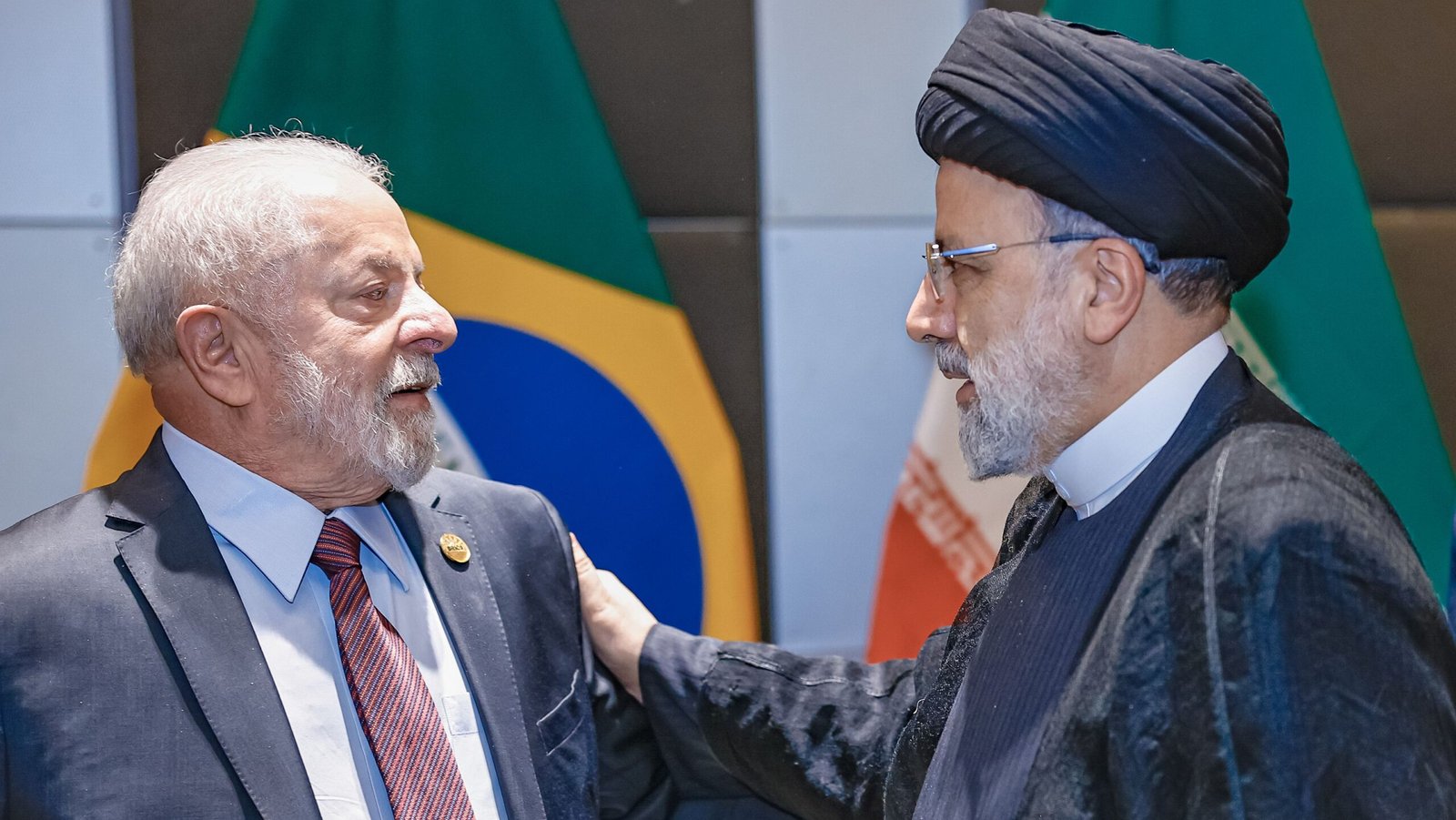
The Brazilian government began to closely monitor Trump’s threat to impose an additional tariff on countries that maintain trade relations with Iran. According to CNN Brasil, President Luiz Inácio Lula da Silva (PT) instructed his team to avoid hasty reactions and prioritize diplomatic channels.
If the threat progresses, the Brazilian president would not rule out direct contact with Trump to explain that the relationship between Brazil and Iran is predominantly commercial and focused on food security, without the involvement of war or strategic products.
This Tuesday, in an official statement, the government said it was following “with concern” the evolution of the demonstrations taking place in various locations in Iran and which had already left around 2,000 people dead due to the repression of the country’s theocratic regime.
Without mentioning the threat of military intervention made by the United States, the text advocates that Iranians decide “sovereignly” about their future.
“Brazil regrets the deaths and conveys its condolences to the affected families,” the statement said. “By underlining that it is up to Iranians alone to decide, in a sovereign manner, about the future of their country, Brazil urges all actors to engage in peaceful, substantive and constructive dialogue.”
