
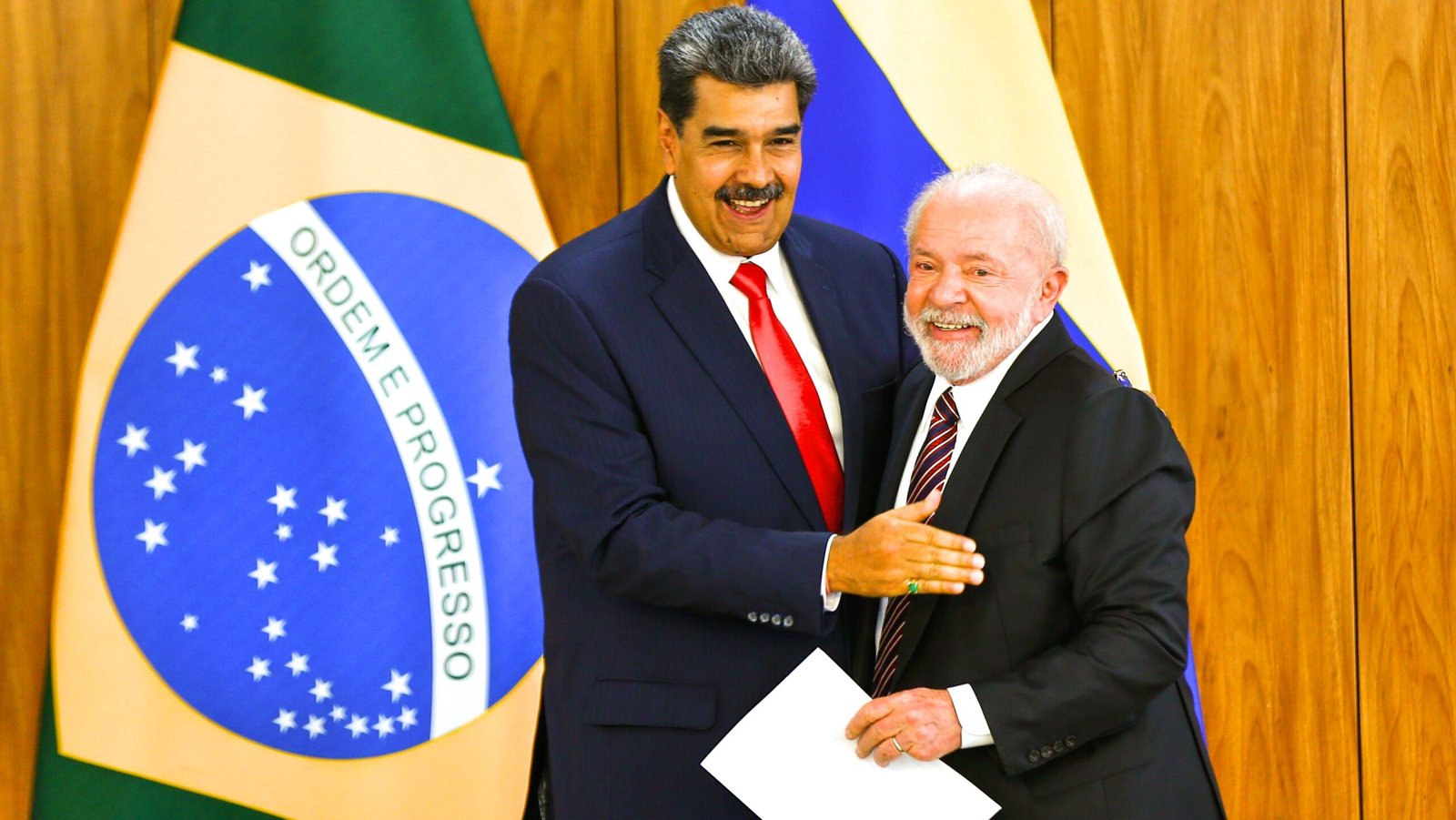
The geopolitical scenario in 2026 became more complex for the Brazilian economy with Venezuelan dictator Nicolás Maduro arrested by elite American troops on Saturday (3), in Caracas. The operation increased tensions between the US and China, the world’s two largest economies and Brazil’s two main trading partners. China is an important ally of the Chavista regime.
Analysts interviewed by People’s Gazette point out that the world is reorganizing itself geopolitically. In addition to the Venezuelan issue – with Maduro in prison -, the war in Ukraine leaves prices unstable, the US and China compete for rare minerals, and artificial intelligence needs cheap energy – something that Brazil has in abundance.
The scenario ends decades of low inflation and free trade. Countries are now seeking security of supply, even at higher costs. This brings risks and opportunities that require strategic adjustments. The financial market is already starting to react. The dictator’s arrest reflects this global reorganization.
Maduro arrested: Venezuela could become Brazil’s rival in oil
Imprisoned Maduro could help end decades of Chavismo that destroyed democracy in Venezuela. According to Economist Intelligence Unit (EIU), since 2006 the country has fallen from 93rd to 142nd in the ranking of democracies, which brings together 176 countries — behind even Cuba.
Venezuela has the largest oil reserves in the world: 300 billion barrels. But the dictatorship reduced production to 1.1 million barrels per day, less than 1% of the world total. It is less than a third of what it produced before Hugo Chávez, in 1999.
The return of American oil companies could flood the market with oil. Currently, only Chevron operates in the country. Analysts at XP and Genial expect prices to fall, although there may be fluctuations in the short term while the market adjusts to the new supply.
According to Janus Henderson, one of the world’s largest investment fund managers, with external help, Venezuela can double production to 2 million barrels per day in two years. In the most optimistic scenario, it would reach 3 or 4 million daily, but full recovery could take up to a decade. “This will bring down the price of Brent, harming Brazilian oil companies”, says Vitor Souza, analyst at Genial Investimentos.
The US, under Trump, wants to control a “mini-OPEC”. Washington would now have a powerful tool to neutralize the decisions of the cartel led by Saudi Arabia, says the analyst.
By mastering Venezuelan oil, Washington can fight cartels and guarantee cheap energy to keep inflation low. Good for the American consumer, bad for those who produce commodities.
There are obstacles, however. The Venezuelan oil industry has lost experts since the 1990s. Many were fired or fled the country, recalls Gustavo Vasquez, oil and LPG manager at Argus, which produces price analyzes for the fuel, agriculture, fertilizers, petrochemicals and natural gas markets.
Stolen pipes, removed parts and decades without maintenance have left the infrastructure devastated. Fixing refineries is even more complex. The Cardón refinery had another blackout in 2025, and Colombia and Venezuela were unable to restart a gas pipeline, even with the support of the presidents of both countries, Gustavo Petro and Nicolás Maduro. But Venezuela is just one piece of the global energy puzzle.
Cheap oil puts pressure on Petrobras and smaller oil companies
With the possible recovery of Venezuelan production, Brazilian investors in the oil and gas sector need extra attention. The country ceases to be a priority in the region and gains a giant competitor. The Brazilian Environmental Institute (Ibama) and environmental restrictions on the Equatorial Margin saw major problems facing Venezuela, which can offer a more favorable regulatory environment. Balanced public accounts and stable institutions are essential in this scenario, highlights Adriano Pires, director of the Brazilian Infrastructure Center (CBIE).
Petrobras and smaller oil companies will face a new challenge. With oil trending towards lower prices, controlling expenses will make the difference between profit and loss. The state-owned company, despite having low costs in the pre-salt, could see its cash flow fall. With oil at US$55, there would be problems paying debts.
Companies like Brava and PetroRecôncavo may suffer more due to high costs. “These companies suffer more when the price of oil falls. The reason is clear: they have higher production costs and greater relative debt than the giants in the sector”, says Souza.
But Venezuela’s opening could offer unprecedented expansion. Deteriorated fields can be purchased at a low price, despite the high risk. Recovering old fields in Venezuela attracts companies, but the moment requires caution until the new Venezuelan government defines the rules. Companies with little debt and high efficiency will be better positioned.
War in Ukraine, Taiwan and new tariffs
In addition to Venezuela, conflicts such as the war in Ukraine and tensions in Taiwan continue to worry investors. If they get worse, capital leaves developing countries and seeks safety in the dollar, putting pressure on emerging currencies like the real.
JP Morgan Private Bank recalls that the war in Ukraine ended the “peace dividend” — a period when military spending was low. “Now countries prefer security over low costs. Rearmament and the search for their own energy have become a priority”, says the bank.
Taiwan produces 80% of chips most advanced in the world. A Chinese attack would paralyze the supply of parts for AI and the military industry, recalls Sergio Vale, chief economist at MB Associados. “The world would come to a standstill. China seeks to control the entire chain to escape sanctions, making products more expensive,” he says. Trade and investment in 2026 will increasingly depend on regional alliances and strategic security.
US tariffs change the rules of the game. The objective is to bring production of essential goods (chipsbatteries) for home, even if this increases global inflation. Security becomes worth more than low prices, reorganizing global production chains.
Global inflation becomes more unstable — even with Venezuelan oil pushing it down. This limits interest rate cuts by large central banks, such as the Federal Reserve. For Brazil, the impact is direct: the difference between interest rates here and abroad puts pressure on the dollar. But this scenario of global reorganization does not only bring risks.
Rare earths and AI: Brazil’s golden chance
Natural wealth places Brazil in a strategic position in the dispute for energy and mineral security that dominates 2026. JP Morgan Private Bank points out that Artificial Intelligence (AI) is triggering demand for rare minerals, and Brazil is an essential exporter of agricultural and mineral products. “Controlling resources, land and water has become a security issue. Brazil’s mineral wealth attracts investment”, says the bank.
The country has the second largest reserves of rare earths in the world, vital for the military and technological industries. Today the USA depends on China, its biggest rival, to have these minerals. According to Vale, from MB Associados, rare earths are the basis for the chips. “The world is leaving globalized production and dividing into blocks. This will increase costs and require new suppliers”, he says.
Brazil has a valuable asset in negotiating partnerships and attracting investment. It could become an important piece of Western security, providing alternatives to Chinese dependence.
Thomas Giuberti, partner at Golden Investimentos, recalls that Brazil can exchange the supply of these minerals for strategic support. If you invest now, you can have 20% of this market by 2030. But you need clear rules and attract investment for refining — stages that China dominates.
Pablo Salgado, portfolio manager at Itaú Asset Management, says that China has monopolized production chains, including rare earths, to use as a weapon. Experts call it “economic war.” Efficiency gives way to security, and Brazil emerges as an alternative for the West to depend less on Beijing. Brazilian diplomacy will need to open doors in Washington without closing markets in China.
In addition to minerals, artificial intelligence creates new opportunities for Brazil. AI will create a two-speed economy by 2026, say UBS analysts. Technology advances quickly, with billion-dollar investments in data centers. The rest of the economy is going slower. To take advantage, Brazil needs clean and cheap energy, one of its greatest assets, explains Luciano Telo, investment director at Swiss bank UBS in Brazil.
The biggest limit for AI in 2026 is electrical energy. Data centers they need continuous and cheap supply. As a leader in hydroelectric and wind power plants, Brazil is well positioned to attract technological investment. But institutional instability gets in the way.
Fiscal risk: the danger of public accounts
Despite opportunities with minerals and energy, fiscal challenges remain. The most immediate effect of the return of Venezuelan oil is the drop in global inflation. With cheaper energy, central banks (Fed and Bacen) can cut interest rates. Inflation in the US will already fall in 2026, making growth with low inflation possible.
But Brazilian public accounts are worrying. Apart from a brief period between 2021 and 2023, they have been in the red since 2014. Brazil depends on exporting oil to balance its accounts. Crude oils alone generated almost US$41 billion between January and November 2025, 13% of exports.
A strong drop in price could increase the gap and increase long interest rates (DI Futures). The country also loses attractiveness for new investments in the sector. Tensions in the Middle East also affect oil prices and Brazilian inflation.
Lula, imprisoned Maduro and the center voter
In addition to the economic impacts, with Maduro in prison there will be direct political effects in Brazil. Lula, historically linked to Maduro, is in a difficult position. The fights have become more intense in recent years, especially after failing to recognize the dictator’s fraudulent re-election.
The opposition is already using social media to remember Lula defending Chavismo. Terms such as “relative democracy” return to the debate. Investors see a greater chance of a change of power in 2026.
Planalto tries to move away, focusing on “national sovereignty”. Itamaraty maintains a tradition against violence and for self-determination. But the center voter, who decides elections, is sensitive to defending dictatorships.
Strategists from XP and Genial remember that the possible end of the Venezuelan dictatorship, with Maduro in prison, shows that regimes that ignore market laws tend to collapse. Under Chavismo, nationalization and persecution of private initiative destroyed production. The fight for investment will punish disorganized countries, they say.
Pires warns that Brazil is gaining a “great competitor” and criticizes the slowness in opening new areas. “We can’t pretend that everything is fine. Investment doesn’t forgive slowness”, he says. The event marks greater US influence in Latin America, changing alliances. Brazilian politics will boil over. The next government will need to be careful, avoiding populist measures that worsen the risk outlook.
Brazil needs stability to attract more investments
Faced with this complex situation, Brazil is at a crossroads. With Maduro in prison there will be a profound effect on the economy, but the country faces an even broader scenario in 2026. In addition to Venezuela, war in Ukraine, dispute over rare earths and AI change investments and global supply chains. For the investor, ignoring this is dangerous.
The ability to supply rare earths and clean energy places the country in a strategic position. As a leader in hydroelectric and wind power plants, it can capture investments in data centers and technological infrastructure.
The chance is limited: other emerging companies compete strongly. Attracting investment in 2026 will depend on internal stability. Lack of harmony between the Executive, Legislative and Judiciary erodes trust. Decisions that change laws suddenly or with retroactive effect undermine legal certainty.
According to Solange Srour, director of macroeconomics for Brazil at UBS Wealth Management, the country needs a credibility shock in public accounts to avoid low growth. Growing debt limits the State’s ability to deal with external crises. Reforms to ensure debt sustainability are essential to finance development.
