
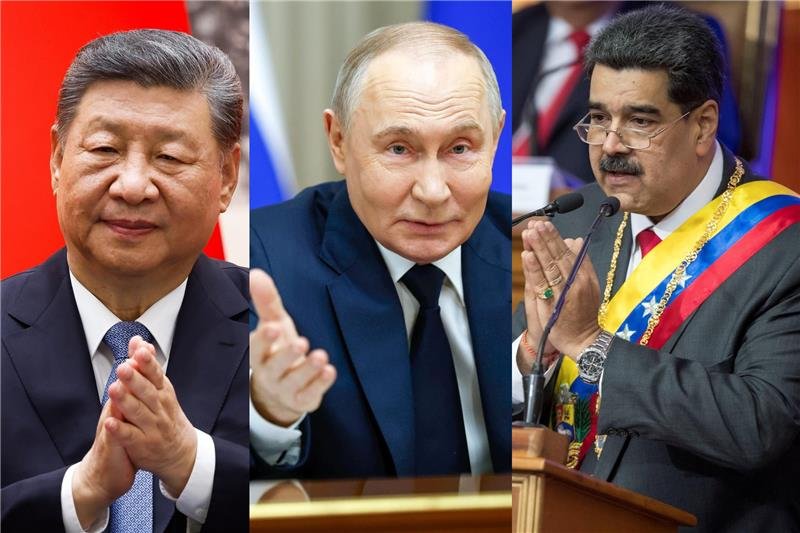
The historic US operation that resulted in the fall of dictator Nicolás Maduro, in Venezuela, on the 3rd, calls into question the long-standing influence of China and Russia in Latin America. The event shakes the geopolitical chessboard and exposes the fragility of the Chavista regime’s allies.
How important was Venezuela to China and Russia?
Venezuela was a strategic point for both countries for several reasons. It was an ideological ally with large reserves of cheap oil, essential for China. For Russia, the biggest interest was the sale of military equipment and espionage, taking advantage of Venezuela’s proximity to the United States. The South American nation functioned as a base for the anti-American agenda of both regimes in the region.
What does Maduro’s fall mean for the Chinese and Russians?
Maduro’s fall is a direct blow to the influence of both countries in Latin America. China loses its main oil supplier in the region, where 80% of Venezuelan exports went. Russia loses a major arms buyer and a spy outpost. Above all, they both lose a crucial ally in America’s “backyard,” which demonstrates a limit to their power to protect partners.
Why didn’t China and Russia prevent American action?
Despite Maduro’s threats, his protection turned out to be a sham. Neither Chinese radars nor Russian missiles prevented the operation. Experts point out that there is a clear limit to the reaction of these regimes. Both face their own challenges: Russia is focused on the war in Ukraine and China is focused on its economic slowdown. Defending Maduro openly would bring more pressure from the US, a cost they did not want to pay.
How does Maduro’s fall affect the political scenario in Latin America?
The operation represents a major crack in the socialist axis that was trying to maintain itself in Latin America. Venezuela was a key player on that board. His fall comes at a time when the region was already undergoing political change, with the election of right-wing or center-right leaders in countries such as Argentina, Chile and Paraguay, which are openly opposed to authoritarian regimes.
And what is the next step for the United States?
The action is part of Donald Trump’s new foreign agenda, focused on increasing American influence in Latin America. After the success of the operation in Venezuela, the president himself suggested that he could expand his military actions in the region. One of the next targets could be Colombia, whose left-wing leader, Gustavo Petro, is seen by Trump as a partner in drug trafficking, as was Maduro.
This content was generated with artificial intelligence. To access the information in full and delve deeper into the topic, see the report below.
SEE ALSO:
- Maduro’s fall contributes to undermining China and Russia’s influence in Latin America
