
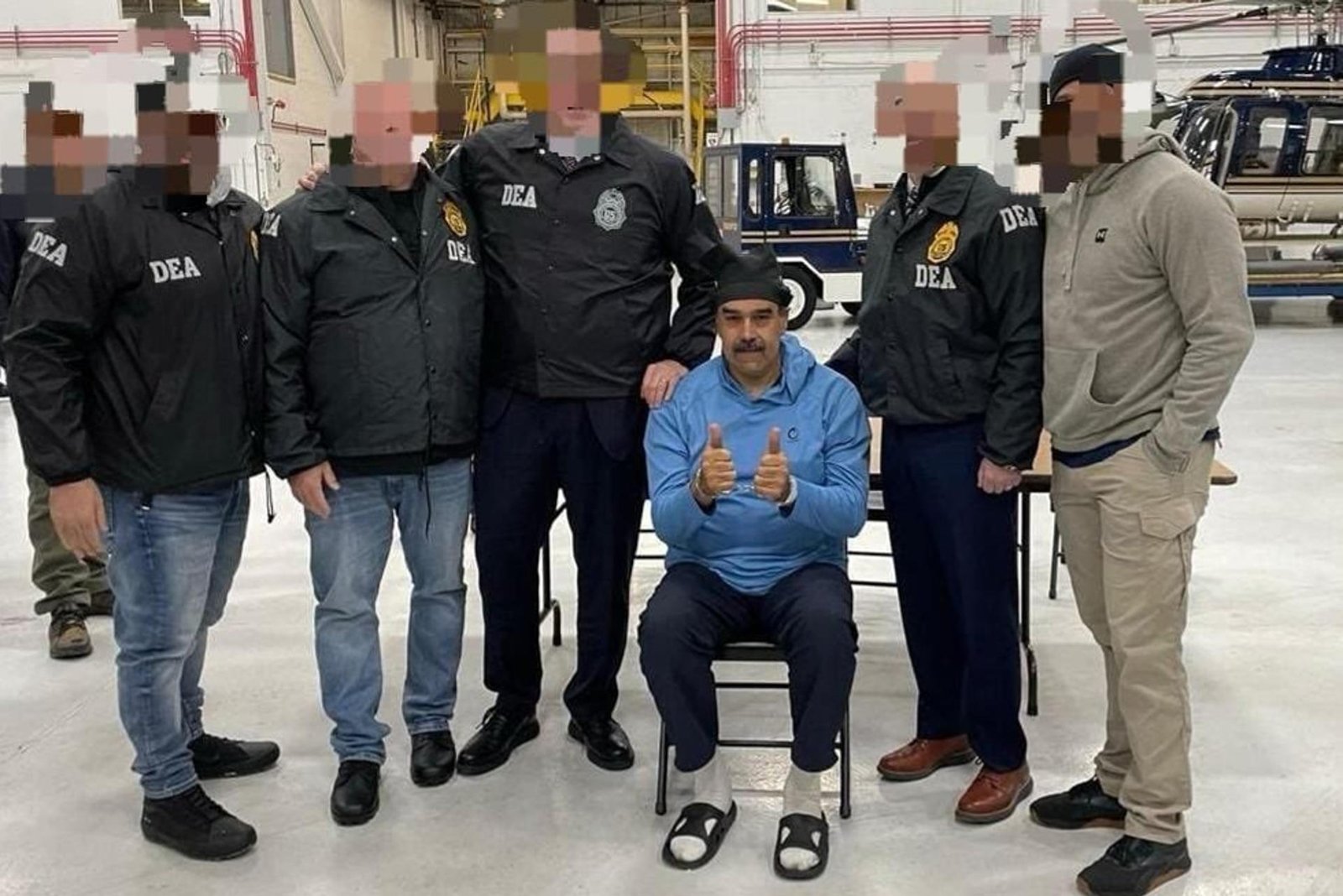
After the military operation that ended in the arrest of dictator Nicolás Maduro in the early hours of this Saturday (3), in Venezuela, by the USA, his assets could be confiscated and even redirected to Venezuela. The process, however, is complex and previous cases show that it can drag on for decades and even never be completed.
Officially, Maduro’s fortune would total up to US$3 million (more than R$15 million), a number calculated based on public information and indices that track the assets of famous people. The amount is based on your official salary and declared assets. However, the practice of powerful criminals is to hide wealth arising from corruption and illicit activities in accounts and assets in the name of family members and even in cryptocurrencies.
SEE ALSO:

The net worth of First Lady Ciliia Flores, for example, is estimated at US$2 million to US$5 million (or up to R$15 million). Another well-known practice is opening accounts in tax havens. offshore.
Since 2024, American authorities have seized assets estimated at US$700 million (R$3.5 billion) in luxury assets that investigations link to him, including houses, yachts, cars, jewelry and a horse farm. Part of these actions served to dismantle the corruption networks of the Chavista regime.
If Maduro ends up convicted on narcoterrorism charges, more assets could be confiscated under American laws that allow the proceeds of crime to be frozen.
Can the US confiscate the funds?
The US has legal mechanisms that implement the confiscation of assets linked to foreign leaders accused of crimes, such as drug trafficking or corruption. This includes civil and criminal forfeiture under legislation such as the “Forum Corrupt Practices Act”, sanctions regimes (by Office of Foreign Assets Control) and the statutes that punish narcoterrorism. The Magnitsky Law, which was applied to Minister Alexandre de Moraes, however was not applied to Maduro because there is a sanctions program dedicated especially to Venezuela.
Assets under US jurisdiction or linked to the American financial system can be frozen and seized, as has happened in several previously sanctioned Venezuelan cases.
The Trump administration put this in the context in which Maduro was captured, mentioning Venezuelan oil and assets considered “stolen” by the US in the nationalization program of the “Bolivarian revolution”.
Can resources return to Venezuela?
There is such a possibility, but it would be under US supervision. Trump said there are plans for American oil companies to invest billions in rebuilding Venezuela’s infrastructure, with the US temporarily “managing” the country to facilitate this transition.
Assets that were seized and oil revenues could be redirected in the form of humanitarian aid, to democratic institutions or to economic recovery through decisions of the American National Congress.
This would be similar to legislation that has already been proposed, the Preserving Accountability for National Assets Act or “PANA law” – a corruption of “friend”, in Venezuelan slang -, which would have the objective of using more than R$20 billion in assets seized from corruption to create a fund that rebuilds Venezuela’s economy, destroyed by Bolivarianism. Laws like this, however, have not yet been voted on in the American parliament and remain in thematic committees.
Is it possible to recover assets?
Asset recovery can happen, but it is complex. Recovery involves international cooperation, mutual legal assistance treaties and the application of sanctions. Venezuelan authorities, including Maduro’s circle, may have hidden billions in countries such as Switzerland, Panama, the British Virgin Islands and Malta through shell and money laundering companies linked to state oil company PDVSA.
The US collaborates with Swiss authorities to freeze and repatriate assets. It is estimated that the total corruption assets of Venezuela’s Chavista regime could reach US$64.6 billion (more than R$300 billion) spread across 31 countries, with the US seeking confiscation orders worth US$4 billion. Challenges include proving ownership and overcoming laws protecting bank secrecy.
What is the estimated size of fortunes
Estimates are that his fortune could be in the region of US$3 million (R$15 million), derived mainly from his presidential salary and declared assets. His wealth could be much greater, as assets worth millions of dollars have been seized and suggest wider enrichment from his regime.
Maduro’s ally Diosdado Cabello had the practice of hiding his assets, so it was never possible to estimate his fortune. Since the 2010s, US authorities have frozen hundreds of millions of dollars linked to money laundering and drug trafficking. Cabello was accused of accepting almost US$100 million in bribes from the Brazilian construction company Odebrecht, which denied the offer in 2017. There is a reward worth more than R$100 million for information on her whereabouts, similar to the reward for Nicolás Maduro himself.
Fate of other tyrants’ fortunes
Saddam Hussein’s estimated fortune ranged from up to US$40 billion (R$200 billion), accumulated through oil trading and corruption.
After his capture following the second Iraq war in 2003, American forces recovered most of what Saddam withdrew directly from the Iraqi central bank, but more than $132 million remained unaccounted for.
Billions in stolen gold were cataloged and returned to Iraq and Kuwait.
Overthrown by a popular uprising in 2011 in Libya, Muammar Gaddafi had billions of dollars confiscated in assets spread across the United Kingdom, the European Union, Switzerland and the USA. US$34 billion (more than R$150 billion) were found in American banks alone. Due to instability in Libya, few assets were repatriated, with the exception of his mansion, which ended up nationalized.
Panamanian Manuel Noriega, with wealth estimated at between US$200 and 600 million from drug trafficking and money laundering (1983-1989), his assets were frozen.
After the US invasion and his capture, authorities froze and contested assets, but hundreds of millions of dollars ended up being attributed to the Panama Defense Forces or allies and were not directly associated with Noriega. His conviction led to asset confiscation, but there was no full recovery. Panama demolished his mansion in 2014 as a symbolic act.
