
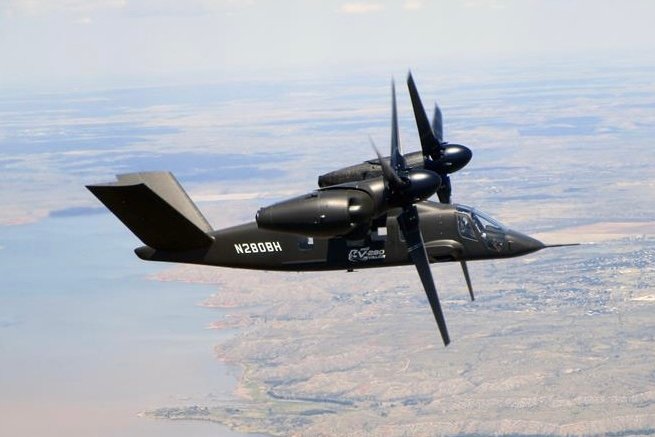
A Rolls-Royce started engine testing Up to 1107the propulsion system selected to equip the long-range assault aircraft prototypes MV-75 Future Long Range Assault Aircraft of the US Army.
+ Video shows Ford Bronco tire screeching during towing; understand the case
+ Amazon driver gets into trouble after driving truck under low bridge
The information is from the website UK Defence Journal. Second Candice BineyardDirector of Business Development and Future Programs at Rolls-Royce Defense in the US, described the testing campaign as a key transition point.
“We continue to work closely with the US Army and our industry partners to provide an ultra-modern propulsion solution with engines Up to 1107 proven, low-risk solutions and a fully integrated system design. Engine testing represents the next critical milestone in bringing this revolutionary capability to our military.”
The tests are being carried out at the company’s campus in Indianapolis, its largest unit in the USA. Over the past decade, the plant has received more than $1 billion in investment in technology enhancements, facility upgrades and testing capabilities.
According to the company, engine tests AE 1107 are intended to support prototype aircraft for the MV-75 FLRAAa next-generation platform designed to provide greater speed, range and lethality for future U.S. Army aviation units.
Each MV-75 FLRAA must be powered by two engines Rolls-Royce AE 1107F. According to Rolls-Roycethe engine is designed to provide high power density, cyber-compatible controls, and survivability capabilities adapted to modern combat environments.
It is worth emphasizing that the AE 1107 and Rolls-Royce It is already in use by the US military services. Currently, the engine powers several variants of the V-22 Osprey operated by the US Marine Corps, US Navy and US Air Force.
Now, the engine will act as a key point in the development of the program MV-75 FLRAAwhich is expected to replace parts of the Army’s current rotary-wing fleet with an aircraft designed for greater range and higher cruising speeds than helicopters.
Photo: Bell. This content was created with the help of AI and reviewed by the editorial team.
