
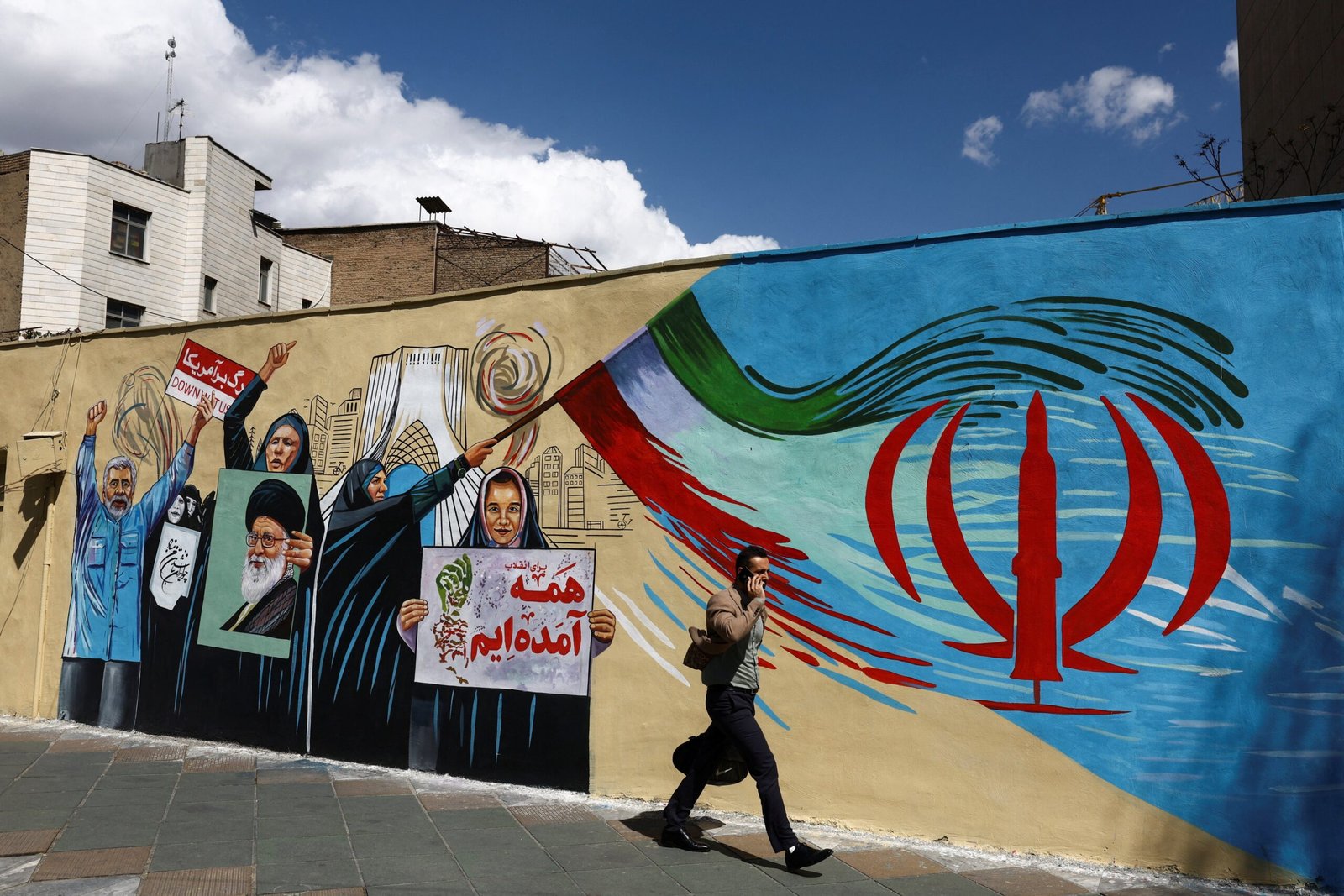
Iran threatens to leave the agreement because of Israel’s attacks on Lebanon United States President Donald Trump promised “regime change” in Iran. After the recent ceasefire, however, Iranian opponents report disappointment and fear in the face of an Islamic republic that declares itself victorious, despite losses at the top of power. ✅ Follow g1’s international news channel on WhatsApp LIVE: Follow the latest news on the war Iranian authorities celebrated the last-minute truce as a triumph of the theocratic system established after the 1979 Islamic revolution. Weeks before the war, the government had violently repressed a mass protest movement. Human rights groups now fear that the regime will feel empowered and intensify repression. “Ending up in a situation where the Islamic republic feels victorious is not a good thing,” a 30-year-old stockbroker told AFP, speaking from the Iranian capital. “They are more confident. They kill more people. They keep the internet cut off. Everything is going to be much worse,” said the Tehran resident, who requested anonymity for fear of reprisals. According to him, the Israeli-American offensive “seems like unfinished work.” “I think at some point there will be war again,” he added. Simin, a 48-year-old teacher in Tehran, reported relief at the end of the bombings after living in “terror” for the past five weeks. But he stated that the Islamic republic’s permanence in power also causes fear. “I’m happy for a few seconds thinking about the end of the bombs, but the news of executions scares me,” he said. For Armin, 34, if the war ends with the regime still in power, “there is no benefit for the people.” According to him, the authorities will “make the people pay for the losses suffered during the war.” Supreme leader Ali Khamenei died on the first day of the conflict, the main name among several leaders killed in attacks carried out by Israel and the United States. Some central figures survived, including his son, Mojtaba Khamenei, who was named as successor, although he has not appeared in public since. Even after the deaths of the leadership, the military machine and repression mechanisms continued to function during the war. READ ALSO President of Iran says ceasefire has been broken with attacks on Iranian islands Plan released by Iran is not the same as what the US received, says White House agency Netanyahu says he will continue bombing Lebanon and claims that ceasefire was coordinated with Israel ‘Witch hunt’ A man walks down a street in Tehran after the ceasefire announcement, on April 8, 2026 Majid Asgaripour/WANA via REUTERS Since the start of the conflict on February 28, Iran has executed seven people linked to the January protests. Six belonged to a banned opposition group, and one was a Swedish-Iranian national accused of spying for Israel. Hundreds of people were also detained. According to NGOs, many were forced to make televised confessions. Internet restrictions have lasted around 40 days, reported monitoring company Netblocks, describing an “almost total disconnection from the outside world.” “The regime has shown that repression is the only weapon it has against its own people,” Raphael Chenuil-Hazan, executive director of the NGO Together Against the Death Penalty (ECPM), in Paris, told AFP. “The death penalty is an instrument of fear (…) We deeply fear a witch hunt,” he added. During the January protests, Trump pledged support for Iranians and called for an end to executions. The truce announced on Tuesday, however, focuses on Iran’s nuclear program and the reopening of the Strait of Hormuz, a strategic route for global hydrocarbon trade. “People in Iran realize that this was never a war for them or their rights,” said Mahmud Amiry-Moghadam, director of the Norway-based NGO Iran Human Rights (IHR). Political groups in exile also expressed frustration. Reza Pahlavi, son of the last shah deposed in 1979, has not yet commented on the ceasefire. An advisor to him, Saeed Ghasseminejad, wrote on the X network that the agreement is “unnecessary and harmful to the national interests of the United States.” For Thomas Juneau, professor at the University of Ottawa, although the regime declared victory, the country was left economically fragile. According to him, “it is a question of when, not if, popular protests will return.” VIDEOS: most watched on g1
Source link
‘Unfinished work’: Iranians report disappointment and fear after ceasefire
13

previous post