
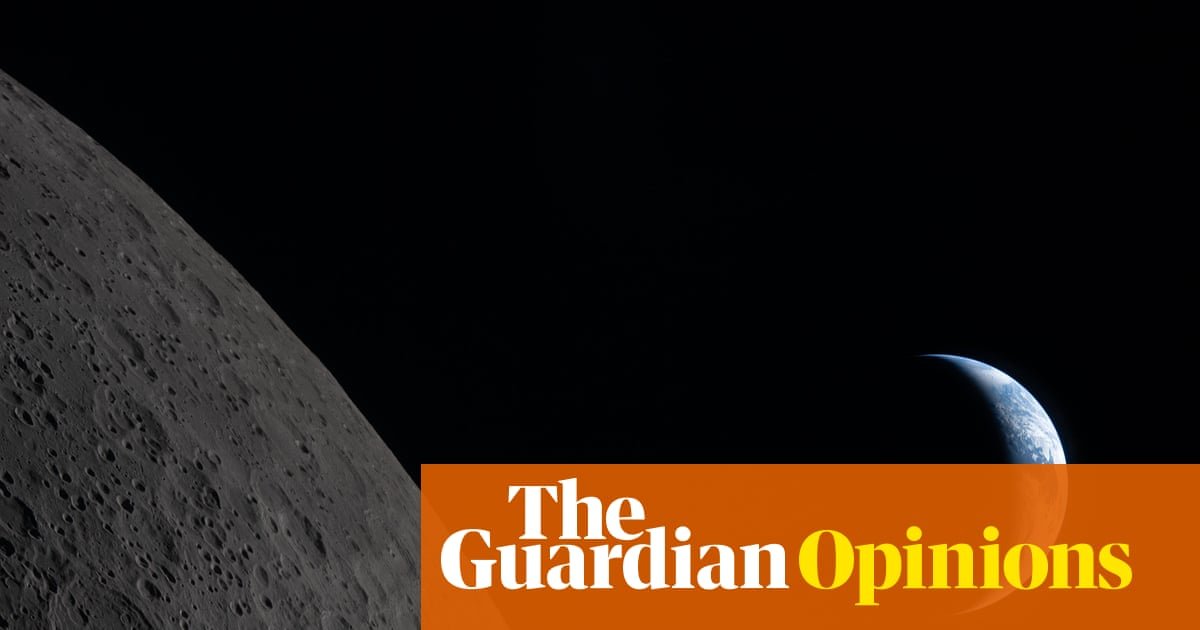
“Everything we need, Earth provides. And that is somewhat of a miracle, and one that you can’t truly know until you’ve had the perspective of the other.” This is how the US astronaut Christina Koch summed up her experience of travelling to the far side of the moon on Monday. The feeling of a deepened appreciation for home recalls statements by an earlier generation of space travellers. The famous Earthrise photograph, taken on the Apollo 8 mission in 1968, has been credited as one of the drivers behind the environmental movement. Such was the power of the first images of the “blue planet” captured from space.
The hope that such journeys can foster global cooperation and appreciation for life was also the theme of the prize-winning novel Orbital, which is set on a space station among a multinational crew. But if it was ever possible to overlook the darker side of space travel, it definitely isn’t today. In the 1960s, the American and Soviet programmes were projections of the two blocs’ military strength. In the 2020s, the tech billionaires Jeff Bezos and Elon Musk are key players in a dramatically revived US industry, while a post-terrestrial geopolitical battle between the US and China takes shape. Nasa aims to put a nuclear reactor on the moon by 2030.
Rather than serving to remind us of Earth’s preciousness, there is a risk that the £100bn Artemis programme is a dangerous distraction from the urgency of finding ways to live within the ecological limits of the world we already have. The US has undertaken its first moon voyage in half a century in the same year that Donald Trump withdrew it from the Paris climate agreement for the second time. Space-focused techno-optimism shades into moral nihilism when it opts for fantasies of colonising new worlds in preference to policies aimed at protecting the one we already have.
But the unquenchable human curiosity and remarkable science that have always underpinned space travel should not be dismissed out of distaste for its darker implications. The Artemis II launch last week only went ahead after a rare bipartisan display of support for Nasa in Congress saw off Mr Trump’s attempts to cut its funding. The credit for the past week’s experiences and discoveries belongs with the scientists, astronauts and support teams – not the White House. Mr Trump’s murderous bellicosity in recent days has been a horrifying contrast to the wonder of the astronauts.
Their voyage to the fabled dark side of the moon will not solve the world’s problems. Much of the research is geared towards future moon landings and the exploitation of natural resources that may be found there, as well as the impact of space travel on astronauts’ health, including the risks from dormant viruses.
But there are good reasons why so many people were thrilled to hear the voices of the astronauts from 250,000 miles away and were captivated by the image of the one Canadian and three American astronauts inside the Orion capsule – which is roughly the size of a camper van – taking photographs from the moon’s far side, where contact was cut off from their mission control centre in Houston for 40 minutes.
They have seen more of the moon, and travelled further away from Earth, than anyone before them. The adventure of their return and landing in the Pacific Ocean still lies ahead.
-
Do you have an opinion on the issues raised in this article? If you would like to submit a response of up to 300 words by email to be considered for publication in our letters section, please click here.
