
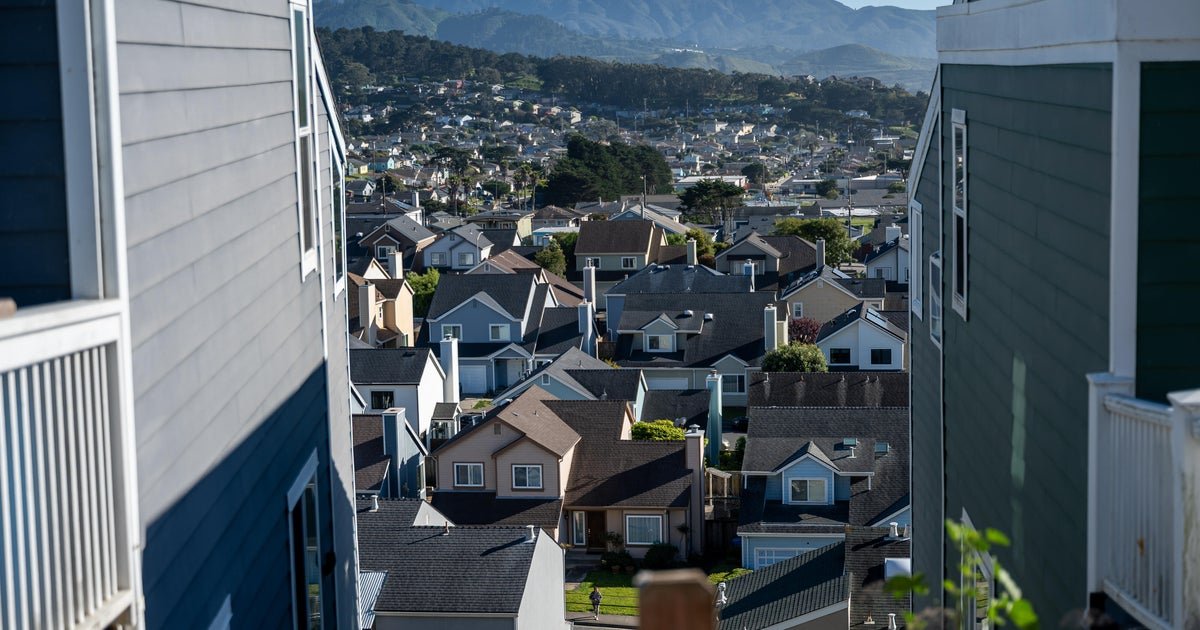
Surging mortgage rates are threatening to wash out the spring homebuying season.
The rate on a conventional 30-year home loan rose to 6.46%, its highest level since September 2025, Freddie Mac said Thursday. Borrowing costs have jumped sharply in recent weeks after having dipped below 6% in late February. The Iran war is exerting further upward pressure on rates by stoking inflation concerns and driving up government bond yields, according to economists. Mortgage rates tend to track the 10-year Treasury bond.
For aspiring homeowners, the upsurge in borrowing costs is a major headache.
“Before this war, it was like, it could be a good buyer’s time now,” said Rachel Marks, a 41-year-old Brooklyn, New York, resident who recently started searching for a home. “Now it’s like, nope, stay away because everything is just going up, up, up.”
As of Thursday, the 10-year Treasury yield was 4.26%, up from 3.96% just before the U.S. and Israel attacked Iran on February 28.
“When inflation goes up, investors in bonds — and that includes mortgage-backed securities — demand a higher return to compensate them for that increase,” explained Mike Fratantoni, chief economist at the Mortgage Bankers Association (MBA), a trade group.
The direction of monetary policy is also weighing on the housing market, Fratantoni said. With inflation seemingly stuck above the Federal Reserve’s 2% annual target, a growing number of economists and Wall Street analysts now predict that the central bank will refrain from lowering its benchmark rate for all of 2026.
“Mortgage rates will remain elevated, above 6%, in part because markets are pricing higher expected inflation into long-term rates,” economists with PNC Financial Services predicted in a report this week.
$95,000 difference
Prospective homebuyers are now grappling with the impact of an unexpected jump in mortgage rates.
Devan Post, a 36-year-old corporate controller in Minnesota who’s in the market for a home offering more space for her family, in February thought she had found a property that ticked all the boxes.
A lender initially quoted her a rate of 5.85% for a 30-year fixed-rate mortgage, she told CBS News. But before she and her husband could jump on the offer, the Iran war erupted. The lender’s latest quote: 6.49%.
Post and her husband recently put in an offer on another home. While they’re one step closer to buying, she said the additional mortgage costs they face are discouraging.
“You feel like you’re finally going to be entering the market when things are going your way. Like, rates are finally going down, we can actually afford a nice house,” she said. “And then it’s like, oh, wait, never mind.”
If the couple locks in at 6.49% and put 20% down, they would pay an extra $265 per month compared with the lower rate offer last month, according to Realtor.com. That comes to $95,400 over the life of a 30-year loan.
A weaker spring season?
Higher mortgage rates coincide with the start of the spring homebuying period, when demand normally starts to pick up. Experts had predicted a strong season, pointing to a modest increase in inventory, momentum in new construction and lower year-over-year listing prices.
The housing market was also eager to turn the page from last spring’s buying season, when President Trump’s “liberation day” tariffs sparked inflation and recession fears, according to Jake Krimmel, a senior economist at Realtor.com.
“This was going to be the year that the market rebounded in a noticeable way,” he told CBS News. “Conditions were forming for improved affordability.”
However, higher mortgage rates have muddied the picture, with Oxford Economics noting in a recent report that the Iran war’s effect on the housing market “will likely send many buyers and sellers to the sidelines.”
The Mortgage Bankers Association recently downgraded its outlook for home sales because of what it expects to be softer demand.
“A month ago, our forecast for 2026 was for an 8% increase in home sales compared to 2025. Now we’re looking for a 5% increase,” Fratantoni said.
Krimmel said it’s too soon to tell if higher mortgage rates will chill demand for housing, noting that “nothing is flashing red yet.” In some cases, rising mortgage rates could even encourage people to jump on an offer to lock in a better deal before costs rise, he added.
Still, some signs point to a slight slowdown in demand. The MBA’s seasonally adjusted purchase index, which tracks the volume of mortgage loan applications for new and existing homes, fell 3% on April 1 from a week earlier.
