
The war between Israel and the United States against Iran, which last weekend completed a month, has generated consequences that go beyond the battlefield, the most visible of which has been the rise in oil and gas prices due to the almost total blockade of the strategic Strait of Hormuz by the Iranian regime. Around 20% of the world’s oil and liquefied natural gas (LNG) passed through this passage before the war.
However, other impacts are already beginning to be felt and could influence Washington’s technological and military dispute with its two major global antagonists, China and Russia, in the long term.
A recent analysis of the think tank Soufan Center pointed out that the US may face difficulties in competing with China due to the war in Iran, which has been causing disruption of essential supply chains, such as helium and liquefied sulfur, destroying energy assets in the Persian Gulf and compromising the extraction of critical minerals and the processing of rare earths.
“While the long-term impacts of the Iran war and technological competition between the US and China are not yet fully clear, the duration of hostilities will be a determining factor,” the report said.
“The war in Iran showed that natural resources and geography cannot be ignored and that industrial power — from the base to production — will define the direction in the coming years,” highlighted the Soufan Center.
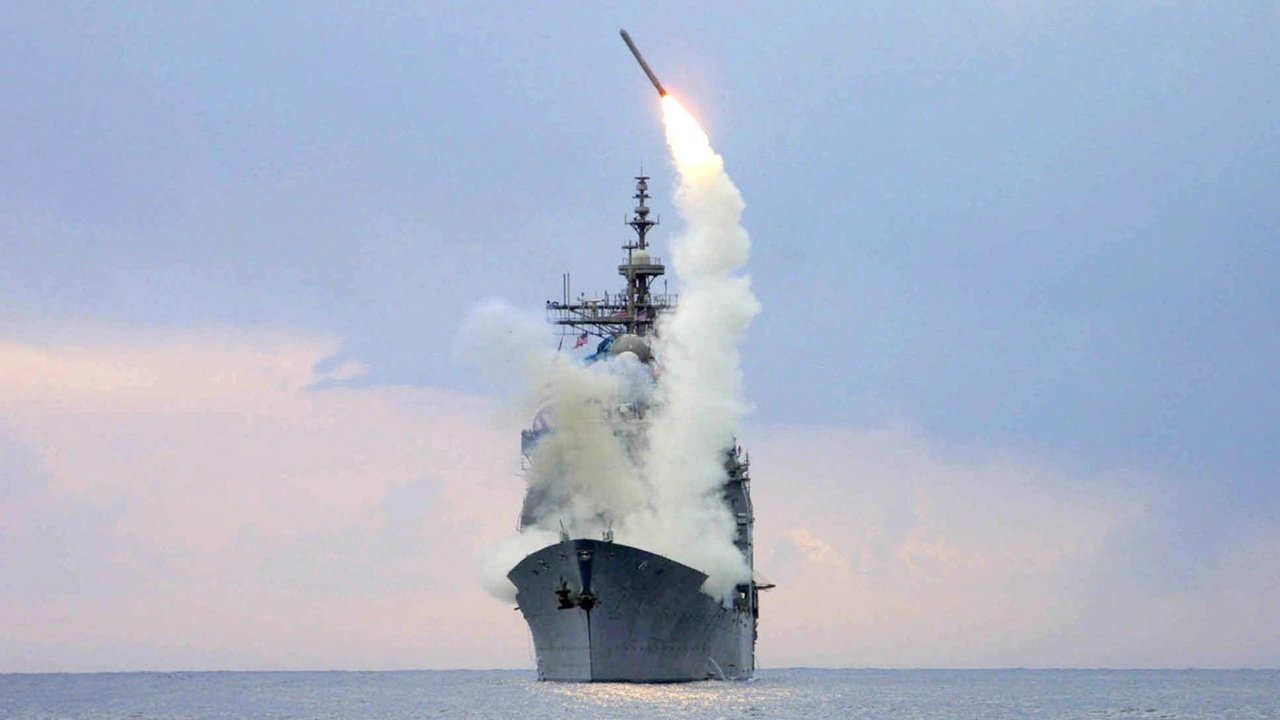
In an interview with People’s GazetteBrazilian Army reserve colonel Marco Antonio de Freitas Coutinho, specialist in international relations and master in international political science, explained that each Tomahawk missile, a mainstay of the American military stockpile, depends on at least 18 critical mineralsmany of them processed mostly in China and some directly affected by logistical disruptions in the Persian Gulf, including tantalum, silver, copper, bismuth, phosphorus, titanium, molybdenum, cobalt, tungsten and graphite.
“These materials are essential for the systems that guarantee the precision, navigability and resistance of the missile,” said Coutinho.
The analyst highlighted that China dominates the processing of rare earths and several critical metals used in these systems, controls essential stages of the value chain and is less vulnerable to the energy shock due to its more electrified matrix and dominance in clean technologies. “In addition, it can expand its influence in the Gulf in the post-conflict period, offering financing and reconstruction,” said Coutinho.
“The bottom line is that the United States’ ability to sustain high-intensity military operations depends on supply chains dominated by China. Thus, the effects of the war in Iran not only create immediate difficulties for Washington, but also reinforce structural trends that favor China in the medium and long term”, warned the expert.
US fires Tomahawks beyond replacement capacity, says newspaper
Specifically on the Tomahawks issue, a report published last week by the newspaper The Washington Post stated that the United States fired more than 850 missiles of this type in the first four weeks of the conflict in Iran, which has raised concerns about shortages of these weapons.
According to information from the think tank Center for Strategic and International Studies (CSIS), the Pentagon has contracts with companies that provide for a maximum production rate of 2,330 Tomahawks annually. However, the US Military only effectively purchases around 90 missiles of this type per year.
Kelly Grieco, senior researcher at the Stimson Center, said in an interview with CBS News that the estimate is that the The Pentagon currently has around 3,100 Tomahawk missiles in its arsenal.
“It is recognized that we do not have sufficient long-range strike capability, so we have been trying to build up these stocks, but we continue to deplete them,” Grieco said.
SEE ALSO:
-
War in Iran gives Russia breathing room, but does not solve Putin’s financial problems
-

Who was Saleh Mohammadi, the wrestling promise who was tortured and executed by Iran
The impasse could have repercussions on the war in Ukraine, whose president, Volodymyr Zelensky, has already expressed concern about the possibility of a lack of weapons to be passed on or sold to Kiev to face the Russian invasion, which in February completed four years.
In a recent interview with the BBC, the Ukrainian president argued that for Russian dictator Vladimir Putin, “a long war in Iran is an advantage”, because, in addition to raising energy prices (oil and gas are Russia’s main export products, and the US has partially lifted sanctions on Russia in this area), the conflict could “exhaust” American arms reserves – compromising sales and transfers to allies such as Ukraine.
“The United States produces 60 to 65 missiles [de vários tipos] per month. Imagine, 65 missiles per month is equivalent to about 700 to 800 missiles produced annually. And on the first day of the war in the Middle East alone, 803 missiles were used,” said Zelensky, who projected that there will “definitely” be a shortage of Patriot missiles in the near future.
Rubio admits that weapons may no longer be passed on to Ukraine
At a press conference in Paris last Friday (27), the American Secretary of State, Marco Rubio, admitted that weapons may no longer be delivered to Ukraine, so that they can be used in the current war in the Middle East.
The chancellor said that so far this has not happened, but if it actually happens, there could be no talk of “diverted weapons”.
“These weapons are ours; they are sales,” he said, citing military sales to Ukraine that are being paid for by NATO.
“Let me be clear, if the United States has a military need, whether to replenish our stocks or to fulfill some mission of national interest to the United States, we will always have priority when it comes to our resources. This goes for all countries in the world, unless they are countries that do not want to survive”, said Rubio.
Marco Antonio de Freitas Coutinho pointed out that the case of the Tomahawks illustrates how American industrial capacity has not kept up with the pace of consumption, since the volume of these missiles used in the first month of war is equivalent to years of accumulated manufacturing.
“Even if the government determines the expansion of production, the defense industry cannot increase supply immediately, as it depends on specialized assembly lines, training of highly specialized technical personnel, creation of a structure of certified suppliers of critical minerals not dependent on China, and manufacturing cycles that cannot be shortened,” said the analyst, citing the risk of stock depletion.
Publicly, the US government does not admit this concern. “[As forças armadas dos EUA] have everything they need to carry out any mission at the time and place chosen by the president [Donald Trump] and on any schedule,” said Sean Parnell, a Pentagon spokesman, in response to the Washington Post report.
He accused the American press of being “biased and obsessed with portraying the world’s most powerful military as weak.”
