
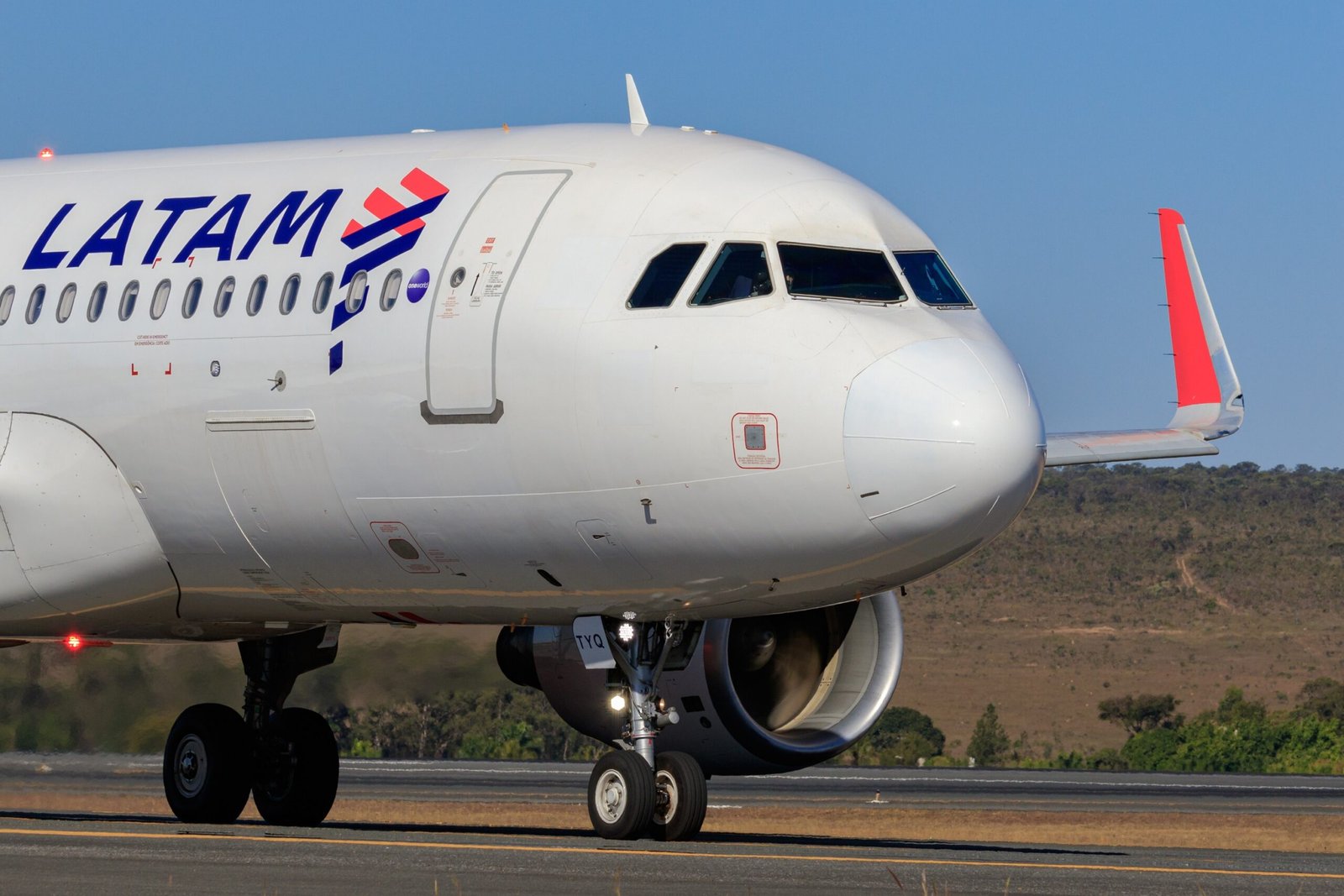
Government announces package of measures to try to curb the rise in fuel prices The federal government launched this Monday (6/4) a package of measures to try to cushion the impacts of the war in Iran on fuels, including specific relief initiatives for the airline sector. For this segment, the measures announced are the exemption from federal taxes (PIS and Cofins) for aviation kerosene (QAV) — generating savings of R$0.07 per liter of fuel —, two lines of credit worth R$9 billion for the sector, and extension, to December, of the Brazilian Air Force navigation fees for the months of April, May and June. The package, signed by President Luiz Inácio Lula da Silva (PT), created a new subsidy for the import and production of biodiesel, which will be added to the subsidy announced at the beginning of March, and also for gas. At the beginning of the month, Petrobras had announced a 54.6% increase in the price of aviation kerosene. In total since the start of the war, in February, the increase is 64%. According to Petrobras, there will be an 18% adjustment in April. The remainder will be paid in six months, with the first installment scheduled for July. The measure comes to ensure the “smooth functioning of the market”, according to the company. Latam plane LATAM/Disclosure The impacts of the crisis are global, but for the Brazilian passenger, the scenario is that of a “perfect storm”: the increase meets costs that are normally already high and a sector already depressed. Even before Petrobras’ announcement, air tickets were already rising. The March inflation preview (IPCA-15) showed an increase of 5.94%. With the new measures announced this Monday, the expectation is that the impacts will be cushioned. Experts interviewed by BBC News Brasil explain why the country is particularly vulnerable to this shock and what consumers should consider before buying their tickets. Why are jet fuel prices rising? The impact of the conflict between Iran and the USA on plane fuel prices is due to the Middle Eastern country controlling the Strait of Hormuz, an area between the Gulf of Oman and the Persian Gulf. Around a fifth of all the oil consumed in the world passes through it, according to the International Energy Agency (IEA). This happens because the strait is the only maritime outlet for oil for major exporters, such as Saudi Arabia, Iraq and Iran itself. Strait of Hormuz Arte/g1 With the conflict, the risks surrounding oil transportation have increased. This was reflected in the rise in Brent prices, which is a reference in the market. One day before the North American invasion, the price of a barrel of Brent closed at US$71.32. But, throughout the conflict, the value already surpassed the US$115 per barrel mark. As QAV is a direct derivative of oil, its price is linked to these fluctuations — as already seen, albeit with less intensity, in other conflict situations, such as Russia’s invasion of Ukraine in 2022. More expensive fuel In Brazil, this vulnerability is amplified by the Import Price Parity (PPI) policy, according to Dany Oliveira, former director of the International Air Transport Association (IATA) in Brazil. This pricing model defines the value of fuels in Brazil not by the real cost of national extraction and refining, but by how much it would cost for an importer to bring this same product from abroad. In practice, Petrobras calculates the price by adding the international oil price (such as Brent, in the case of QAV) and the variation in the dollar to “hypothetical costs” of transportation, such as maritime freight and port fees, as if the fuel were crossing the ocean in a tanker. Therefore, it doesn’t matter that around 90% of the QAV used in Brazil is produced in the country — its price will follow the international market. The price of aviation kerosene in Brazil follows international prices Getty Images via BBC According to Oliveira, in normal times, aviation fuel represents around 40% of the total cost of Brazilian airlines, while the global average is around 27%. According to a note from the Brazilian Association of Airlines (Abear) sent to the BBC, fuel now accounts for 45% of the companies’ total costs after the last adjustment. Furthermore, with the war, “companies need to divert areas precisely because of security”, explains Oliveira. “These diversions can lengthen flight time by up to an hour and a half. That’s even more time consuming kerosene.” Is it worth purchasing tickets in advance? For Diego Endrigo, financial planner at Planejar, it may be worth getting ahead and buying tickets for trips for the rest of the year. Unlike foreign exchange, where it is possible to buy dollars little by little to create an “average price”, air service tends to suffer abrupt transfers. Furthermore, “people can and should buy tickets in advance, as there is a possibility, with the war, of reducing the number of flights”, says Endrigo. “And then, if you reduce the number of flights, we have the famous rule of supply and demand. And price inflation occurs precisely because of this.” With less available flight supply and equal passenger demand for travel, ticket prices rise. Travelers should also pay extra attention to travel insurance, often offered by credit card companies themselves, which can offer protection and assistance against unforeseen events, from medical emergencies to flight cancellations. The uncertainties brought by geopolitical conflicts can also bring lasting lessons about personal planning, says Diego. “In addition to all the tragedy, citizens pay a very high price economically for a war”, he states. “To prepare for emergency situations, we can diversify, in addition to assets, we can diversify country risk. Today we have many affordable international account options, which allow us to have assets in multiple locations.” Change in the STF froze passenger actions against airlines The purchase decision also comes up against an issue beyond finances: passenger rights in the event of cancellations. This is because, in November, Minister Dias Toffoli, of the Federal Supreme Court (STF), suspended proceedings against airlines that deal with delays, changes or cancellations of flights resulting from “external fortuitous circumstances” or force majeure, as defined in the Brazilian Aeronautics Code (CBA). In practice, this means that processes motivated by events beyond the companies’ control (such as adverse weather conditions, airport closures, restrictions imposed by civil aviation authorities or pandemic situations) must be halted until the court makes a definitive decision on the dispute. The dispute is which set of rules should prevail in these situations: whether it is the Consumer Protection Code (CDC), which offers greater protection and reparation to passengers, or the CBA, which has more restrictive rules. Therefore, depending on what the STF decides, it is possible that war situations like the one happening in Iran will be read as “external fortuitous events” and, therefore, passengers affected by a cancellation under these conditions will not have the right to complain against companies. For Walter Moura, lawyer at the Brazilian Institute for Consumer Protection (Idec), a “war that lasts more than three weeks is not like a tornado, which happens out of nowhere.” Therefore, he argues that conflicts like the one in Iran should not be classified as “external fortuitous events”. “For future sales, they are fully capable of making predictive calculations, creating special payment and cancellation plans,” he says. “I don’t believe that the Supreme Court will resist pressure from the airlines. It’s a good idea for consumers to prepare themselves to buy airline tickets in the same way as buying lottery tickets. The chances of losing money are increasingly greater.” Anac said in a note that the Brazilian rules “do not provide specific guidance for a war situation”, but understands that “the text must be expanded to this type of circumstance”. “In other words, the airlines are not responsible for the damage, which does not exempt them from the need to guarantee material assistance to passengers,” said Anac. Brazil’s potential to make aviation fuel cheaper If the current situation is a crisis for everyone involved, it may have a small positive point in the long term: boosting the search for alternatives for aircraft, which have fossil origins. “The moment shows a very high dependence on a single polluting input, and we need to reduce this dependence”, says Dany de Oliveira. One of the options is Sustainable Aviation Fuel (SAF), a biofuel produced from waste such as cooking oil, animal fat and sugar cane biomass. Current aircraft engines are already compatible with SAF. Historically, SAF is 3 to 5 times more expensive than regular kerosene. However, with the barrel of Brent rising with the war, this economic distance decreases. Sustainable fuel (SAF) is 3 to 5 times more expensive than common kerosene, but the difference could fall with the rise in Brent Getty Images “Brazil has everything it takes to be the ‘Saudi Arabia of SAF'”, says Oliveira. In addition to having the largest biomass reserve in the world, Brazil already has decades of experience with Proálcool and biodiesel blends, with adequate infrastructure for biofuels. Furthermore, the SAF can bring geopolitical independence: a fuel produced from sugar cane or animal fat on Brazilian soil does not depend on the Strait of Hormuz. With this in mind, the SAF is part of the Future Fuel Law, approved in 2024, which regulates the steps of the energy transition in Brazil. It defines that, from 2027, airlines need to use a small percentage of SAF. Companies like LATAM have already started using biofuel in certain operations. “The regulatory framework helps, but we still lack an investment portfolio to accelerate these SAF projects. What we have today is potential”, says Oliveira. “May this moment be a lever for these projects to become more robust and be able to be accelerated.” * With reporting by Marina Rossi
Source link
Government eliminates taxes on aviation fuel: what could happen to airline tickets?
28
