
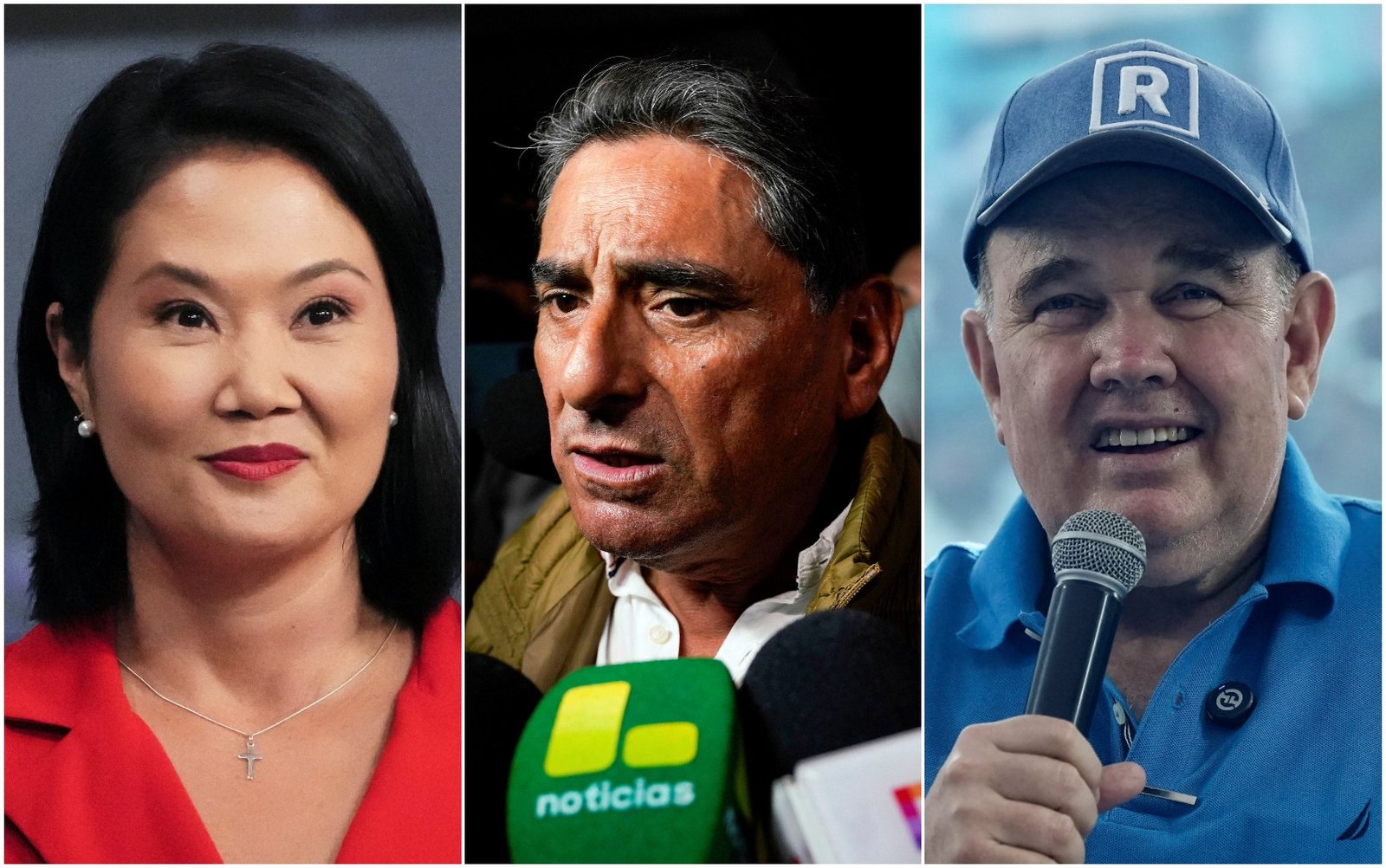
Election in Peru: Peruvians go to the polls in a dispute with a record number of candidates Peruvian voters will have to wait at least until Monday (13) to know the results of the presidential election, after the process was hampered by logistical problems that left thousands of people in the country and abroad unable to vote this Sunday (12). The problems prompted election authorities to allow 63,300 residents of the capital, Lima, to vote on Monday. The extension, announced after vote counting began Sunday night, also includes Peruvians registered to vote in Orlando, Florida, and Paterson, New Jersey. Voting is mandatory for Peruvians between 18 and 70 years old. Failure to appear can result in a fine of up to US$32 (about R$160.71). A former minister, a comedian and a political heiress are among the 35 candidates running for president of Peru. Only 5% of the ballots were counted on Sunday. This preliminary result placed Rafael López Aliaga in the lead with 23.4%, followed by Jorge Nieto, in second place, with 16.4%. However, a second round is practically certain, due to the deeply divided electorate and the large number of candidates — the largest in the history of the Andean country. A candidate must obtain more than 50% of the votes to win in the first round. READ MORE: With a record 35 candidates, Peru chooses a new president From a dictator’s daughter to a self-flagellating conservative: who are the main candidates in Peru The election takes place amid rising crime and corruption, which have fueled widespread discontent among voters, who largely see the candidates as dishonest and unprepared for the presidency. Many competitors responded to security concerns with sweeping proposals, including building mega-prisons, food restrictions for inmates and reinstating the death penalty for serious crimes. More than 27 million people are registered to vote. Of these, around 1.2 million vote abroad, mainly in the United States and Argentina. Voters are also being asked to choose members of a bicameral Congress for the first time in more than 30 years, following recent legislative reforms that concentrate significant power in the new upper chamber. The 3 main candidates, all from the right, are: Keiko Fujimori, Carlos Álvarez and Rafael Lopez Aliaga Reuters/Angela Ponca; Reuters/Leslie Moreno; Reuters/Angela Ponce Keiko Fujimori, daughter of former president Alberto Fujimori, appeared with 15% of voting intentions, according to the Ipsos-Peru 21 survey. This is her fourth attempt to come to power, and this persistence reveals that she has a loyal electoral base, but it also shows Fujimorism’s inability to produce alternatives. Close behind was Carlos Álvarez, with 8%. Humorist and screenwriter, he is the model of “outsider” taken to the extreme: he defines himself simultaneously as “right, left and center” and proposes measures such as the death penalty, in addition to the country’s withdrawal from the American Convention on Human Rights. Hot on his heels is Rafael López Aliaga, with 7%. Former mayor of Lima and representative of an ultra-conservative right. A fervent Catholic, he himself says that he self-flagellates with a hair shirt to avoid falling into sexual temptation and he himself says that he has not had sexual relations since 1981. But, to make the scenario even more intricate, there is the businessman and former mayor of Lima, Ricardo Belmont, aged 80, who would be in a technical tie between Álvarez and Aliaga, according to some surveys. And due to this atomization of votes, the Parliament that emerges from these elections will also be made up of small groups, which will mean that the next president will not have his own majority. History of political crises Peru has had 9 presidents in the last 10 years: 3 elected and 7 interim. The president who will be elected will be the tenth in a decade. All presidents elected this century went to prison for corruption scandals and one for attempting a self-coup. And a fact of fantastic realism: the official portraits of the penultimate president, José Jerí, were ready precisely in the week of his dismissal. They were delivered to ministries minutes after Congress voted to impeach him. The paintings had barely arrived and the president had already left. *With information from the Associated Press.
Source link
Failures delay election in Peru and voting is reopened
5
