
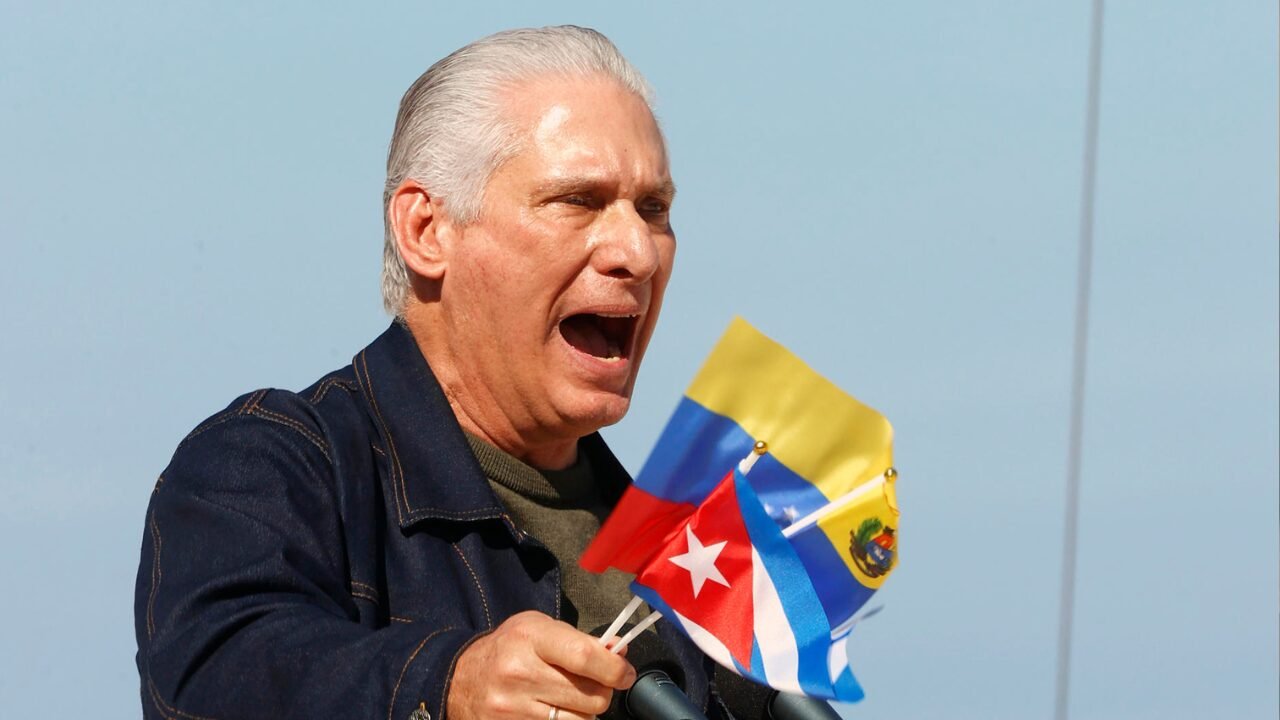
In a country where blackouts are routine, food is a luxury item and the average salary is no more than US$20 per month, the Cuban dictatorship announced on Thursday (2) a gesture presented as historic: the early release of more than 2,000 prisoners — the biggest pardon granted by the regime in more than a decade.
The move came shortly after the US government eased an oil blockade imposed on the island nearly three months ago, clearing the way for a Russian ship to deliver fuel shipments to the country.
The pardon was publicized as a “humanitarian and sovereign gesture”, which took place “in the context of the religious celebrations of Holy Week”. But the sequence of events tells another story.
One day before the announcement, dictator Miguel Díaz-Canel admitted that Cuba was holding talks with the US to resolve its energy crisis — confirming what Trump had been saying since mid-January.
According to the newspaper The New York Timesthe Americans signaled that Díaz-Canel should leave power. In this context, the release of prisoners appears as a calculated gesture: a sign that the regime is willing to give in enough to reduce external pressure, but without any real change in Díaz-Canel’s absolute control over the country.
Just ordinary prisoners
The main problem with the ad is what it hides. The regime did not disclose the list of beneficiaries or explain the criteria used — and made it clear that those arrested for “crimes against authority”, a category often applied to opponents, were left out.
Hours after the releases began, on Friday (3), the human rights NGO Cubalex reported that it was not possible to confirm the release of any political prisoner among the beneficiaries.
Spanish Javier Larrondo, president of the NGO Prisoners Defenders, highlighted that the number of people detained for political reasons remains at record levels (more than 1,200, according to estimates by international entities).
“We counted dozens and dozens of new political prisoners in March alone. And now the regime pretends to be good, benevolent”, says Larrondo.
Politics and religion
Another controversial point is the use of Christian tradition by a regime founded on Marxist atheism and which, for decades, persecuted the Church. For critics, the religious calendar became a political tool for the island’s dictatorship.
The Vatican acts as a mediator between Cuba and the United States, and prisoner releases often accompany these moments of dialogue — as has already occurred in negotiations involving Miguel Díaz-Canel and Pope Francis.
The pattern repeats itself: under pressure, the regime turns to religion to improve its external image.
Bicycles and Che Guevara
While the world watched the pardon announcement, another scene took place inside Cuba — and it showed the true face of the dictatorship.
Díaz-Canel himself participated, also on Thursday, in the so-called “Anti-Imperialist Youth Parade on Wheels”, in Havana. On bicycles and roller skates, the protesters displayed images of Che Guevara and chanted war cries against the USA.
The episode sums up the Cuban contradiction. To the world, the regime sells the image of a dictatorship that is opening space for dialogue. For young Cubans, the message is different: defend the revolution, blame capitalism and keep cycling.
SEE ALSO:
-
Eight gifts from the PT to the Cuban dictatorship (paid with your money)
-

Misery, garbage, blackouts, repression: the influencer who unmasked Cuba’s bankruptcy
