
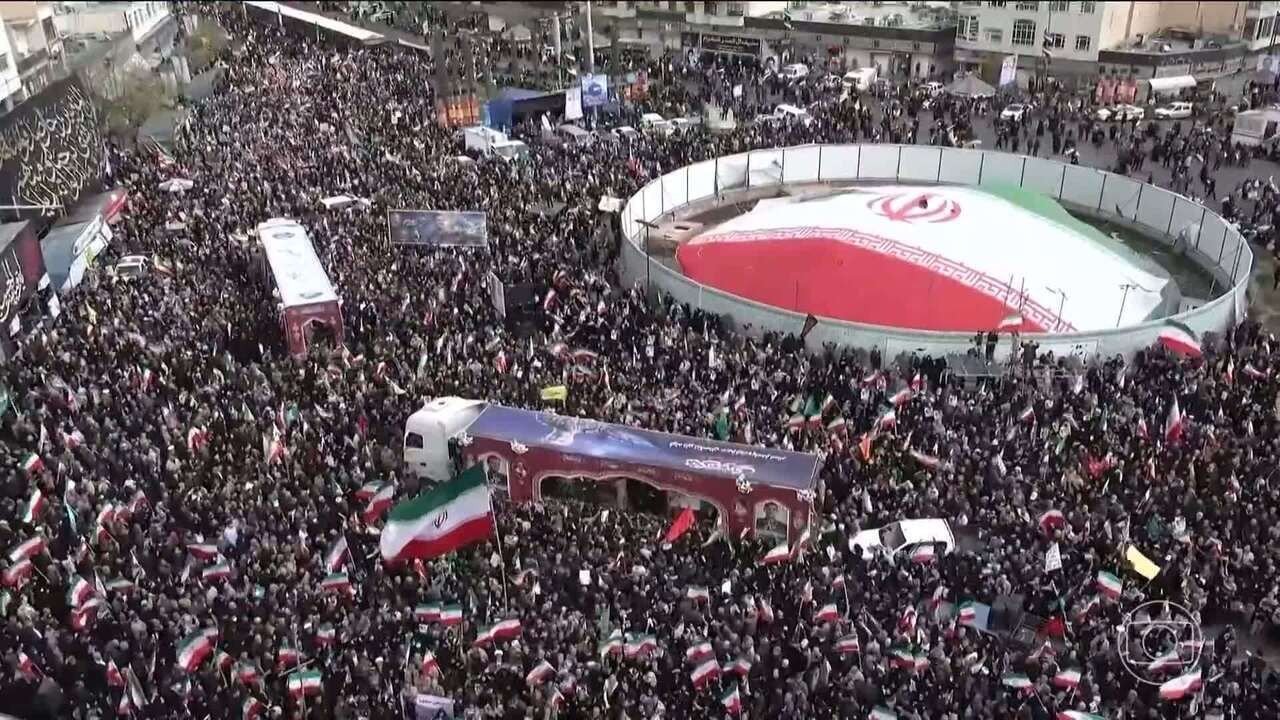
Are we heading towards World War III or is this an exaggerated fear? Getty Images via BBC More than a month after the start of the United States and Israel’s war against Iran, there are fears that the current conflict in the Middle East could escalate into something much bigger. The war affected, in addition to Iran, more than 10 other countries in the region, such as the United Arab Emirates, Iraq, Bahrain, Kuwait, Saudi Arabia, Oman, Azerbaijan, Cyprus, Syria, Qatar and Lebanon, in addition to the occupied West Bank. Many fear that the current conflict could stop being regional and become a global war. But is this fear really justified? War spreads across the Gulf with attacks from Iran and death of Hezbollah commander When does a conflict become a world war? “People tend to think that wars are carefully planned and that those who go to war know exactly what they are doing,” explains emeritus professor of international history Margaret MacMillan, from the University of Oxford, in the United Kingdom, in an interview with the radio program The Global Story, on the BBC World Service. “In fact, if you look at the wars of the past… World War I [1914-1918]…much of what sparked its inception occurred by accident and because people underestimated their opponents,” she continues. “Think of it, sometimes, as a kind of schoolyard brawl.” It was the assassination of the nephew of the Austro-Hungarian Emperor Franz Joseph (1840-1916), Archduke Franz Ferdinand (1863-1914), that generated the entire chain of events that led to the First World War, according to MacMillan. In a matter of weeks, a group of alliances pushed Europe into conflict. The Austro-Hungarian Empire rose against Serbia, Germany supported Austria, Russia mobilized in support of Serbia, France supported Russia and the United Kingdom, in the name of honor and strategy, also entered the war. “In the First World War, it would have been the European imperial powers,” he explained to the BBC. “In the Second World War, it would have included the United States, Japan and China.” Many people would describe current tensions in the Middle East as largely regional. But were the conditions present for a broader escalation? Zelensky said he believed Russian President Vladimir Putin had already started World War III and that the only response would be to apply intense military and commercial pressure to force Moscow to withdraw. “I believe Putin has already started it. The question is how much territory it will be able to take and how to stop it… Russia wants to impose a different way of life on the world and change the lives that people have chosen for themselves”, highlighted the Ukrainian president. So, what is the current risk of World War III occurring? “I think the country most likely to escalate the conflict is probably Iran or its allies, like the Houthis in Yemen”, says MacMillan. Iran’s possible actions, such as attacking shipping lanes or closing the Strait of Hormuz, could have global consequences, interrupting energy supplies and bringing the main powers into the conflict, according to the professor. The involvement of the United States also increases the risks. And other countries, even if they are not directly involved, are affected economically or strategically, she explains. of the West represents an opportunity for it to move toward Taiwan. Or Russia could intensify its actions in Ukraine while global attention is elsewhere on the planet. “There is always the possibility that a conflict will spread outside of a region, in part because countries outside that area will see opportunities, as the war involves people who could prevent them from doing what they want,” explains MacMillan believes the conflict will remain regional, attracting the countries of the Gulf Cooperation Council, which includes Saudi. Saudi. But he doesn’t see China and Russia being drawn into war. For him, “this idea that something happens in the world and China is going to attack Taiwan, it just… doesn’t make any sense.” making a huge strategic mistake, you simply let him go and continue what he is doing”, explains the professor. Would it be in China’s interest not to play a diplomatic role, even though it suffers the consequences of fluctuating oil prices? For Maiolo, this is a small price to pay. “In the hierarchy of strategic interests as a whole, it is much more interesting for China to have the United States concerned about the Middle East than its oil sources.” More than a million people were displaced in Lebanon, due to the impacts of the United States and Israel’s war against Iran Getty Images via BBC The role of leaders According to MacMillan, history has shown that war is often triggered by pride, a sense of honor or fear of opponents. It indicates that history also shows that individual leaders can set the course of events. [1841-1929]in the First World War, declared that making peace is more difficult than making war”, recalls the professor. For her, there is often the argument that, if there are great losses or sacrifices from people, leaders decide that they need to “keep going to win the war”. “Denazify” Ukraine, but Russia says its military objectives have not yet been achieved, highlights the professor. The UK Defense Minister estimates that Russia has suffered a total of 1.25 million deaths. This number is believed to be an underestimate and, even so, it is much greater than all the American deaths that occurred during the Second World War [1939-1945]according to the British Minister for the Armed Forces. MacMillan highlights that leaders who refuse to back down or admit failure can prolong and deepen conflicts. She adds that, in the past, figures like Adolf Hitler (1889-1945) continued to fight, even when defeat was inevitable, driven by ideology, pride or illusion. And these decisions can turn limited conflicts into devastating wars. Paths to containment To achieve containment, diplomacy is very important, highlights MacMillan. “You need to know the other side… and you need to stay in touch with them.” She explains that communications improved on all sides in the late Cold War (1947-1991) and with the involvement of NATO. “There are many examples where people said ‘Wait a minute, this is getting crazy'”, continues the professor. “They understood that it was becoming too volatile and that they needed to reduce the temperature.” The existence of nuclear weapons is always a consideration in de-escalation policies when major powers are involved. Maiolo agrees. For him, “there needs to be a recognition… in Tel Aviv, Washington and Tehran… that they have reached the limits of what can be achieved.” The professor explains that the continuation of the war will not “produce a desired outcome” for all sides. “There will need to be some kind of agreement on lifting sanctions, some kind of security agreement, some kind of understanding about Iran’s place in global politics,” he said. Maiolo states that, only through mediation, the powers involved can reach a ceasefire and then transform it into a more lasting agreement. Editing by Alexandra Fouche
Source link
Are we heading towards World War III or is this an exaggerated fear?
58
