
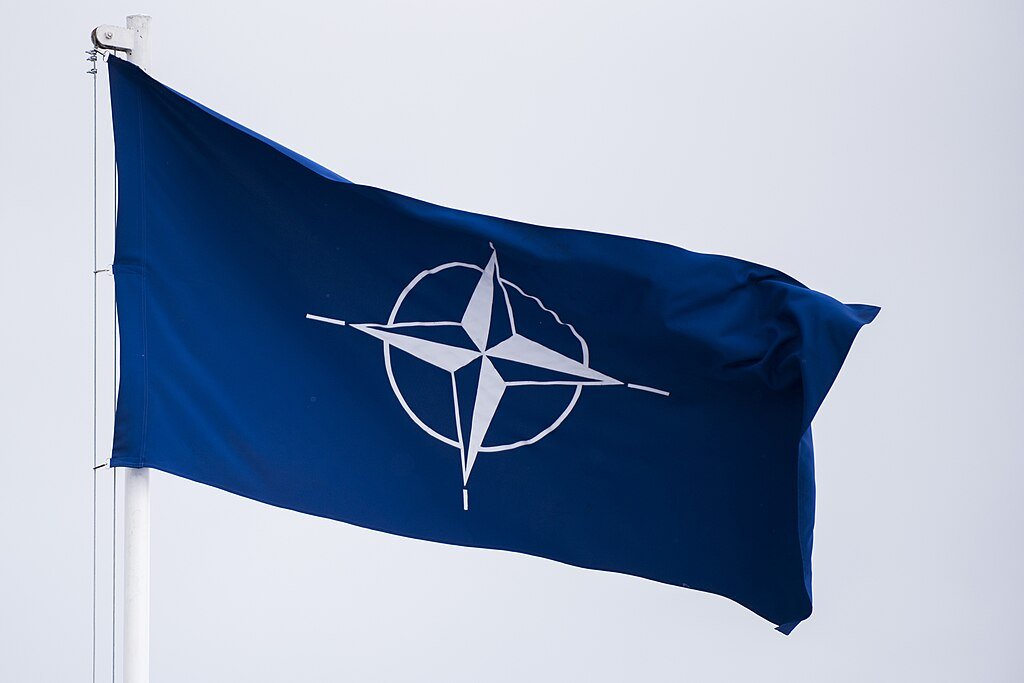
On Friday (27), President Donald Trump cast doubt on the country’s permanence in the North Atlantic Treaty Organization (NATO) by criticizing the lack of support from European allies in Israeli and American military operations against Iran. This Monday (30), Secretary of State Marco Rubio reinforced the president’s tone by classifying it as “very disappointing” in an interview with Al Jazeera the refusal of alliance countries to allow the US use of bases and airspace during the conflict.
The main reason behind Trump’s threats lies in the assessment that the United States is not receiving strategic compensation commensurate with its role within the Western military alliance. As the president said in a speech on Friday, Washington bears a large part of NATO’s defense costs, but did not receive support in an operation considered critical to its interests.
“We spend hundreds of billions of dollars a year protecting them […] but now […] I don’t think we need to be [mais na Otan]”, said Trump at the time.
NATO member countries, mainly European ones, have avoided direct involvement in the war, claiming that the confrontation with Iran does not trigger the alliance’s collective defense mechanisms. According to this understanding, the military treaty only provides for joint action in the event of a direct attack against one of its members – which, until now, has not been formally recognized, even after episodes such as drone and missile attacks against British bases and the violation of Turkish airspace.
Behind the scenes, NATO members claim that the operation against Iran was not previously coordinated with European partners, which contributed to the resistance to joining the offensive.
Trump’s indignation with NATO countries increased even more after the alliance’s main European powers – the United Kingdom, France and Germany – refused to participate in a US-led coalition to reopen the Strait of Hormuz, a strategic route for global oil transport that has become one of the central focuses of the conflict. These countries have even demonstrated a willingness to contribute to navigation safety in the region, but without offensive military involvement. After the refusal, Trump called his allies “cowards” and stated that the United States “will remember” the stance adopted.
In a post on social media last week, President Trump stated that the United States “will never forget” NATO’s lack of support in the war against Iran and again stated that the alliance countries “did absolutely nothing” to help the US and Israel in the conflict.
Secretary Rubio said in this Monday’s interview that the refusal of European countries – such as Spain – to authorize the use of bases and airspace for operations against Iran raised even more doubts within the Trump administration about the practical benefits of continuing to join NATO.
“If NATO is just for the United States to defend Europe, but denies us rights to use bases when we need them, that is not a very good arrangement,” he declared. He added that the entire relationship with the alliance “will have to be re-examined” after the end of the ongoing military operation in the Middle East.
Spain became one of the main points of friction within the Western alliance by preventing the US from using its territory and airspace for military actions. The government of Socialist Prime Minister Pedro Sánchez closed the country’s airspace to US military flights involved in the war against Iran and banned the use of the Rota and Morón bases in the American and Israeli operation against the Islamic regime.
Spain’s actions were harshly criticized by the White House, which even threatened to apply trade sanctions against the European country. Socialist Prime Minister Sánchez has been one of the main critics of the offensive against Tehran. His criticisms were even thanked by the Iranian regime.
The US threats come at a time when the alliance itself is trying to maintain internal cohesion. NATO Secretary General Mark Rutte said last week that the bloc remains strengthened and highlighted the increase in defense investment by European countries, driven by pressure from Trump.
Just last week, Rutte said, following Trump’s criticism, that more than 30 alliance countries had already committed to discussing measures to ensure the reopening of the Strait of Hormuz, including partners outside the alliance. However, to date, there is no clear definition of the alliance’s direct military participation in these actions.
