
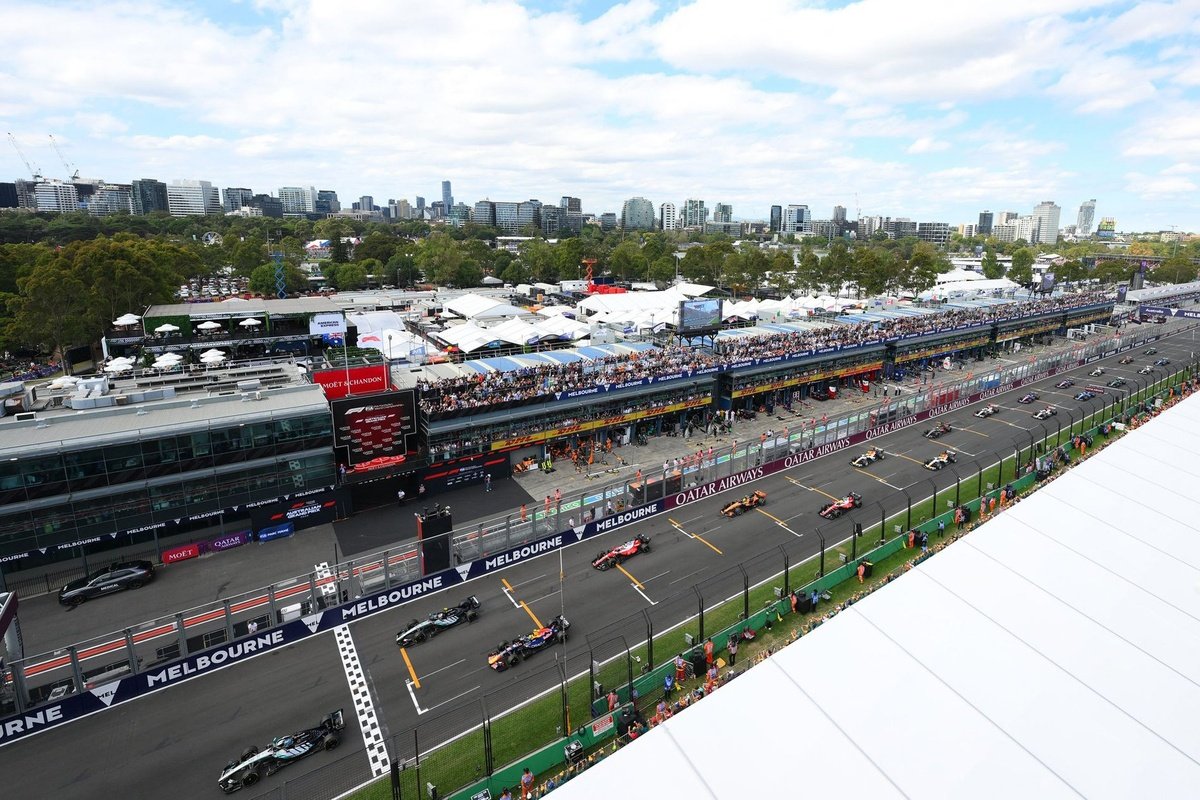
When his Racing Bulls car failed to make a clean getaway from eighth on the grid in the Australian Grand Prix last weekend, Liam Lawson was expecting the worst, as Franco Colapinto came within millimetres of running straight into the back of him at high speed.
“I honestly at that point had braced already in the car,” said Lawson. “Because I was looking in my mirror and I could see his car on my left when he was close to me, and I was sure he was going to hit me – and then all of a sudden he came by me on the right.”
At the start of a grand prix, incredible amounts of energy are being unleashed. Under normal circumstances, each car would be deploying more or less the same quantity, albeit modulated by each driver’s reflexes and finesse on the controls, and the ability of the rear tyres to grip.
But as it stands, under the new regulations, cars are arriving on the grid with different amounts of energy in their batteries – which, given the near 50/50 split of electrical input into total power, has a huge influence on the efficiency of the launch. The starting procedure has already been modified to accommodate concerns about the time it takes for the turbos to spool up, now that the MGU-H has been deleted from the technical package, but clearly problems remain.
On the formation lap, drivers have to accelerate heavily in places to bring their tyres up to temperature, which depletes the battery. But they are also limited in terms of how much energy they can recoup, making the formation lap procedure that much more complicated because the allowance is calculated from the timing line – which in Melbourne was halfway up the grid.
Lawson wasn’t the only driver to arrive with a depleted battery and carry some compromise into the start, but he was the worst affected. The consequences were exacerbated by him starting from eighth, so cars starting further behind were arriving at much greater relative velocity. Colapinto was also unsighted by the cars in front of him, so he had less time to react.
Marshals try to extinguish the blaze after Ricciardo Paletti’s Osella struck the rear of Didier Pironi’s stalled Ferrari at the start of the 1982 Canadian Grand Prix
Photo by: Getty Images
The incident bore an uncomfortable resemblance to the start of the 1982 Canadian GP, when polesitter Didier Pironi stalled his Ferrari and was hit by Riccardo Paletti, who had launched from 23rd on the grid and was similarly unsighted by cars ahead. In that case the consequences were tragic, and Paletti was dead before the marshals could extract him from the wreckage.
What’s frustrating in 2026 is that the issue was avoidable – just unanticipated.
“We had quite good pre-starts and good starts during pre-season,” said Lawson. “It’s something that, the issue we had, we hadn’t really experienced too much.
“We had it once or twice before but didn’t expect it and didn’t see it coming at the start of the race. It’s something that we understand now fully and it’s about trying to apply a fix so that it doesn’t happen again. From my side, there’s not a lot I can do in the car, to be honest.
“If it keeps going on like this, yeah, what happened on the weekend is so easy to happen. If Franco hadn’t done a very good job of avoiding it, that would have been a really big crash.
“At the moment it is quite dangerous but in terms of the decision making, obviously we’re not part of that so we’ll obviously give our opinions on what we’re feeling inside the car but it’s up to the FIA.”
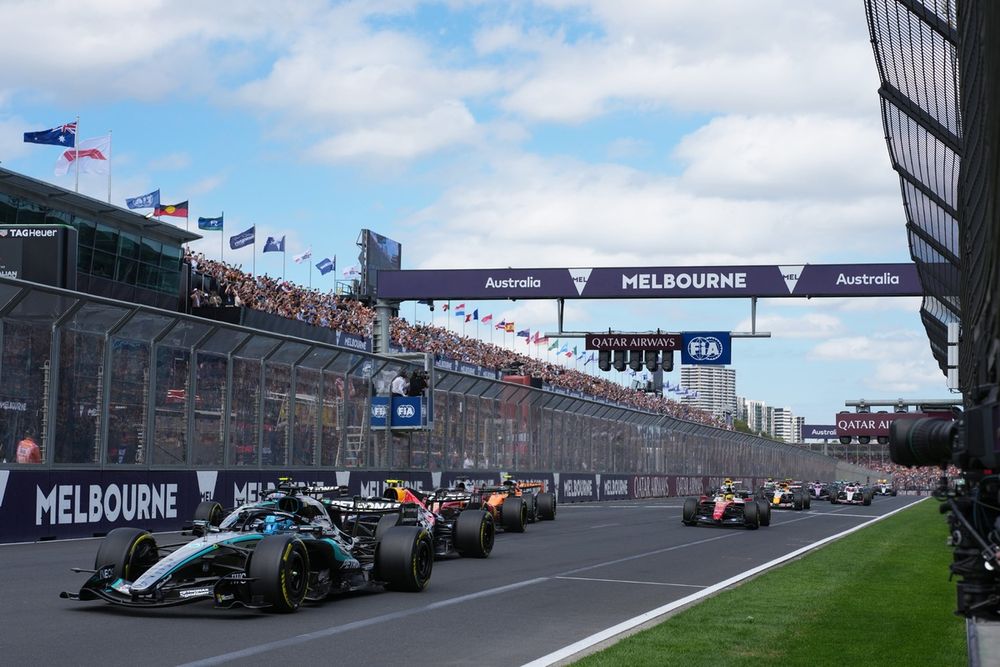
The position of the timing line at Albert Park also played a factor in the start issues
Photo by: Jayce Illman / Getty Images
Max Verstappen, another driver who arrived on the grid with a depleted battery, also put the onus on the governing body to make the necessary changes.
“There are a few simple solutions, but they need to be allowed by the FIA with the battery-related stuff because, yes, starting with a 0% battery is not a lot of fun and also quite dangerous,” he said in the pre-China press conference.
“So we are in discussions with them to see what can be done because you could see we almost had a massive shunt in Melbourne in the start. Now some of that is related to batteries.
“Some, of course, that can happen with an anti-stall. But you could see a lot of big speed differences because I was not the only car that had almost, let’s say, no battery, or 20, 30%. This is something that I think can be easily fixed.”
Who is responsible for the fix?
There are options, but it is not entirely up to the FIA to implement them. The current pre-start procedure – in which the signalling panels flash blue five seconds before the starting lights go on, enabling drivers to rev their engines to spool up their turbos – was only adopted after much wrangling. Then the blockage was Ferrari, which had anticipated the issue of turbo lag affecting race starts and had designed its engines with smaller compressors.
The issue in Melbourne was essentially another procedural one. Under the 2026 rules the amount of energy each car can harvest per lap is limited; the amount varies depending on the circuit. In Melbourne it was eight megajoules.
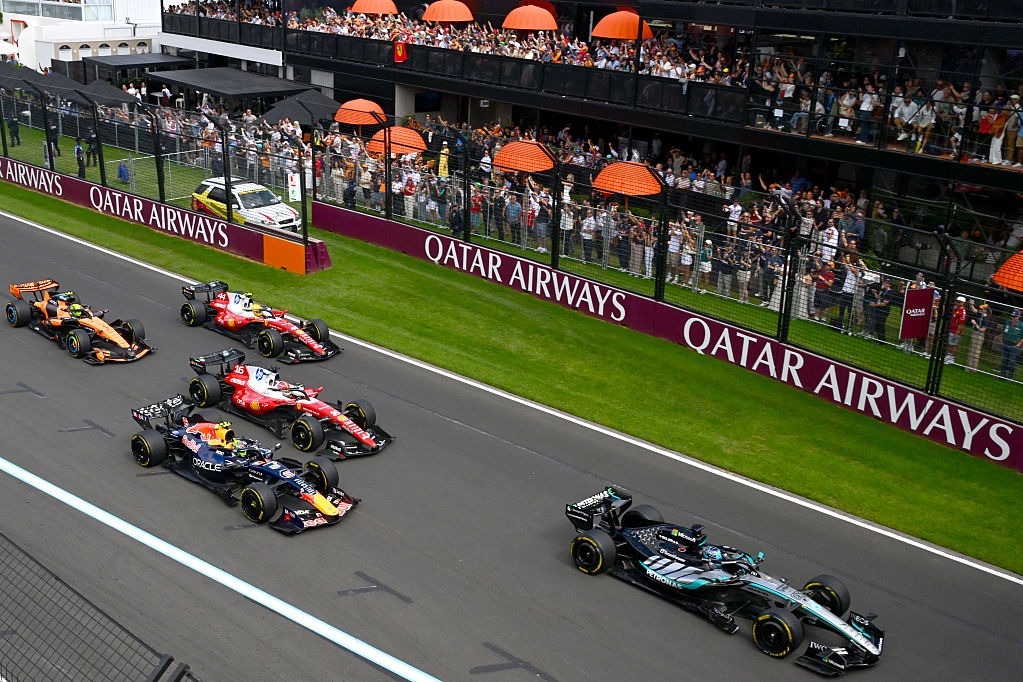
Different battery levels made for a chaotic start in the Australian GP
Photo by: Getty Images
But obviously there has to be a defined point where the lap begins and ends for harvesting purposes.
“I think there was an error that caught a lot of teams out, which was the harvest limit on the formation lap,” said George Russell – another driver who was low on battery at the start.
“The drivers who started in the first half of the grid who were beyond the timing line, they were already within that lap. So when you did your formation lap start, you’re spending your battery and you’re charging your battery, which goes towards your harvest limit.
“The drivers at the back, when they did their formation lap start, they then launch away, they cross the start finish line and then it resets because they’re effectively on the next lap.
“When I got halfway around the track, I could no longer charge the battery. I had no power to do proper burnouts.
“The FIA were looking to potentially adjust that, but as you can imagine, some teams who were making good starts didn’t want it, which I think is just a little bit silly.”
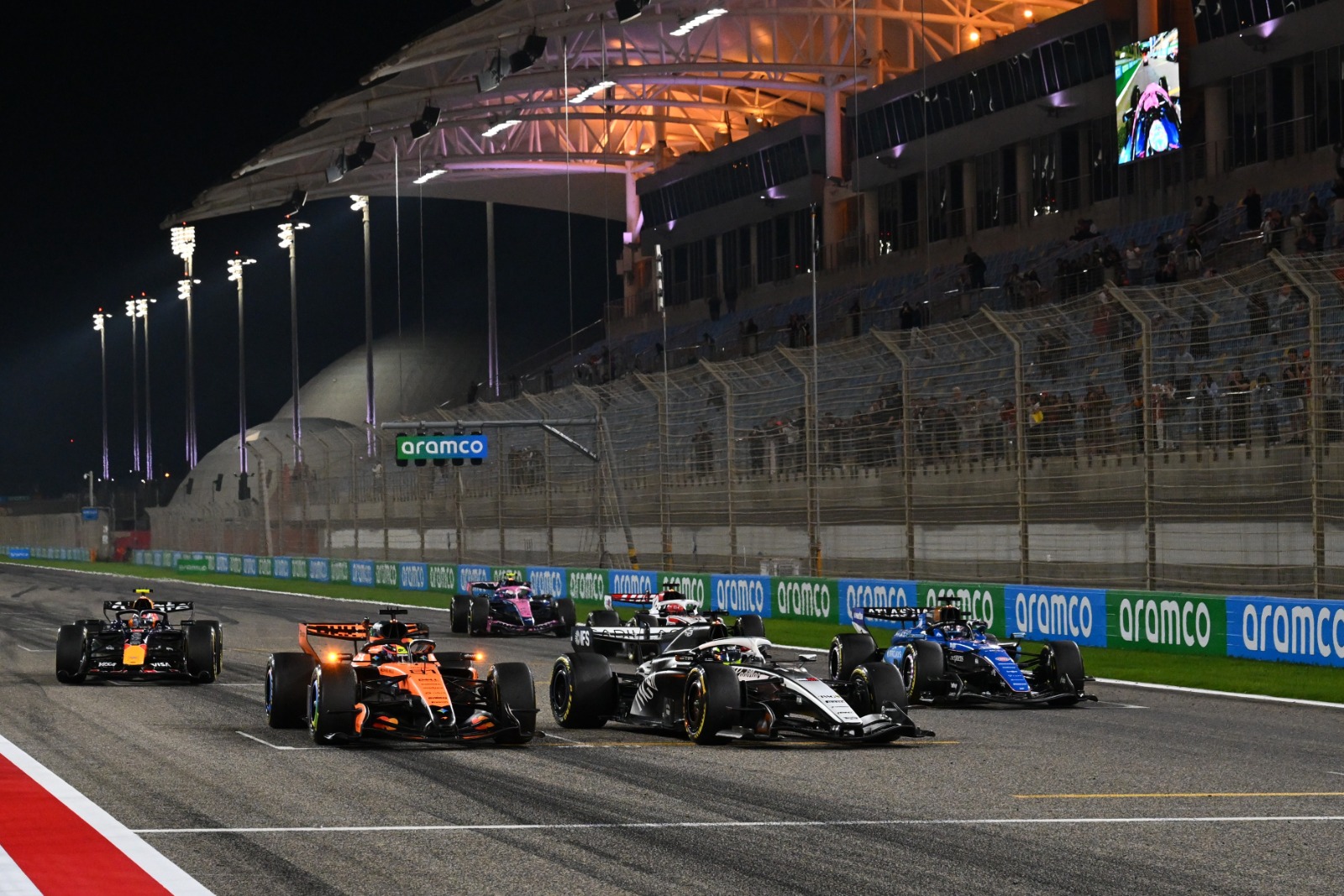
A change to the start procedure was evaluated during the Bahrain test
Photo by: Getty Images
In the absence of the necessary supermajority vote to remove or change the harvest limit, teams and drivers are simply going to have to adjust their procedures to mitigate the problem. Indeed, there are voices – unsurprisingly, perhaps, among teams using Ferrari power – who say this is the best way forward, rather than expending time and energy on reactive measures.
“For me, it’s way, way too early [to change the rules],” said Haas team principal Ayao Komatsu. “All the teams have the same set of regulations. You cannot do a knee-jerk reaction after one event where everybody is learning at such an amazing rate.
“And the formation lap [in Melbourne], we didn’t do a very good job, actually. We actually drained the battery a lot more than we should have done because we weren’t aware of certain things.
“But then you review the data from Sunday. Then now it’s Thursday. The understanding we got from that one formation lap, I’m sure if we did it again, we’d do a much better job, which we should apply here.
“Imagine then if we change the regulation formation lap now, moving the goalpost, right? What are we doing? I’m sure if you make those knee-jerk reactions, you’re going to have unintended consequences.”
Komatsu specifically referenced the imbroglio on Saturday morning in Melbourne when the FIA announced an immediate change to one straightline mode area on safety grounds, only to rescind the directive after further consideration. His contention was that implementing change without consultation merely sows confusion.
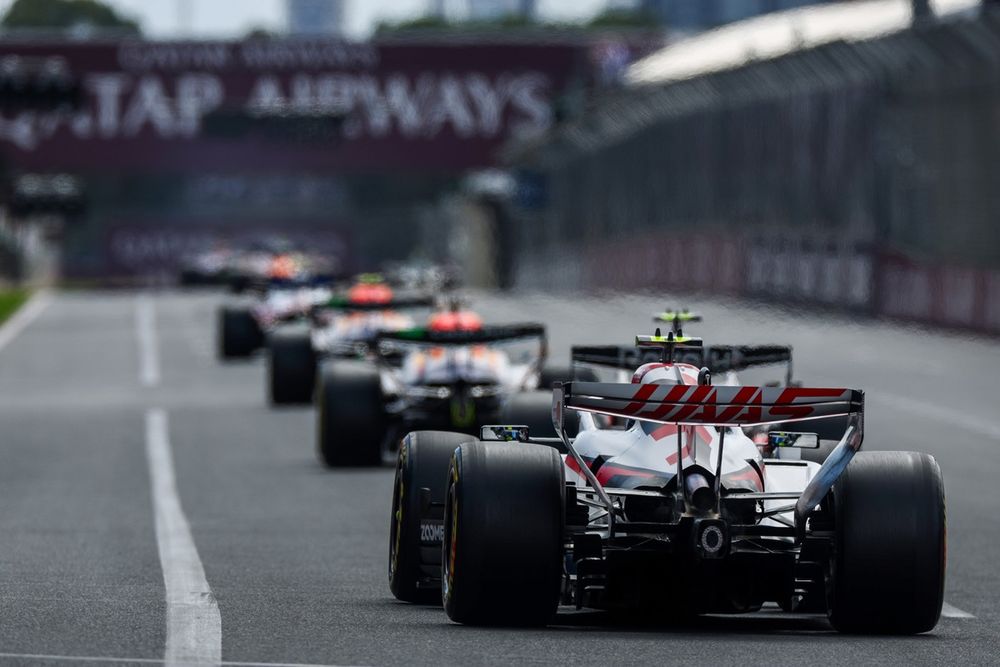
The Ferrari-powered teams have not supported pushes for rule changes
Photo by: Peter Fox / Getty Images
“We had a meeting with all the team principals and the FIA earlier on [today], including the formation lap topic. And then, of course, opinions divided. But what doesn’t change is everybody’s learning quickly, right?” Komatsu said.
“So let’s not just rush into certain knee-jerk reaction because that’s the worst thing that can happen for me. You change something, then engineers need to learn the new things. Drivers need to learn the new things. Oh, wow, then now these unintended consequences – now we introduced a new problem. We need to change it again.
“Let’s not do that. Observe, let the teams learn, give drivers some stability, then they have a chance to get used to these new regulations as well. Then after several races, look at the global picture, not just formation laps.
“What do we need to improve? What is actually safety critical? What is affecting the show? Then take a decision from there.”
From a regulatory point of view, then, formation-lap harvesting is joining an ever-growing pile of questions being kicked down the road. It may just be that in the short term, leaving the regulations as they are is the lesser of several evils: now the teams will not be “caught out”, because the harvest limit is a known issue.
As Russell said, “Now all the teams know the problem, we’ll just drive around it, but it’s just creating a bit of unnecessary complications to something that doesn’t really need to be there…”
We want to hear from you!
Let us know what you would like to see from us in the future.
– The Autosport.com Team
