
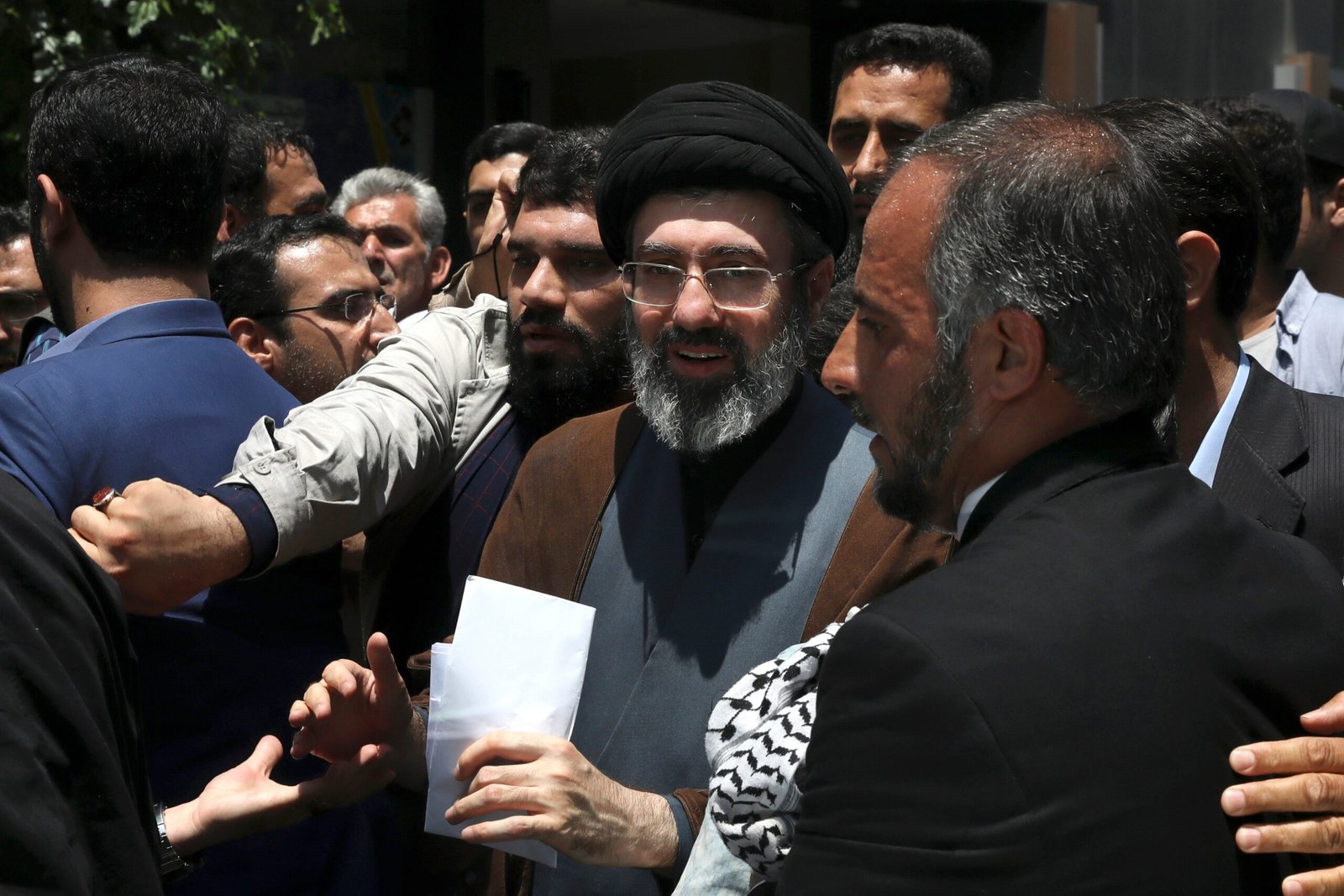
Iran announces Mojtaba Khamenei as new supreme leader Iran’s Assembly of Experts announced this Sunday (8) the appointment of Mojtaba Khamenei, 56, as the country’s new supreme leader, according to state media. He will replace his father, Ayatollah Ali Khamenei, who has held the position since 1989. The assembly is made up of 88 Islamic clerics, and its main responsibility is to choose the supreme leader who, in practice, concentrates power in Tehran. The last time the body had to deliberate on the election of a leader was more than 36 years ago, in 1989. Dominated by the Shiite current of Islam, Iran considers political power inseparable from religion. Therefore, all the main candidates for the post are religious, and the majority receive the title of ayatollah. See who Mojtaba Khamenei is: Mojtaba Khamenei, son of Ali Khamenei and candidate for Iran’s new supreme leader. Photo from 2019. AP Photo/Vahid Salemi/File Even though he holds the title of Ayatollah, Mojtaba is an intermediate-level cleric and is one of the most influential figures in the Iranian clerical establishment. He lost not only his father in the bombings on the 28th, but also his mother, his wife and a young son, according to the Iranian press. Mojtaba is known for having a hard-line stance and has close ties with Iran’s elite Revolutionary Guards, considered the most powerful political-military force in the country and a central player in the defense of the regime. For years he has been considered one of the main candidates to succeed his father. Despite being very powerful behind the scenes, the fact that he is the son of his predecessor weighs against him. The passing of power from father to son is not well regarded within the Shiite current of Islam. According to The New York Times, Mojtaba is discreet and rarely seen in public. He built influence mainly within his father’s cabinet, where he was said to have participated in coordinating military and intelligence operations. He is also known for teaching at Shiite seminaries, an activity that helped consolidate his position within Iran’s religious hierarchy. Despite his influence in power circles, little is known about his political positions or leadership style outside the regime’s closest core. Experts interviewed by the newspaper say that his choice represents a clear sign of continuity in the Iranian political system, especially at a time of strong external pressure and military escalation in the region. Still, his rise could generate controversy both inside and outside Iran, as the 1979 Islamic Revolution overthrew a monarchy and promised to prevent the hereditary transmission of power. Mojtaba is also associated with accusations of indirect participation in the repression of protests in Iran, especially during the so-called Green Movement of 2009, when demonstrations contested the re-election of then-president Mahmoud Ahmadinejad. Critics claim that forces linked to the regime, including paramilitary militias, acted to contain the protests. READ ALSO: War in Iran: Is the Middle East tourism boom over? Trump says Iran’s next leader won’t last long without his approval ‘Day turns to night’ in Tehran after Israeli attacks; Iran warns residents of risk of acid rain Oil depot in Iranian capital engulfed in fire
Source link
Who is Mojtaba Khamenei, Iran’s new supreme leader?
18
