
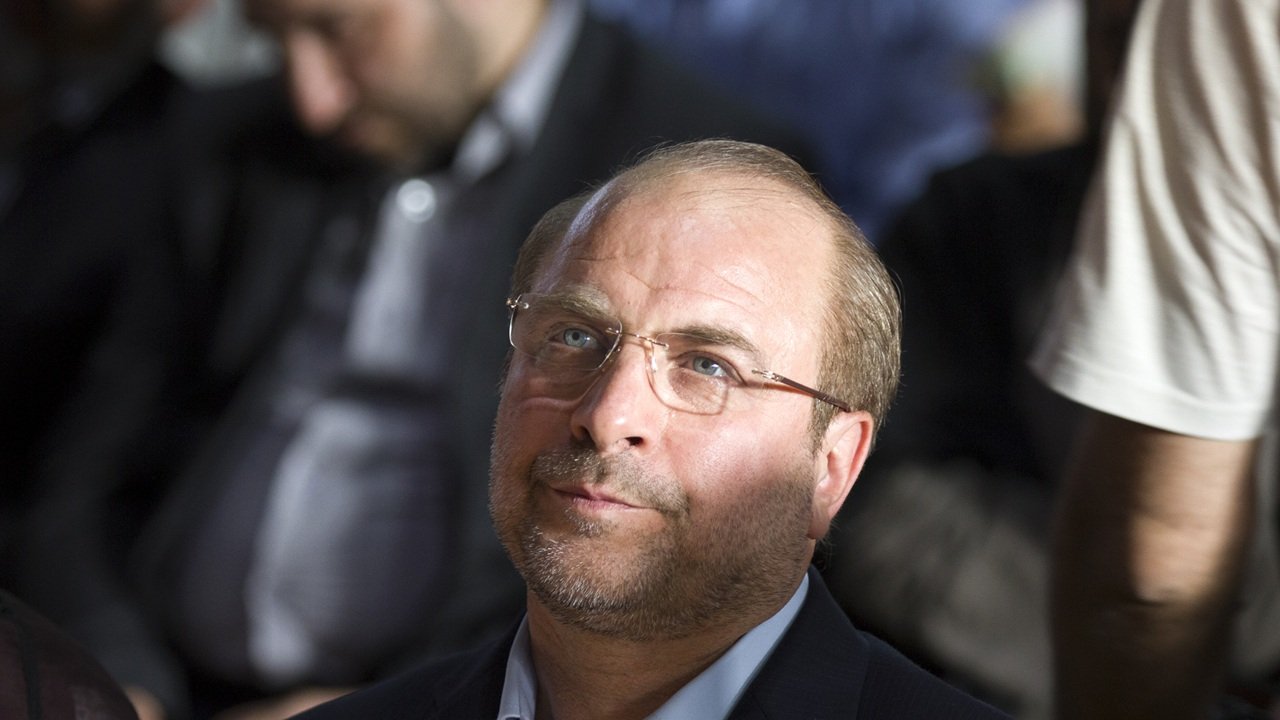
On Monday (23), in a conversation with journalists, American President Donald Trump stated that the United States is negotiating with an “important figure” in the Iranian regime to try to end the war, but that this person would not be the new supreme leader of the Persian country, Mojtaba Khamenei.
Although Trump and other members of his administration have not confirmed it, Politico reported in a report this week that Washington is reportedly evaluating the president of the Iranian parliament, Mohammad Bagher Ghalibaf, as a potential partner and even future leader of the country.
The idea would be for Ghalibaf to play a similar role to that of dictator Delcy Rodríguez has been exercising in Venezuela since the capture of Nicolás Maduroin January: a less radical interim leadership, willing to talk to Washington (and meet its demands) while not representing a sudden change of regime, avoiding internal conflicts.
Who is Ghalibaf
Ghalibaf, 64, had a military career, fighting in the Iran-Iraq War (1980-1988) and serving in the feared Islamic Revolutionary Guard Corps (whose Air Force he commanded between 1997 and 2000), was commander of the Iranian Police Forces, mayor of Tehran (2005-2017) and is now a professor at the University of Tehran.
He has been President of Iran’s Parliament since 2020 and was a candidate in three presidential elections, losing in all of them. In the most recent dispute, in 2024, he came in third place, with 14% of the votes.
Analysts point out that Ghalibaf has great influence in various spheres of the regime and would be less ideological than other names in the Islamic dictatorship, which would make him attractive to the United States.
“He is the one in charge of everything,” said Hamidreza Azizi, a researcher at the German Institute for International and Security Affairs, in an interview with CNN International. “For him, the ends justify the means.”
Ghalibaf was proud of having attacked protesters
Despite this theoretically more pragmatic profile, Ghalibaf has a reprehensible record in the area of human rights: he supported the regime’s violent repression of protests in December last year and January this year and, in an audio from 2013, bragged about having attacked protesters when he served in the Revolutionary Guard.
“There are photographs of me available, showing me on the back of a motorbike, crashing [nos manifestantes] with wooden sticks. I was among those who participated in the street attacks and I am proud of that,” said Ghalibaf.
Further evidence that the speaker of Iran’s parliament is far from moderate is that he attended the funeral of the former leader of the Lebanese terrorist group Hezbollah (backed by Tehran) Hassan Nasrallah and senior leader Hashem Safieddine, killed in Israeli attacks in Beirut in 2024.
On Monday, he refuted Trump’s statements that negotiations with the regime are progressing.
“There were no negotiations with the US, and fake news is used to manipulate the financial and oil markets and escape the quagmire in which the US and Israel are trapped,” Ghalibaf wrote on his X profile.
The next few weeks will tell whether he can truly become the “Delcy of Iran.”
