
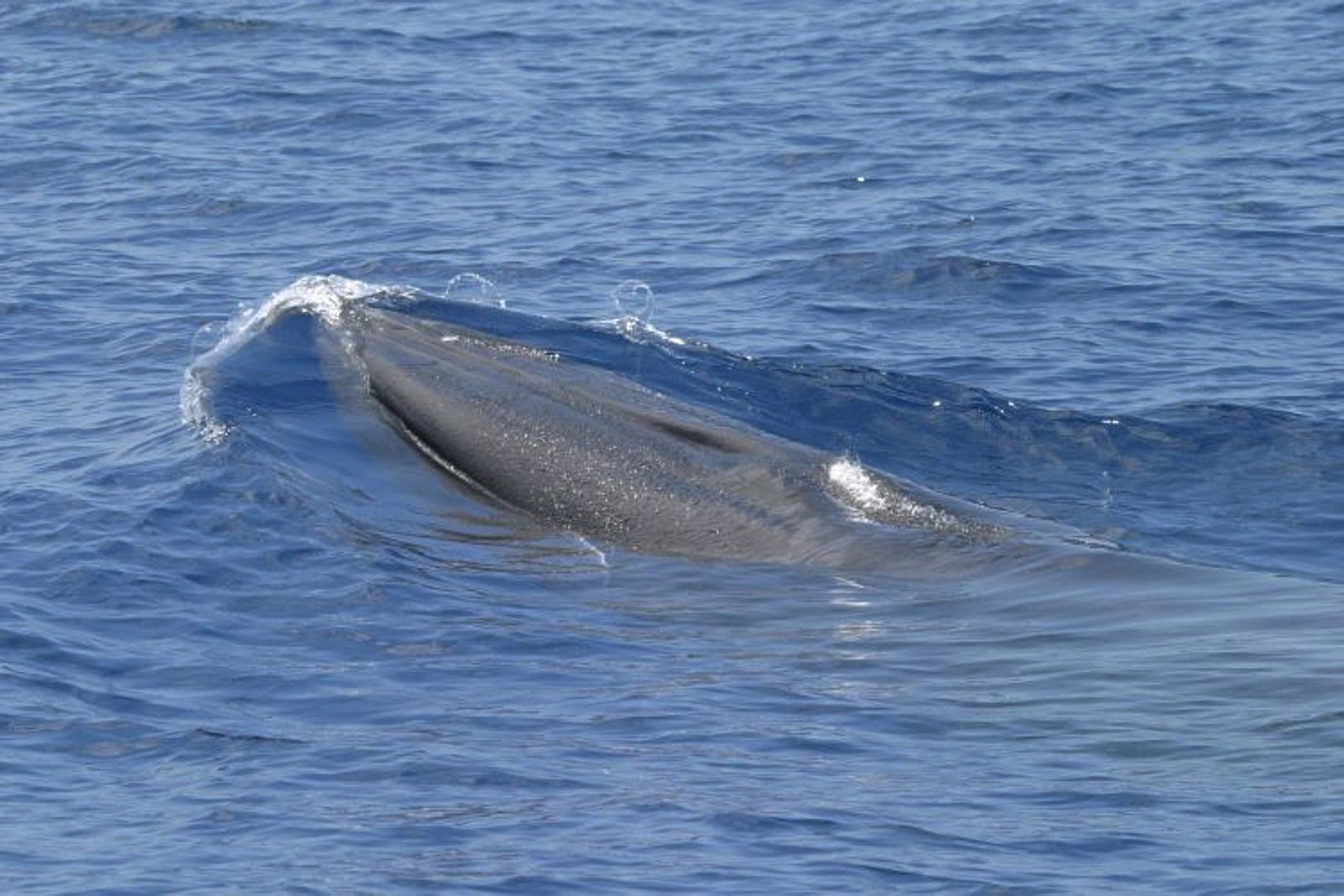
This photo, provided by NOAA Fisheries, shows a Rice whale at the surface of the Gulf of Mexico. NOAA Fisheries (Permit No. 779-1633) via AP One of the world’s rarest whale species lives in just one place: the Gulf of Mexico. It is precisely there that plans by the United States government to expand oil and gas exploration place the species at even greater risk of extinction, according to scientists. With an estimated population of less than 100 individuals — and possibly less than 50 —, the species depends on a very restricted area to survive, which makes it especially vulnerable to environmental changes and human action. The species was recently identified and lives in a limited area. Recognized as a distinct species only in 2021, the Rice whale inhabits a relatively narrow strip in the northeast of the Gulf of Mexico, in waters between 100 and 400 meters deep. In this 2024 image provided by NOAA Fisheries, a Rice whale is visible aboard NOAA’s Twin Otter aircraft off the coast of Texas in the Gulf of Mexico. Paul Nagelkirk/NOAA Fisheries (Permit #21938) via AP) The animal’s behavior also contributes to its vulnerability. During the day, the whale dives in search of food —mainly fish with a high energy content— and, at night, it remains close to the surface, where it rests. This pattern exposes it to risks such as collisions with vessels. According to biologist Jeremy Kiszka, from Florida International University, it is a species that “lives quite on the edge”, as it depends on a specific habitat and a restricted diet. Drilling could worsen existing threats The expansion of oil and gas exploration could intensify a series of impacts that already affect the Rice whale. Among the main risks highlighted by experts are increased noise in the ocean —which can interfere with communication and food-seeking behavior—, increased vessel traffic, with the risk of collisions, and the possibility of new oil spills. Furthermore, climate change, associated with the burning of fossil fuels, can alter the habitat of whale prey, reducing food availability. Studies also indicate that a significant part of the already small population may have been affected by the Deepwater Horizon platform disaster in 2010, considered one of the biggest oil spills in history. Oil rigs are visible through the fog near the Flower Garden Banks National Marine Sanctuary in the Gulf of Mexico, off the coast of Galveston, Texas, on September 16, 2023. AP/LM Otero, Archive Other species may also be affected The impacts of exploration are not limited to the Rice whale. Scientists highlight that the marine ecosystem is interconnected, and that changes in one region can affect several species. Potentially threatened animals include sea turtles at risk of extinction, manatees, seabirds, corals and other marine mammals. “The ocean is interconnected,” said Letise LaFeir, from the New England Aquarium, highlighting that changes in the Gulf of Mexico could have effects on the entire region. Debate involves economy, energy and environmental protection The discussion takes place in a context of pressure to increase energy production, driven by international conflicts and rising oil prices. US authorities are even evaluating legal mechanisms that could allow the relaxation of protection rules for endangered species in the name of economic interests and national security. Experts, however, warn that decisions of this type could set precedents and increase the risks for species that are already threatened. “If this can be done in the Gulf, no species is completely safe,” said environmentalist Michael Jasny of the Natural Resources Defense Council. See the videos that are trending on g1
Source link
What is known about the Rice whale, a rare species threatened by US oil expansion plans
34

previous post