
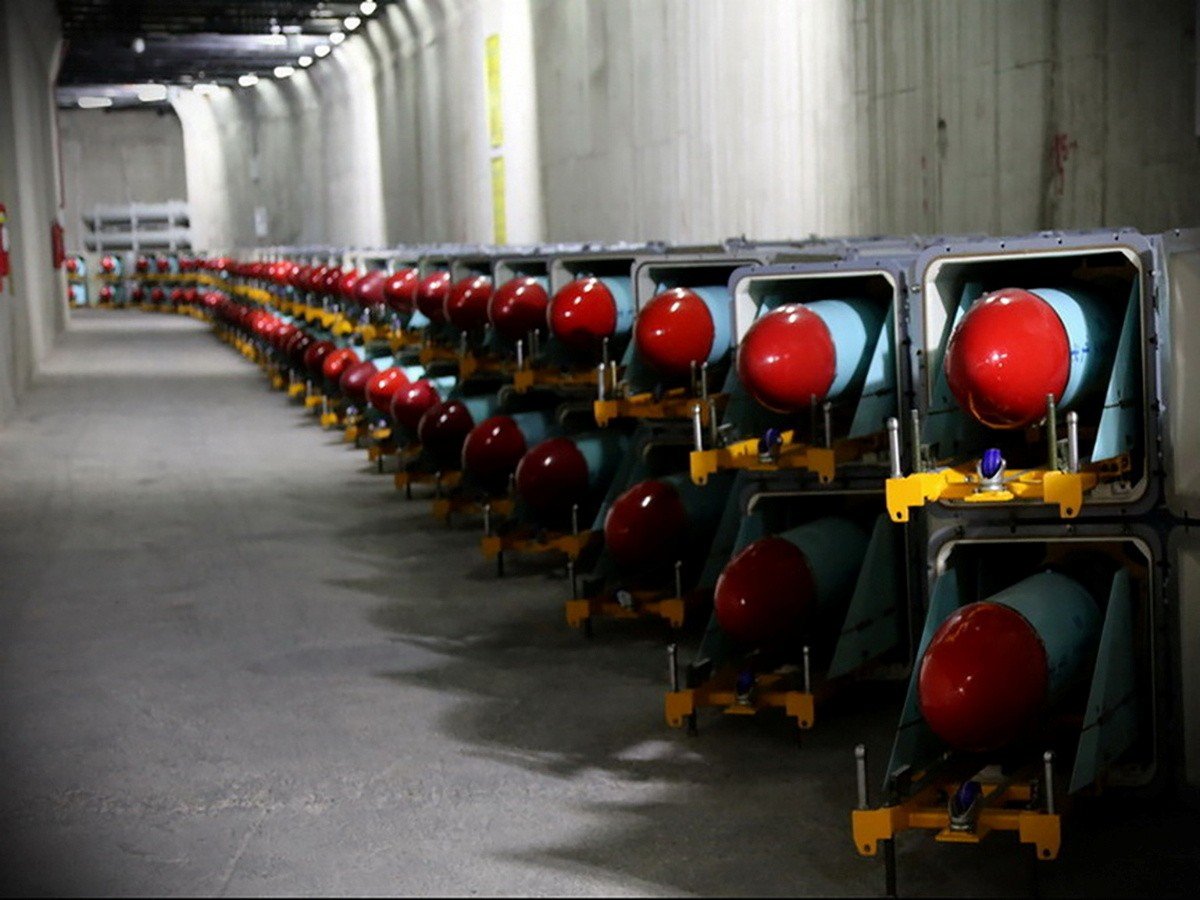
Iranian missiles photographed in Iran’s Revolutionary Guard ‘Missile City’ IRGC/WANA (West Asia News Agency)/Handout via Reuters Iran keeps secrets underground in responding to joint attacks by Israel and the United States during the war: the so-called “missile cities”. These are underground military complexes used to store, manufacture and launch strategic weapons. Controlled by the Islamic Revolutionary Guard Corps, these bases are considered central to the country’s defense and deterrence strategy. Follow the news of the War in Iran in REAL TIME. The facilities are located in mountainous regions, such as the Zagros and Alborz mountain ranges. The rugged terrain helps hide the structures, making them difficult to detect by satellites and surveillance systems. Built to withstand attacks, many of these bases are up to 500 meters deep and are protected by layers of reinforced concrete and the mountain rock itself, which reduces the impact of high-powered bombs. See the videos that are trending on g1 The size and complexity earned them the nickname “cities”. The locations have their own energy, water and air purification systems, as well as accommodation capable of housing military personnel for months. Tunnels that stretch for kilometers allow the internal transportation of weapons by rail. According to Iran, there are hundreds of these facilities spread across the country. They store short- and medium-range ballistic and cruise missiles. With a range of around 2,000 kilometers, these missiles are capable of hitting targets in countries such as Israel and Saudi Arabia, but can reach more distant points in Asia and Europe. Launches can be made by vertical silos, which allow firing in sequence, or by mobile launcher trucks. These vehicles can operate from the underground complexes themselves or in nearby areas. ‘Missile Cities’ in Iran have weapons with images of the country’s political and military leaders IRGC/WANA (West Asia News Agency)/Handout via Reuters The bases are considered priority targets by countries such as the United States and Israel. Estimates indicate that Iran has between 2,000 and 3,000 missiles, most of which are stored in these locations. Analysts say the location of many of these structures is unknown. Experts say that, so far, there is no evidence of a direct link between these bases and the Iranian nuclear program. The current arsenal is made up of conventional explosives, although some models have the technical capacity to carry nuclear warheads in the future.
Source link
What are Iran’s ‘missile cities’, underground fortresses in the heart of the mountains and important ‘weapons’ in war
24
