
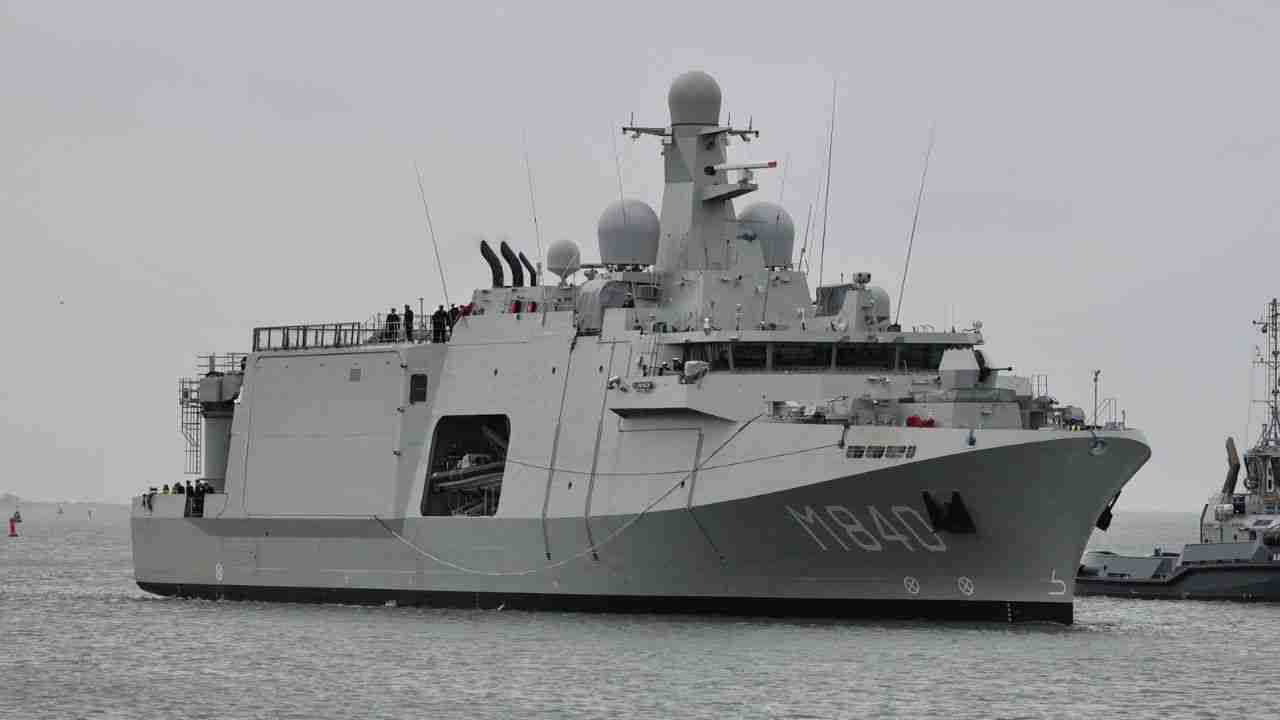
The mine countermeasures ship Vlissingen was delivered on February 27, 2026, in Den Helder, marking a breakthrough in the binational rMCM program between Belgium and the Netherlands.
The vessel is the second of the class and the first destined for the Royal Netherlands Navy, consolidating a new chapter in European naval cooperation.
The project is led by the Belgium Naval & Robotics consortium, which brings together Naval Group and Exail. Military authorities and company executives highlighted that the delivery symbolizes an unprecedented level of trust between the two countries, as Belgium, as the lead nation in the program, coordinated the construction of a ship for the Dutch navy, an achievement considered historic within BeNeSam cooperation.
The Vlissingen represents a paradigm shift in mine warfare by operating with completely unmanned systems, keeping the crew a safe distance from threats. The vessel is capable of transporting and launching surface, underwater and aerial drones, as well as employing robotic systems to detect, classify and neutralize mines. According to those responsible for the program, the method can multiply the speed of operations tenfold compared to traditional models.
+Israel reinforces defense forces with dozens of vehicles and new military shipment
Measuring 82.6 meters long and displacing 2,800 tons, the ship was designed to withstand underwater explosions and operate with reduced acoustic, electrical and magnetic signatures. Inserted in a tripartite agreement signed in 2023 between France, Belgium and the Netherlands, the rMCM reinforces European industrial and military integration, in addition to contributing to NATO’s operational readiness in the maritime environment.
Source: Naval News | Photo: X @kon_marine | This content was created with the help of AI and reviewed by the editorial team
The new mine countermeasures vessel Vlissingen has arrived in Den Helder. As the first ship of the Vlissingen class, it marks a new working method: using unmanned systems above, on and under water to detect and neutralize mines while the ship remains at a distance. ⚓️ pic.twitter.com/8WzUQ0YOQH
— Royal Navy (@kon_marine) February 27, 2026
