
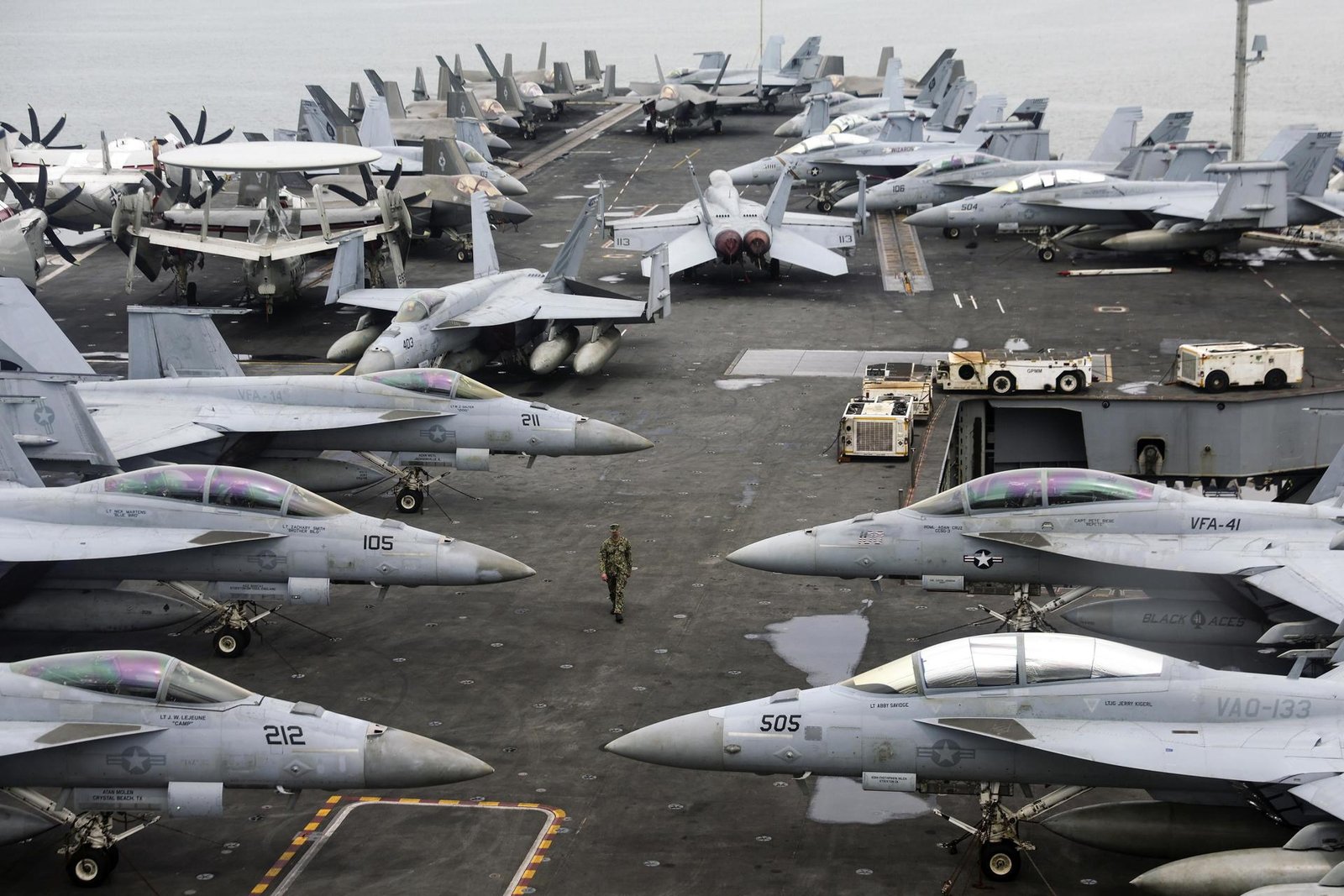
5th generation stealth fighters, Tomahawk missile salvos, B-2 stealth bombers, advanced missile detection and electronic warfare planes. These and other weapons formed the first wave of attacks that struck more than 1,000 targets in Iran in the first 24 hours of the war in Iran.
The start of the American offensive was detailed by General Dan Caine, head of the US Joint Chiefs of Staff in an interview on Monday (2). This information, combined with data released by the Israel Defense Forces, provides an overview of the initial phase of the military offensive in Iran.
See below what is known about the attacks.
SEE ALSO:
-
Trump says it is “too late” to negotiate with Iran after military offensive
-
What were the US and Israel targets in the attacks on Iran?
Starting order
According to General Caine, President Donald Trump authorized the attack on Iran at 3:38 pm (1:38 am on Saturday in Tehran) on Friday (27). Trump’s order to US Central Command was: “Operation Epic Fury is approved. No abortion. Good luck.”
According to Caine, the first steps were to put anti-aircraft defense weapons on land bases and American vessels in readiness. Pilots reviewed images of their targets and went over the attack plan. Fighters began to be loaded with missiles and refueling planes were prepared for takeoff.
The aircraft carriers Abraham Lincoln and Gerald Ford then sailed to their launch points, the ideal position for aircraft to take off. Caine said the aim was to act with “speed, surprise and violence”.
Synchronized wave attack
The first attacks were virtual. US Cyber Command and Space Command launched (non-kinetic) electronic warfare and hacking attacks to disrupt Iran’s communications and radars. The idea was that Iranian outposts would report aircraft sightings and commanders would only realize that the country was being attacked when it was too late to protect the initial targets.
At around 9:45 am in Iran (1:15 am in the US) more than 100 American planes and salvos of Tomahawk missiles, launched from US warships, formed a synchronized wave of attacks. The Americans initially hit Iran’s southern flank and moved on to the central region of the country.
The Israel Defense Forces said it sent about 200 aircraft that took off from the country’s air bases, traveled to Iran and began its attack from the west. These fighters initially destroyed Iranian air defenses and air bases. This opened the way for bombers whose mission was to eliminate the Iranian regime’s political elite, especially in the capital Tehran.
The Israeli government had announced on Saturday (28) that the initial plan for a joint attack during the night was delayed to obtain a surprise effect.
US General Caine said the attack took place in broad daylight due to a “trigger event conducted by the Israel Defense Forces, enabled by the US intelligence community”.
According to military analysts, these statements are a reference to the fact that American intelligence agencies discovered that the then supreme leader of Iran, Ayatollah Ali Khamenei, would meet with members of the National Security Council leadership at 9:40 am local time in a residential complex.
The “triggering event” was the possibility of eliminating Khamenei at the very beginning of the offensive, according to the American newspaper New York Times. The tactic worked and the death of Iran’s supreme leader was confirmed on Saturday.
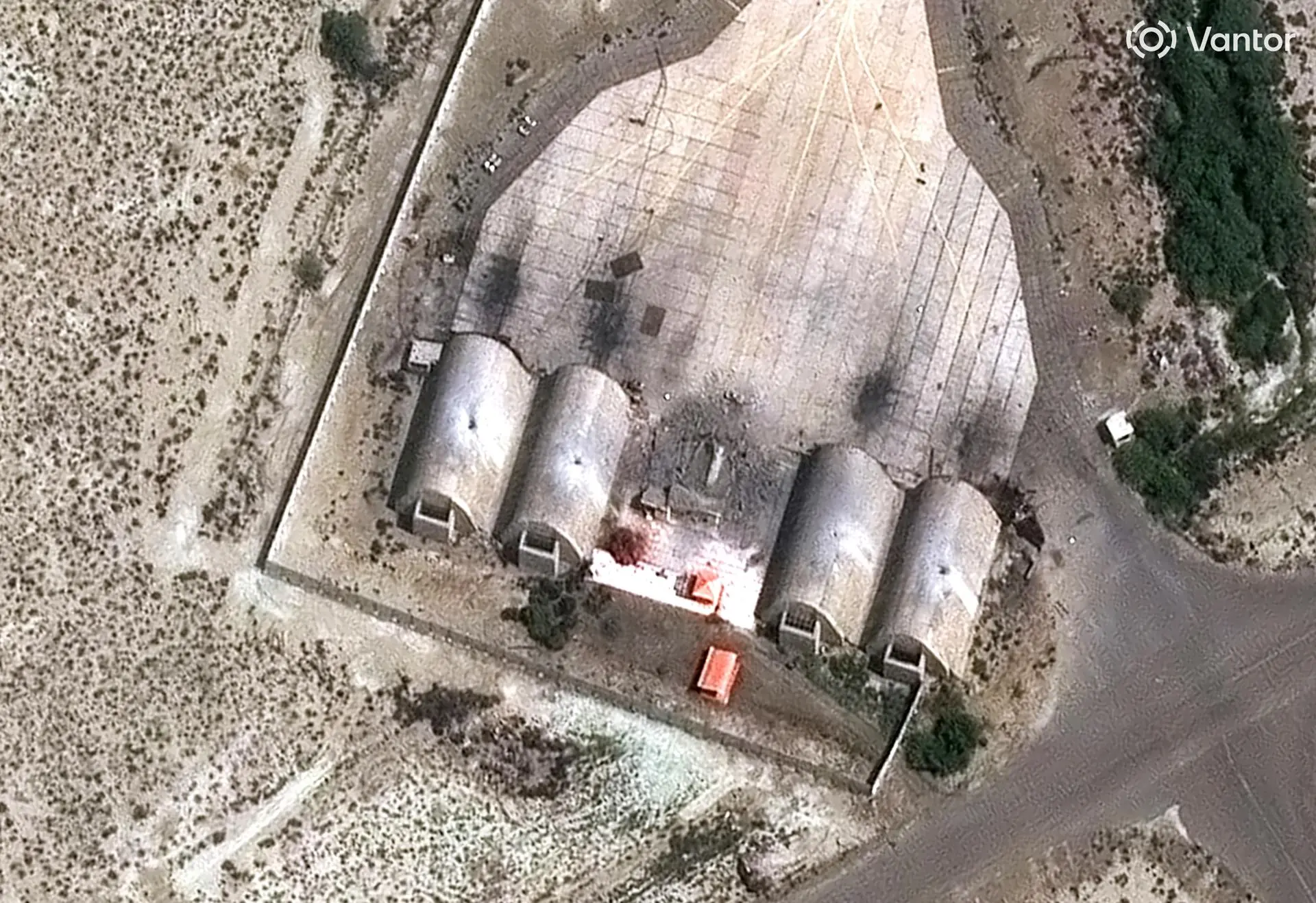 Satellite images show the result of an attack by Americans and Israelis on the Konarak base in Iran (Photo: SATELLITE IMAGE 2025 VANTOR/EFE)
5th generation fighters and anti-radar planes
While the Israelis focused their attacks on eliminating the Iranian regime’s political and military elite, the United States focused its bombings on destroying buildings and structures used in command and control of Iranian forces, naval bases and the navy, missile launching equipment and structures, and locations used by the Iranian intelligence structure.
General Caine said that 4th and 5th generation fighters were used in these attacks. The most advanced are the 5th generation, represented in US forces by the F-35 and the F-22 Raptor.
They differ mainly from “normal” fighters in that they are invisible to enemy radar and have advanced sensors and communication systems that make joint attacks more efficient. They are being used in Iran mainly to attack anti-aircraft defense systems, warships and as an escort for strategic bombers, as they have a high capacity to shoot down missiles and “invisibility”.
The fourth generation planes mentioned are mainly the F-15 and F-14. They were built to surpass previous generations of fighters in aerial maneuverability and versatility to hit both other aircraft and targets on the ground. They replaced fighters from the Korean and Vietnam wars, whose capabilities were based especially on speed and long-range combat, and today they are the attack aircraft that the US has in greatest quantity.
They are mainly used to bomb military installations such as bunkers, ammunition depots, weapons factories and ballistic missile launch structures. They generally act after 5th generation fighters and Tomahawk missiles have already destroyed anti-aircraft defenses.
Another type of 4th generation fighter that has played an important role in the air campaign is the F-18 Growler. It is launched from aircraft carriers and has an electronic warfare function. Emitting high-frequency radio waves, it interferes with enemy radar. Iranian operators begin to receive noise and false target information on the radar, which facilitates the infiltration of attack planes.
General Caine stated that on the first day of combat the US obtained so-called local air superiority. In other words, the planes of the US-Israel coalition could fly with an advantage over the Iranian ones, increasingly degrading the country’s air defense capacity.
Israel declared on Sunday (1) that it had achieved “air supremacy” with the United States, a step beyond air superiority, when Iran’s defense forces no longer pose a threat to American and Israeli planes. However, on Monday (2), attempted attacks by Iranian Sukhoi planes were recorded against countries in the region. This means that the Iranian air force has not been destroyed and still has some capacity to operate.
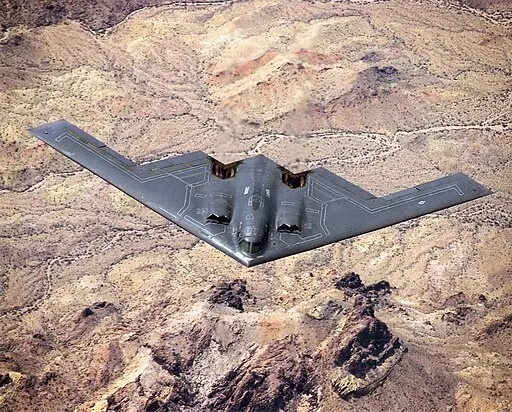 B-2 Spirit bomber is used again in Iran to attack underground bases. (Photo: USAF/Wikimedia Commons)
Strategic bombers and kamikase drones
Another information revealed by General Caine is the use of strategic bombers invisible to the B2 Spirit radar in the current campaign in Iran. They had already been used in the 12 Day War, in June last year, to launch the GBU-57 MOP bombs, the only ones capable of penetrating tens of meters underground to destroy underground bases. The US is the only country that has this military capability. The target at the time was the Fordow base, where Iran was enriching nuclear fuel.
According to the general, these bombers are being launched from American soil and make 37-hour flights to attack targets in Iran. Caine did not make it clear whether the aircraft participated in the first wave of attacks or just the subsequent bombings. He also did not say what the Spirit’s tactical objectives were, but analysts estimate that they are being used again to attack underground bases in Iran.
O think-tank Institute for War Studies also revealed that B1-B Lancer hypersonic strategic bombers, capable of carrying 34,000-kilogram bombs, were used on Sunday (1) to attack Iran’s ballistic missile launch systems. These are the long-range missiles that Iran uses to attack Israel.
The head of the US military also revealed that planes capable of detecting missile launches on Iranian soil are being used on the battlefield. They pass information on to command centers that coordinate the activation of fighters and anti-aircraft batteries to shoot down these missiles and attack the points from where they are being launched.
The US also claimed to be using LUCAS-type kamikaze drones, similar to the Iranian Shahed. These are weapons that are relatively fast and cheap to produce, and attack targets located at long range using swarm tactics. In other words, hundreds of drones are launched at the same time to saturate the enemy’s air defenses.
General Caine stated that the US and Israel have already launched tens of thousands of munitions against Iran. Trump’s President Donald has said that the military campaign could last four weeks.
