
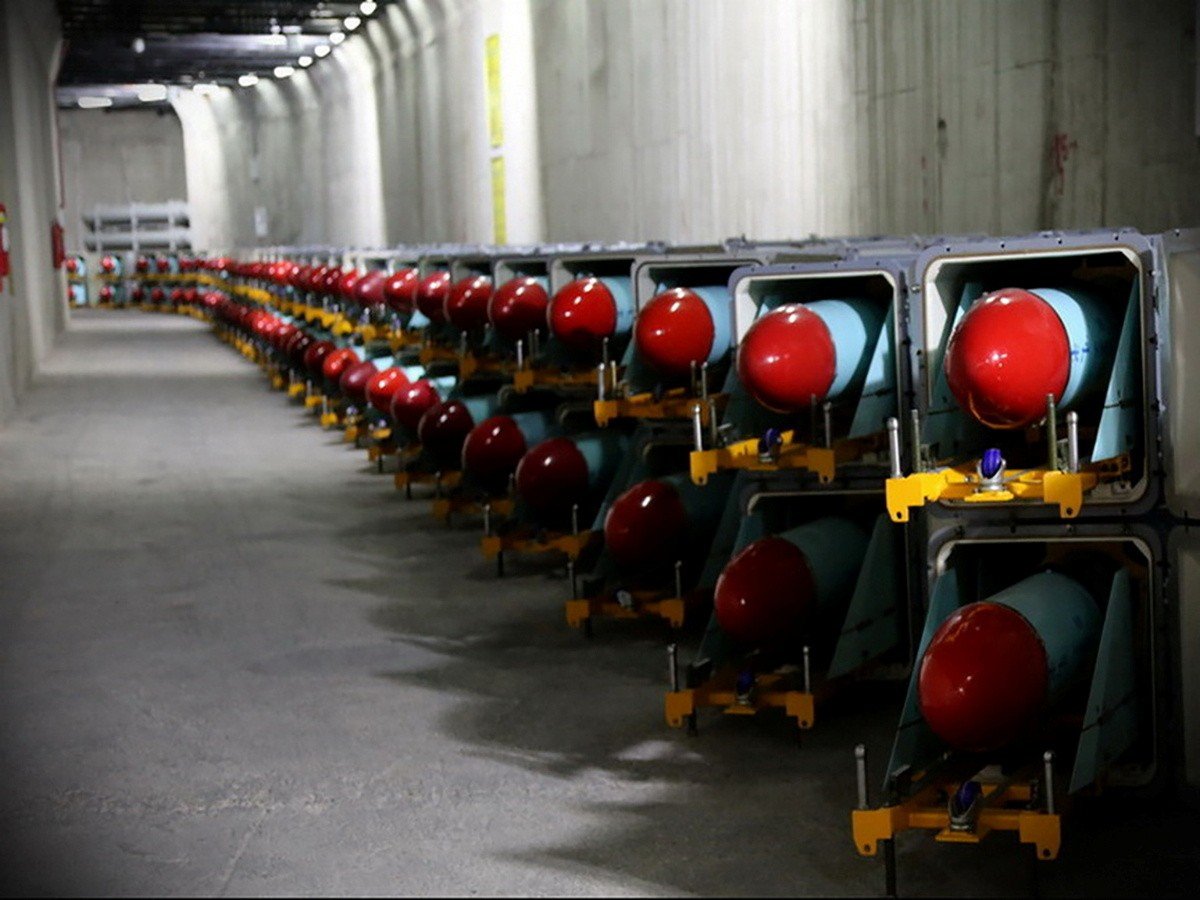
Iranian missiles photographed in Iran’s Revolutionary Guard ‘Missile City’ Iran Revolutionary Guard/Wana/Handout via Reuters About a month after the start of the war, the United States can only determine with certainty that it has destroyed about a third of Iran’s vast missile arsenal, the Reuters news agency revealed this Friday (27). ✅ Follow the g1 international news channel on WhatsApp The situation of another third of Iran’s missile stock is still uncertain, but US bombings likely damaged, destroyed or buried the weapons in underground tunnels and bunkers, according to the agency. The information was confirmed to Reuters by five US officials familiar with US military intelligence information amid the war that the country has been waging with Iran for about a month. The US and Israel bomb Iran daily and one of the countries’ declared objectives is to disable the Iranian missile program, which is one of Tehran’s trump cards. The US Army claimed to have carried out more than 10,000 bombings on Iranian territory since the start of the conflict, while the Israeli Army does not release a general report, but announces daily air attacks on missile launchers and projectile production sites. Even so, the US assessment is that although many of Iran’s missiles are destroyed or inaccessible, Tehran still has a significant stockpile and can recover some of the buried or damaged missiles when the fighting ceases. One of Reuters’ sources said the US intelligence assessment is similar regarding Iran’s drone capabilities, indicating there is some degree of certainty that about a third have been destroyed. The US Army’s assessment seen by Reuters contrasts with superlative public statements by the Trump administration since the start of the war. Officials including Secretary of War Pete Hegseth and President Donald Trump have said the US has obliterated Iran’s military capabilities and that Tehran is ending its ability to fire missiles. Trump even stated on Thursday that Iran had “very few rockets left”, despite having recognized the threat posed by Tehran’s remaining missiles and drones to ships in the Strait of Hormuz. “The problem with the strait is this: Let’s say we do a great job. Let’s say we eliminate 99 percent (of the missiles). 1 percent is unacceptable, because 1 percent is a missile hitting the hull of a ship that costs a billion dollars,” Trump said in a televised cabinet meeting Thursday. What are Iran’s ‘missile cities’, underground fortresses in the heart of mountains and important ‘weapons’ in war Iran’s missiles are prime US target The Trump administration has said it intends to weaken Iran’s military by sinking its navy, destroying its missile and drone capabilities and ensuring that the Islamic republic never obtains a nuclear weapon. US Central Command said its operation, officially called “Epic Fury”, is on schedule or even ahead of plans established before the attacks began on February 28. American attacks hit more than 10,000 Iranian military targets as of Wednesday and, according to Central Command, sank 92% of the Iranian navy’s large ships. The US military has released footage showing attacks on factories that produce Iranian weapons and highlighted that it is not only targeting stocks of missiles and drones, but also the industry that produces them. Still, Central Command declined to say exactly how much of Iran’s missile or drone capabilities were destroyed. One source said part of the problem is determining how many missiles were stored in underground bunkers before the war began. The US has not released its estimate of the size of Iran’s pre-conflict stockpile. Estimates range from 2,500, according to the Israeli Army, to around 6,000, according to some analysts. Iran still fires at neighbors Despite the intense pace of American attacks, Iran has demonstrated that it has not run out of weapons. On Thursday alone, it launched 15 ballistic missiles against the United Arab Emirates, in addition to 11 drones, according to the country’s Ministry of Defense. It also demonstrated new capabilities. Last week, Iranian forces fired long-range missiles for the first time, hitting the US-UK military base at Diego Garcia in the Indian Ocean. Nicole Grajewski, an expert on Iran’s missile forces and the Islamic Revolutionary Guard Corps at Sciences Po university in Paris, said the Trump administration may have overestimated the impact of the strikes on Iranian capabilities. She cited the fact that Iran continues to carry out attacks from the Bid Kaneh military installation, which was heavily bombed. “The fact that they were able to maintain this indicates that the US may have exaggerated the success of the operation,” Grajewski said, adding that he believes Iran still maintains about 30% of its missile capacity. She said Iran has more than a dozen large underground facilities where it can maintain launchers and missiles. “The big question is: did these facilities collapse?”, he added. Iran Tunnels A senior American official expressed skepticism about the U.S. ability to accurately assess Iran’s missile arsenal, in part because it is unclear how many are in underground facilities and accessible in some way. “I don’t know if we will ever have an accurate number,” he said. Defense Secretary Pete Hegseth acknowledged the challenge posed by Iran’s tunnel network in statements on March 19: “Iran is a vast country. And just like Hamas and its tunnels (in Gaza), they have invested resources — aid, economic development, humanitarian aid — into tunnels and rockets.” “But we are hunting these targets in a methodical, relentless and massive way, like no other army in the world can do, and the results speak for themselves,” he said, without detailing the percentage of missiles or drones destroyed. This report is being updated.
Source link
US can only confirm destruction of a third of Iran’s missile arsenal, agency says
48
