
The United States and Israel have carried out a series of attacks against Iran after negotiations over the country’s nuclear program failed.
The offensive triggered a rapid military escalation in the region, with Iran responding through missile and drone attacks aimed at Israel and Middle Eastern countries hosting US military bases.
During operations, the United States employed the system HELIOSa high-energy laser weapon installed on Navy ships. The technology is designed to neutralize drones and missiles before they reach their targets, offering a more precise and lower-cost defense alternative to traditional interceptors.
Experts also highlight the role of military satellites in early detection of attacks. These systems can identify missile launches and locate their launch points, allowing missile defenses to be quickly activated and alert troops on the ground to seek cover.
The war, however, resulted in serious consequences and an international reaction. Israeli attacks in Beirut left hundreds dead, while a bombing that hit a school in southern Iran killed dozens of children and teachers, a case currently under investigation. Faced with the escalation of the conflict, international leaders, such as the Prime Minister of Spain, have criticized the military actions and called for an end to the war.
+ Harley-Davidson reveals new features for 2026 as it faces declining global sales
Source: Unilad | Photo: X @sentdefender | This content was created with the help of AI and reviewed by the editorial team
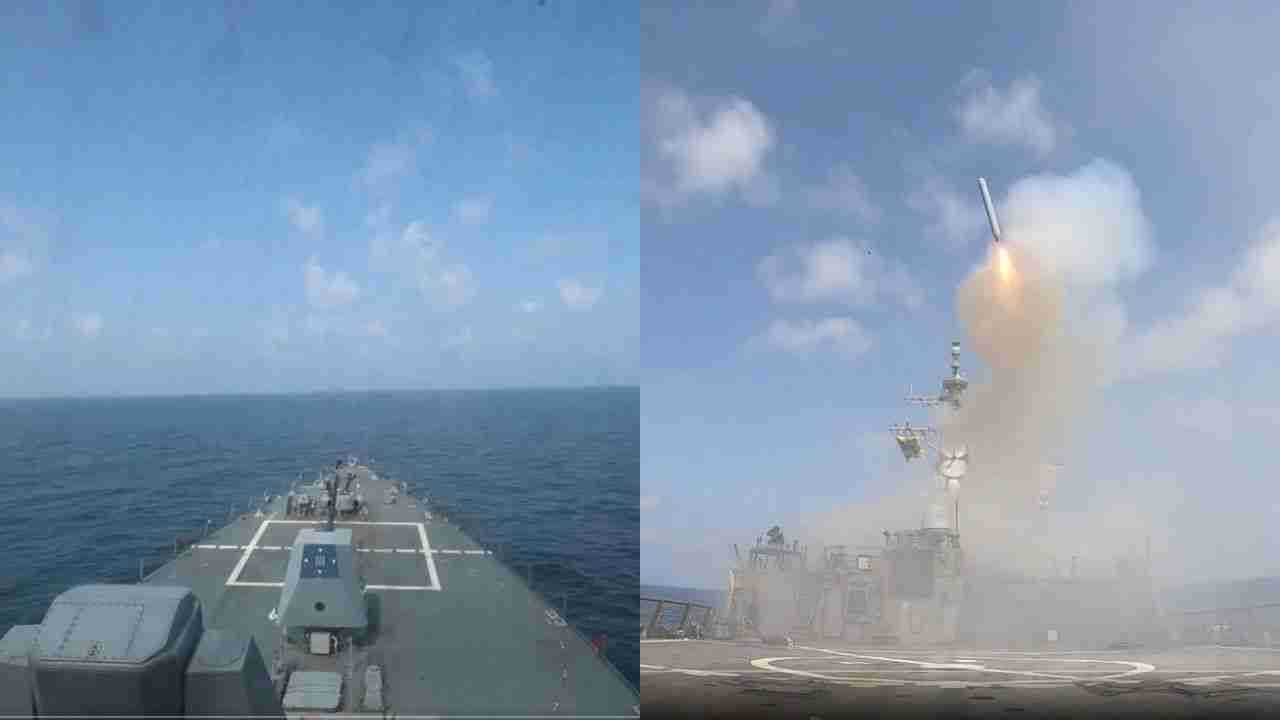
U.S. Central Command (CENTCOM) has published footage showing BGM-109 Tomahawk Land Attack Missiles (TLAM) being launched from Arleigh Burke-class guided-missile destroyers, as well as F-35C Lightning lls and F/A-18E Super Hornet from the USS Abraham Lincoln (CVN-72), during… pic.twitter.com/1PhcUbNR6Q
— OSINTdefender (@sentdefender) February 28, 2026
