
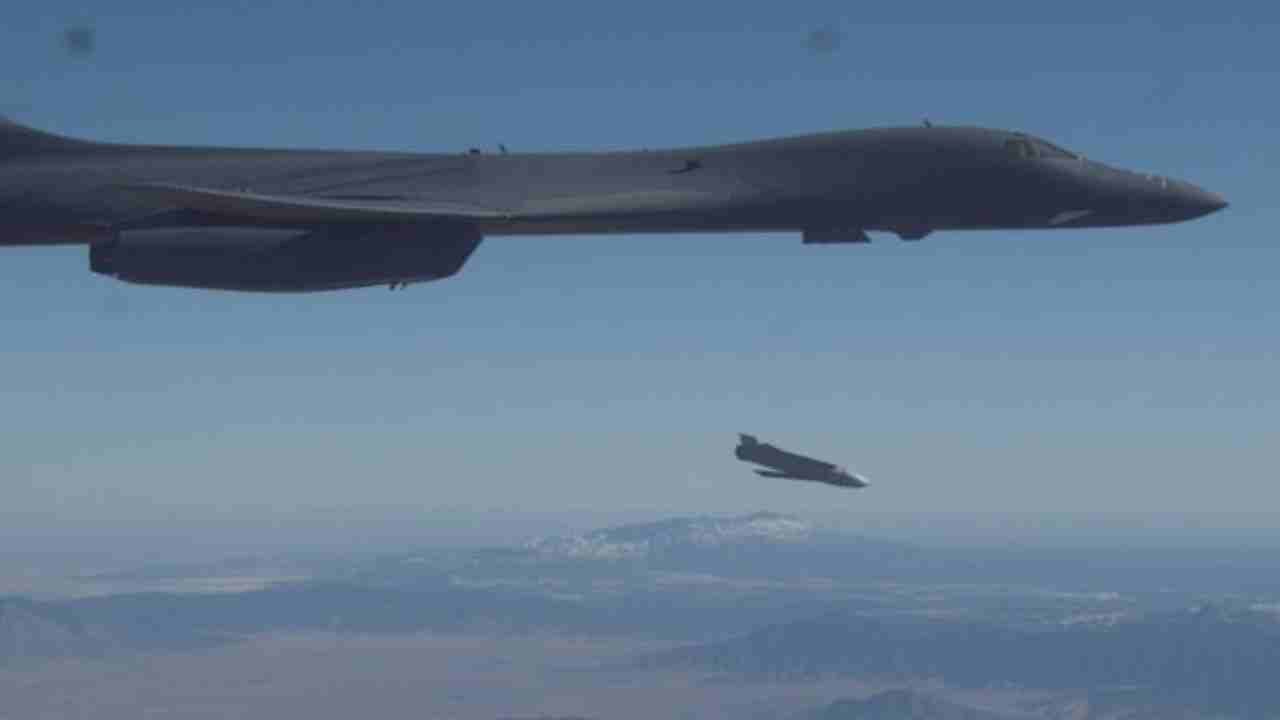
The United States launched a large-scale attack on Iran’s underground missile facilities near the Strait of Hormuz, using high-penetrating bombs capable of destroying fortified structures.
The attack occurred amid rising tensions in the region, which are already having a direct impact on maritime traffic in the Persian Gulf.
According to US Central Command, the targets housed anti-ship cruise missiles that pose a direct threat to international shipping. The aim of the military operation was to neutralize these capabilities and reduce the risk to ships traveling on one of the world’s most important energy transport routes.
The weapons used are a GBU-72 were of a type designed to destroy deep-seated and heavily fortified targets. This type of weapon is used by fighters and bombers and was specifically developed for operations involving heavily defended military installations.
At the time of the strike, the Strait of Hormuz is under a blockade imposed by Iran, which uses mines, drones and ships to significantly affect global energy flows and increase oil prices. In the midst of the crisis, the American government also increased its criticism of its European allies for not supporting efforts to reopen the strategic route.
Hours ago, U.S. forces successfully employed multiple 5,000-pound deep penetrator munitions on hardened Iranian missile sites along Iran’s coastline near the Strait of Hormuz. The Iranian anti-ship cruise missiles in these sites posed a risk to international shipping in the… pic.twitter.com/hgCSFH0cqO
— U.S. Central Command (@CENTCOM) March 17, 2026
+ Ukrainian-British drones can help protect the Strait of Hormuz
Source: New York Post | Photo: X @AFGlobalStrike | This content is generated with the help of artificial intelligence and verified by the editors
