
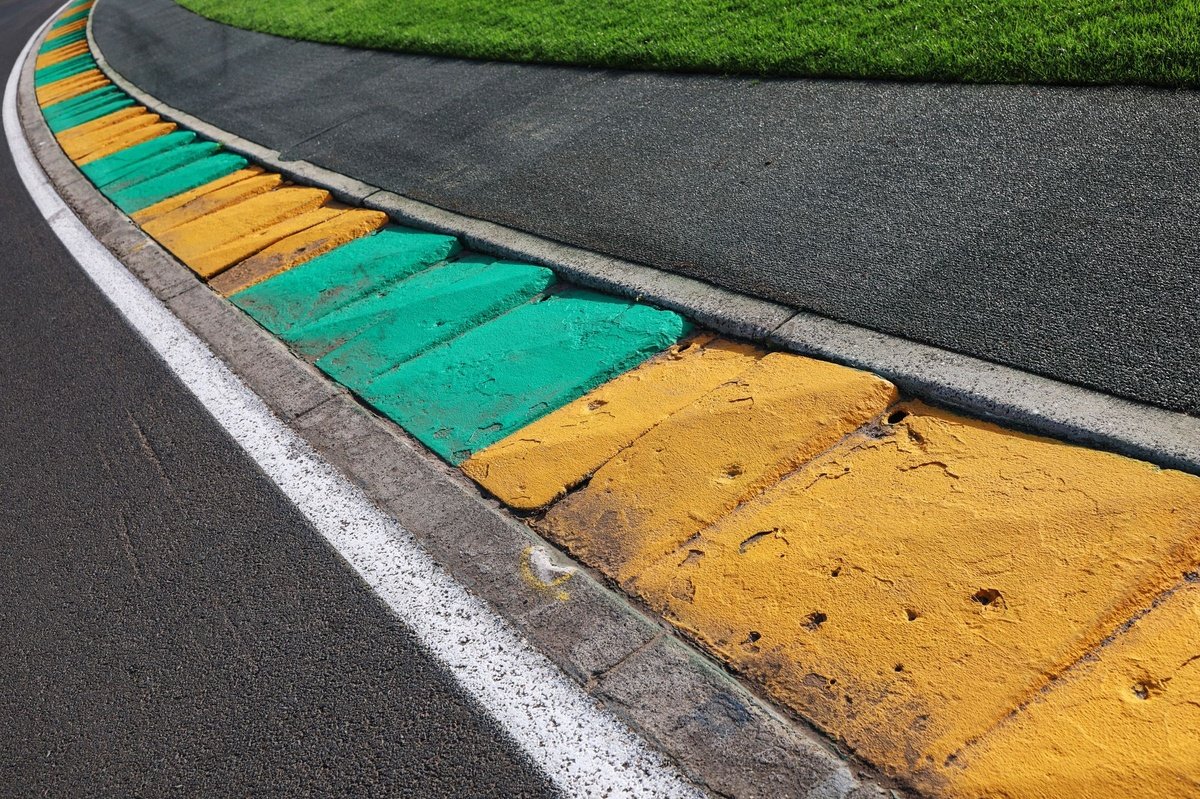
One aspect of Formula 1’s 2026 regulations that has become increasingly evident through feedback from the engineers and drivers is the track-dependent nature of the new cars. There’s a cast of circuits where drivers won’t have to stray too far from their natural driving inputs to harvest energy, and another group of tracks which will make it difficult to charge the battery.
Melbourne fits into the latter camp; since Albert Park was re-profiled ahead of the 2022 season, it has been a much quicker venue; the removal of one of the chicanes on Lakeside Drive changed the transition between the second and third sector into a flat-out stretch with only one braking zone for a high-speed corner.
Beyond Turns 3, 11, and 14, there are few low-speed corners – meaning that the drivers cannot rely as much on braking to recover energy. Instead, super clipping, lift-and-coast, and keeping high revs in the corners will be the key harvesting tools.
This will be especially vital on a qualifying out-lap. Ensuring that the battery is full for the start of the lap will make a driver’s life far easier, as it gives them significantly more latitude to deploy that energy – particularly in the first sector. If that’s not achieved, deployment is reduced, immediately costing lap time.
“You want to start the lap with a full energy pack,” Williams sim driver Harrison Scott told Autosport, in explaining the qualifying challenge. “So that’s super important for lap time, but also these tyres are super critical being in the right temperature window. And managing those two things actually is a real challenge right now.
“I’ll say going through this in two weeks of testing at Bahrain, that’s something that we was working a lot on as a team, and still need to work on doing that process as efficiently as possible because the two things need to happen together. You want to start your first one with full energy and you want the tyres in the correct window.
“To get the tyres in the correct window, you need to use energy. It’s been a very difficult process to manage, but it’s certainly going to come easier as the events get on. We’ve got amazing tools around us to be able to make that process as easy as possible: in our simulations, we can go through a number of different scenarios to make sure that we’re well equipped.”
Watch: Autosport Explains: F1 Sim Development Driver
In addition to the conflicting requirements of tyre warm-up and energy harvesting, the three relevant recharge mechanics work at different times: charging through the corners requires a driver to go slowly as does lifting and coasting, but harvesting off the super clip means a driver needs to have been going quickly on the straights – which in turn costs energy to do.
Variance in speeds will thus be seen over qualifying, which could make it a tricky task for those on hot laps to pick their way through drivers attempting to charge up. This might be especially obvious in the final two corners, as those preparing for qualifying laps will not be running at anything close to full throttle.
Speaking ahead of the Australian Grand Prix, Haas team principal Ayao Komatsu outlined the challenge he expects to see in Melbourne, particularly in balancing the recharge and the tyre preparation.
While teams have tended to use practice sessions to validate new parts and explore tyre strategy, it will now include an exploration in finding that balance between the two areas ahead of qualifying to ensure that the warm-up laps are carried out correctly. Komatsu felt that while qualifying now had the “potential for disaster” if teams cannot get the harvesting and tyre preparation balance right, most will use FP1 to hone in on their run plans for Saturday.
“To charge the battery on the out-lap, certain corners you have to go slow, but certain straight you have to go flat out,” Komatsu explained. “But if you’re letting somebody through at the straight where you should be flat out, you’re [in trouble].
“There’s honestly lots of potential for disaster in qualifying. But again, this is why practice is so important, to be able to simulate that as much as possible. You cannot go into Q1 and this is the first time you actually go qualifying.
“You’ve got to use some of the FP1 sessions as your quali simulation, not necessarily in terms of lap time, more in terms of operation. And then you’ve got to find out how much is that going to sacrifice tyre preparation, and what’s the best trade-off. That’s a big thing. It’s going to be a challenge.”
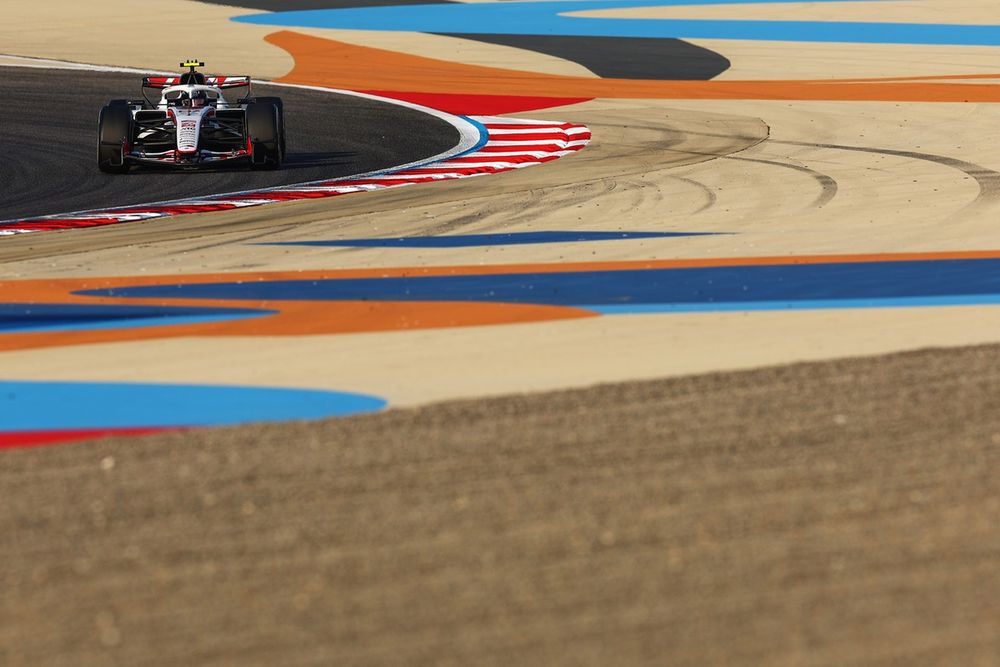
Oliver Bearman, Haas F1 Team
Photo by: Joe Portlock / LAT Images via Getty Images
While a handful of harvesting techniques were seen in Bahrain testing, the Sakhir venue is not one that is expected to be tough on energy management given the plethora of transitions from straights into low-speed corners. Instead, Komatsu likened the anticipated experience in Melbourne to the Barcelona shakedown, particularly with regard to the nature of the final corners.
At Bahrain, a driver does not need to carry as much speed onto the start-finish straight as the final corner is relatively slow – Barcelona’s reinstated double-right, however, does put more weight on the exit speed through Turns 13 and 14. Albert Park should present the same issue.
“Bahrain is so much easier to do,” Komatsu added. “Also in terms of how much energy you can recover, here it’s much more difficult. What kind of corners you have at the last two corners has got a massive impact, so Barcelona is actually a very difficult circuit to open the lap properly Bahrain, less of an issue. Here, it will be a big issue.
“If you don’t carry enough speed, you just never catch up. You have to carry a certain speed, but you don’t want to. That’s before, depending on what kind of traffic you’ve got, the throttle percentage and the MGU-K deployment, recovery, all that is working against each other, if you like, what you need to do.
“So that’s why I think traffic management is very difficult. It’s the same for everyone. Everybody’s got the same issue. You’ll probably hear lots of drivers shouting.”
Whether you’re a fan of the new regulations or not, Saturday will be box-office viewing. Expect surprises – some will fall foul of traffic drudgery, and others will come unstuck with their recharge and deployment.
These processes will improve as time goes on – and they’ll start to become a little bit more natural. But that’s not going to be the case first time out.
We want to hear from you!
Let us know what you would like to see from us in the future.
– The Autosport.com Team
