
Saleh Mohammadi was 19 years old and considered a promise for the wrestling Iranian (Olympic wrestling), a very popular sport in the country and traditionally linked to national pride. A member of international competitions in the youth category, the young athlete saw his sporting career as a chance to build a future outside the political tensions that marked his generation.
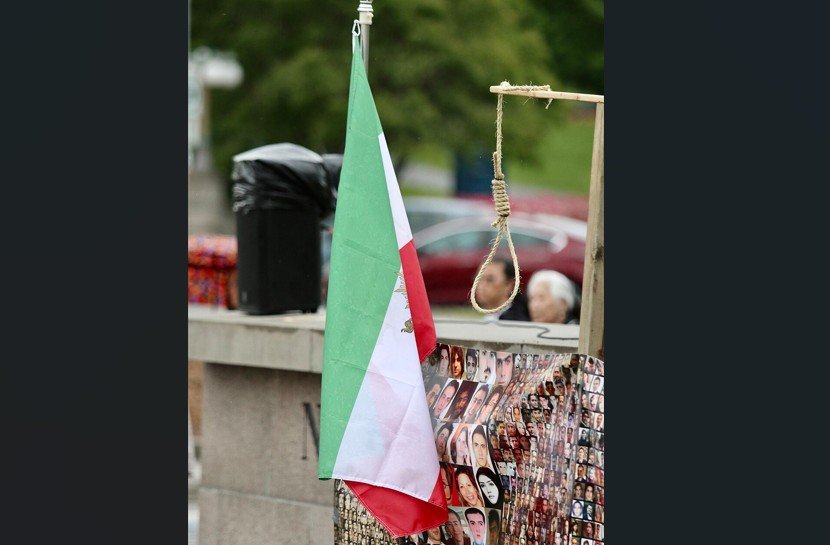
His dream of continuing to compete, however, was interrupted in January, when he was arrested at the height of the Islamic regime’s repression of the protests that spread across the country. This month, Mohammadi was executed by hanging in the city of Qom, south of Tehran, after being sentenced to death in a trial criticized by human rights organizations.
In addition to the athlete, two other young people – Mehdi Ghasemi and Saeed Davoudi – were also executed. Iranian authorities stated that the three participated in the killing of police officers during protests that began in Iran at the end of last year. They were convicted of the crime of “moharabeh”, a term from Islamic law used by the regime to accuse opponents of “waging war against God”, one of the most serious accusations foreseen in the country’s judicial system.
According to international human rights groups, the process against Mohammadi was conducted “acceleratedly and without basic legal guarantees”. Amnesty International reported in February that the athlete was tortured to make confessions. Mohammadi himself, according to the information, denied the accusations made against him in court, stating that he had not participated in the protests and reported attacks during his detention, including fractures caused by beatings.
Saleh Mohammadi was seen internationally as a promising athlete. In 2024, he won a bronze medal in an international youth tournament held in Russia and kept records of training and competitions on social media, always with motivational messages. Friends and teachers described him to international media as “disciplined and dedicated”, with no history of violence.
wave of repression
The athlete’s death occurred amid the intensification of the wave of internal repression in Iran, which was worsened by the Islamic regime’s war against the United States and Israel. According to human rights organizations, more than 50,000 people have already been arrested for demonstrations in the country. Iranian state agencies also recently reported that hundreds of people have been detained in recent weeks, already under the backdrop of war, on charges of publishing content considered “favorable to the enemy” or “threatening national security”.
The human rights organization Iran Human Rights states that the regime has used public executions to intimidate the population and prevent further protests. According to the organization, at least 27 people detained in the demonstrations in December and January have already been sentenced to death, while more than a hundred face charges that could also lead to execution.
For human rights organization Center for Human Rights in Iran (CHRI) the execution of the young people “after mock trials based on torture and forced confessions”, is “a state-sanctioned murder, designed to terrorize the population and send a clear message: any act of dissent will be punished by death”.
Increase in executions in Iran
Reports published in late 2025 indicate that the total number of executions in Iran has increased significantly over the past two years. Monitoring carried out by Iran Human Rights point out that more than 1,500 people were executed by the Islamic regime in 2025 alone, almost double the number recorded in the previous year – when 975 executions were recorded.
Since the beginning of US and Israeli military attacks against the country, Iranian authorities have expanded detentions, restricted internet access and accelerated trials against protesters, under the argument of “preserving national security”.
According to the agency Reutersmore than a thousand arrests have already been recorded this March alone, many related to publications on the internet, filming of sensitive installations or participation in demonstrations.
For Mahmood Amiry-Moghaddam, director of the organization Iran Human Rights, the execution of both the athlete and the other young people aims to intimidate the population at a time of fragility for the regime.
“The government is well aware that the main threat to its survival does not come from external actors, but from the Iranian people themselves, who demand fundamental changes,” said the activist in an interview with the American magazine Fortune.
