
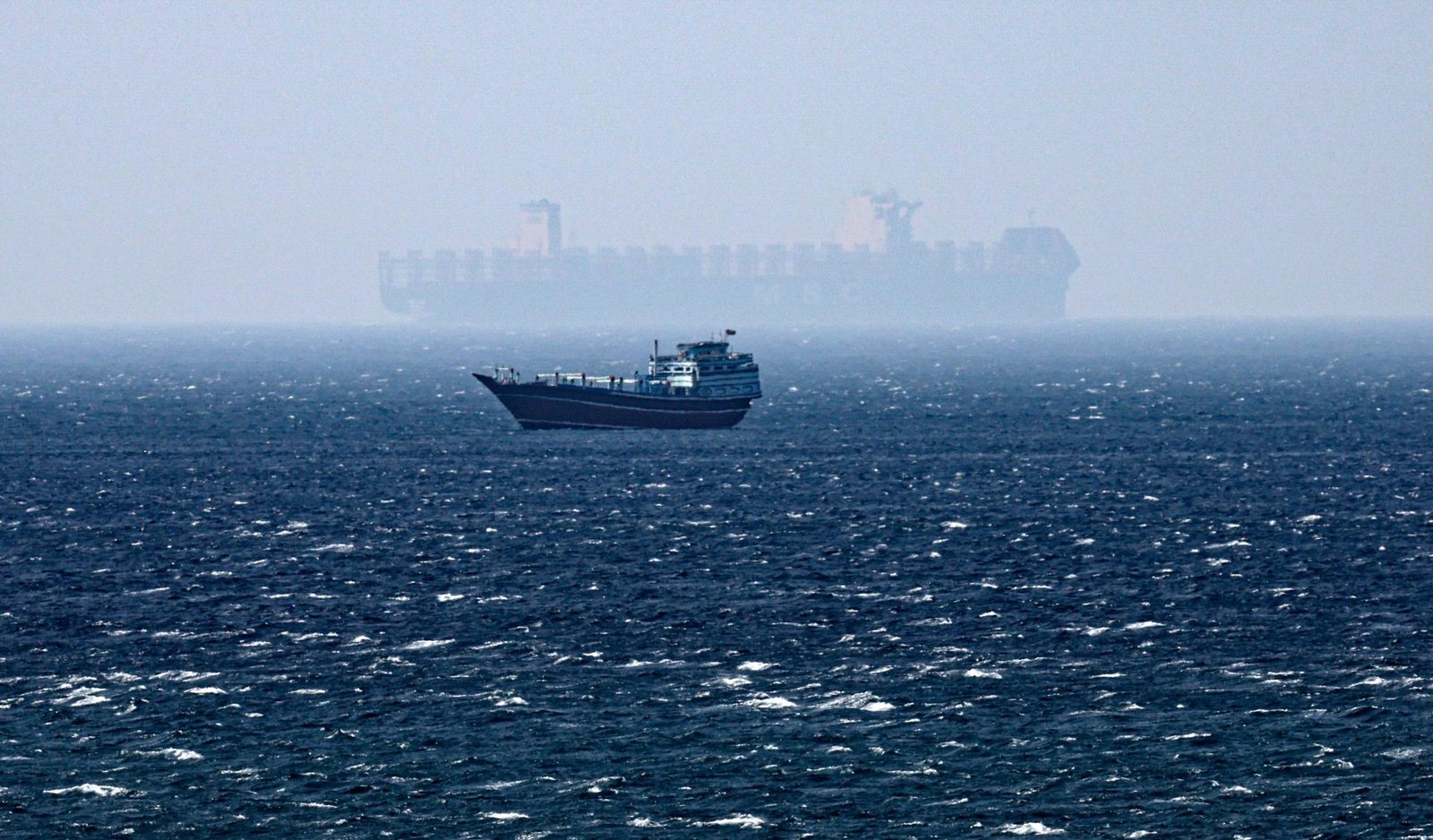
The Strait of Hormuz, a strategic route for global energy trade, has gained prominence in the war waged between the US and Israel against the Iranian regime in recent days. The sea passage, as well as its surroundings, has become a real battlefield between opposing forces in the conflict and a risk for oil tankers that routinely use the sea route.
More than a dozen ships have been attacked in the region since the start of the war on February 28, and the conflict has caused traffic through the region to fall by up to 90% in recent weeks, according to an assessment by the data and market analysis company Kpler.
Located between the Persian Gulf and the Gulf of Oman, it is through this strait that an average of 144 ships pass per day, of which 37% are oil tankers, 17% container ships and 13% bulk carriers, according to UN data on the 2025 Maritime Transport Review. The passage is responsible for receiving around 20% of the world’s crude oil production, as well as liquefied natural gas and fertilizers, the latter being an element that worries the Brazilian government.
The current military escalation in the region has interrupted maritime traffic through this route due to constant threats from Iran, which controls the route. The country is selectively allowing some ships to pass through the strait. The agency Reuters reported that two Indian-flagged liquefied petroleum gas (LPG) ships were given permission to sail through the Strait and Turkey’s Transport and Infrastructure Minister separately said that Iran allowed a Turkish-owned ship to pass through the passage.
This Sunday (15), Iranian Foreign Minister Abbas Araghchi claimed that the country is open to negotiations with countries that wish to access the Strait of Hormuz “safely”. According to him, the regime has already received several contacts to discuss the matter, without mentioning the names of these countries.
The repercussions resulting from the war reach beyond the region, affecting energy markets, shipping and global supply chains. Rising energy, fertilizer and transportation costs – including shipping, marine fuel prices and insurance premiums – could drive up food prices and intensify pressure on the cost of living in many countries.
Strait of Hormuz is a route of constant conflict
For years, Persian authorities have repeatedly threatened Israel and the US with blocking maritime traffic, especially the latter, in response to sanctions imposed by Washington over its nuclear program.
In the context of a pre-war crisis with the USA, in February, Iran reported the temporary closure of certain areas of the zone due to naval maneuvers in the Strait of Hormuz.
Previously, on June 21, 2025, the Iranian Parliament approved its closure after the new US administration, led by Donald Trump, ordered the bombing of Iran in the context of the conflict between Israel and the Persian country.
Due to its geographic location, the Persian Gulf has been the scene of numerous incidents in recent years, including attacks and seizures of oil tankers and cargo ships.
The issue of mines and American assessments for escort in the region
One of Iran’s strategies to prevent the passage of American, Israeli and allied vessels on the strategic route is the use of naval mines, explosive equipment positioned at sea to severely damage ships.
US President Donald Trump said in recent days that the US had destroyed almost all of the Iranian mine ships in the Strait of Hormuz “in a single night”. Furthermore, according to him, practically the entire Iranian navy has been eliminated since the beginning of the offensive against Tehran.
The US Central Command (Centcom) officially said that, since the discovery of the deployment of naval mines by the Islamic regime, at least 16 vessels used on the route to threaten navigation have been completely eliminated.
A US Congressional report released last year suggests that Iran has between 5,000 and 6,000 naval mines in service.
The growing concern of countries that use the route to transport energy led the US to evaluate escorts through the region. A concrete decision has not yet been made by the Trump administration on the issue, which is seen as a high-risk and costly mission for the US Navy.
This Saturday, the American president called on several countries to form an international coalition to challenge Iran’s blockade of the Strait of Hormuz. He cited China, France, Japan, South Korea, the United Kingdom and “others who are affected by this artificial restriction.”
A senior official from Japan’s ruling party said on Sunday (15) that Tokyo does not rule out sending warships to defend the Strait of Hormuz, as requested by President Trump, but made it clear that the country should consider the possibility with “caution”.
“Legally, we have not ruled out the possibility of issuing a maritime security order under Article 82 of the Self-Defense Forces Law, but given the situation of the ongoing conflict, we must make a decision cautiously,” warned Takayuki Kobayashi, head of the policy council of the Liberal Democratic Party (PLD), during a program on the public broadcaster NHK.
