
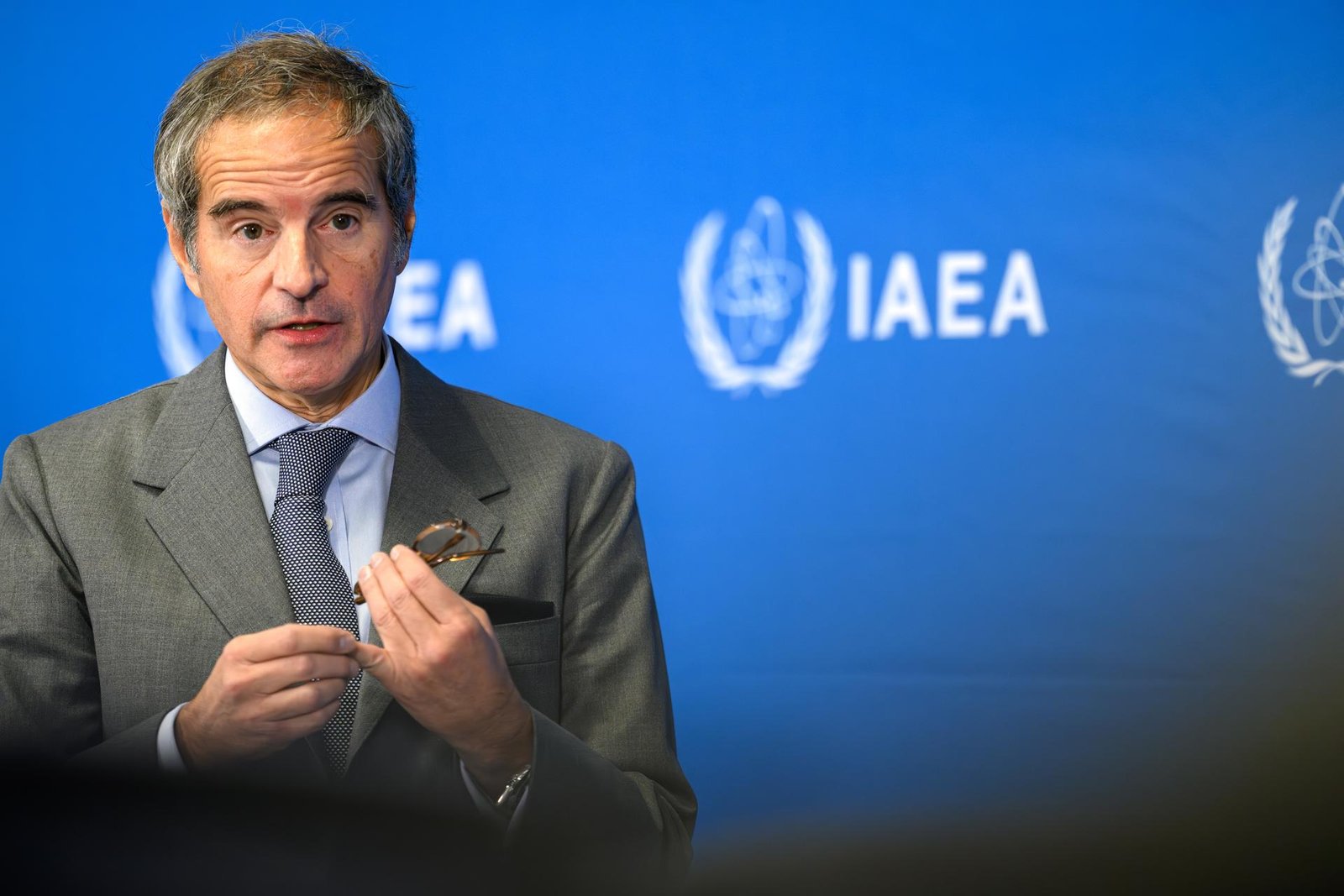
Candidate supported by the president of Argentina, Javier Milei, to head the United Nations (UN), the director general of the International Atomic Energy Agency (IAEA), Rafael Grossi, said this Tuesday (3), in an interview with the Argentine newspaper The Nationthat Iran’s level of uranium enrichment is unprecedented among countries that do not possess nuclear weapons.
“No country without nuclear weapons enriches uranium like Iran. It’s playing with fire”, declared the diplomat when commenting on the escalation of the conflict between the USA, Israel and the Islamic regime, due to the impasse over Tehran’s nuclear program.
According to Grossi, the situation related to the Islamic regime’s nuclear program has been worrying the international community for years. He stated that ambiguity over the limits of the Islamic country’s nuclear program creates an environment of permanent distrust in the international community.
“An ambiguous nuclear program creates a pre-war situation,” Grossi said in the interview. “The United States and Israel will not allow Iran to have nuclear weapons, and neither will other countries. Iran has chosen a certain degree of opacity. […] It’s not about justifying war, but about understanding how we got here,” he added.
The IAEA director recalled that the agency has not been able to fully reestablish its inspection activities in Iran since the so-called 12-Day War, which occurred in June last year, when Israel and the US bombed several nuclear complexes in Tehran. As the director explained, despite the agency maintaining frequent contacts with authorities of the Islamic regime, including Foreign Minister Abbas Araqchi, it has not yet been possible to regain the level of access necessary to verify nuclear activities in the country.
Grossi reported to the The Nation who even participated in the diplomatic negotiations that were taking place between the USA and Iran, mediated by Oman, which sought to neutralize both Iran’s nuclear program and its missile program. The conversations took place in the Middle East and Europe.
According to Grossi, discussions advanced on some points, but “technical differences” prevented the conclusion of an agreement. Among the questions still open were whether Iran could continue enriching uranium, to what level this would be permitted and how international checks would be conducted.
The head of the UN nuclear agency also stated that he was not surprised by the start of the current military offensive against Iran.
“We knew that the situation was extremely tense and that military action could not be ruled out at any time,” he said.
According to the IAEA, satellite images and preliminary information indicate that important Iranian nuclear facilities were hit in this current offensive led by the United States and Israel. Among the affected locations would be the Natanz nuclear facility, where, according to Grossi, two more access points would have been bombed. The facility was also the target of US bombings last year, where it was reportedly severely damaged. In the case of the Isfahan nuclear facility – also hit by the US in 2025, Grossi stated that it is still “not clear” whether the damage caused by this current offensive directly affected the facility’s nuclear structures or whether the explosions occurred in military installations located nearby the complex.
Despite previous attacks and recent operations, Grossi said some of Iran’s nuclear capabilities could still remain intact. According to him, Iran still possesses around 440 kilograms of uranium enriched to 60%, a level considered technically close to that needed to produce fuel for nuclear weapons. Israel and the US accuse Iran of working to produce nuclear weapons.
Even in the face of military escalation, Grossi argued that a lasting solution to Iran’s nuclear issue will not be achieved by force. According to him, after the ongoing fighting ends, it will be necessary to resume diplomatic negotiations to “establish a control and verification mechanism that reduces tensions in the region”.
The diplomat also warned that Iran’s retaliatory attacks against countries that host American military bases increase the risks of international escalation.
“There is an obvious risk,” said Grossi, highlighting that the Iranian response against countries in the region could involve new actors and make the conflict even more complex.
According to the IAEA director, the agency is ready to resume negotiations and offer technical guarantees that ensure that Iran’s nuclear program does not pose an international threat, if political conditions allow the resumption of dialogue.
