
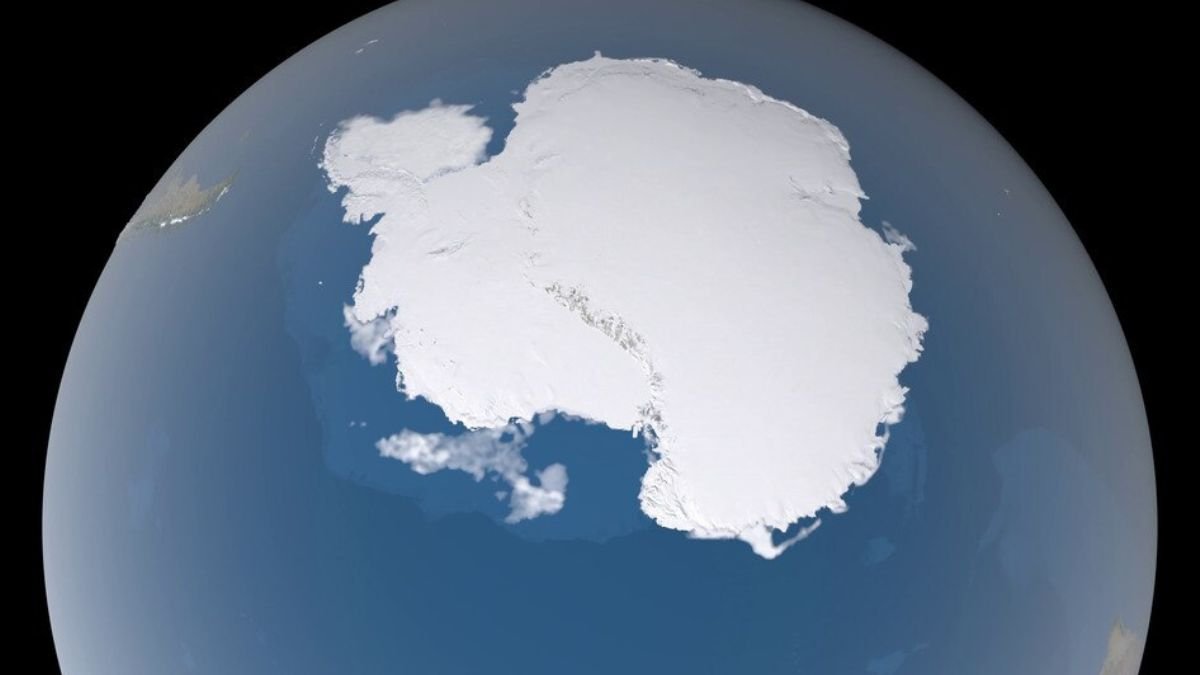
Scientists used radar technologies to create an unprecedented mapping of Antarctica’s subglacial relief, revealing mountains and deep canyons hidden under kilometers of ice. The discovery helps predict the impact of climate change on sea levels and the future of the planet.
What has been discovered hidden under the ice of Antarctica?
Recent research has revealed that Antarctica is not just a flat, uniform block of ice. Under a layer that is up to four kilometers thick, there is a vibrant and complex relief. The new map details entire mountain ranges, plateaus and gigantic subglacial canyons that were previously unknown or just scientific guesses.
How were scientists able to see through such thick layers of ice?
The main technique used was Antarctic radar operated by planes and satellites. It works like this: radio waves are emitted, pass through the ice and hit the solid rock below. By measuring the time it takes for the signal to return, experts can calculate the exact thickness of the frozen layer and draw the precise shape of the rocky terrain that is hidden.
Why is the shape of the ground beneath the ice so important?
The relief directly influences the speed at which glaciers slide towards the ocean. If the ground is sloped or has natural channels (canyons), the ice flows faster. Understanding this ‘invisible geography’ is key to creating mathematical models that say how quickly the ice will melt and how much global sea levels could rise in the coming years.
Does the map reveal anything about Earth’s past?
Yes, the mountains and geological structures found hold clues from millions of years ago. They help reconstruct the history of when Antarctica was part of the supercontinent Gondwana, before being isolated by the cold. The mapping works like a time capsule, connecting the movements of ancient tectonic plates with the current configuration of the continent.
What is the main benefit of this discovery for the future?
In addition to improving climate predictions, the map guides where future missions should drill into the ice to install sensors or study subglacial lakes. It reduces scientific uncertainties about how the continent will react to global warming, transforming Antarctica into a key player in understanding the environmental changes that will affect all coastal regions of the world.
Content produced based on information gathered by the Gazeta do Povo team of reporters. To access the full information and delve deeper into the topic, read the report below.
SEE ALSO:
- The new map revealing the secrets hidden beneath the Antarctic ice
