
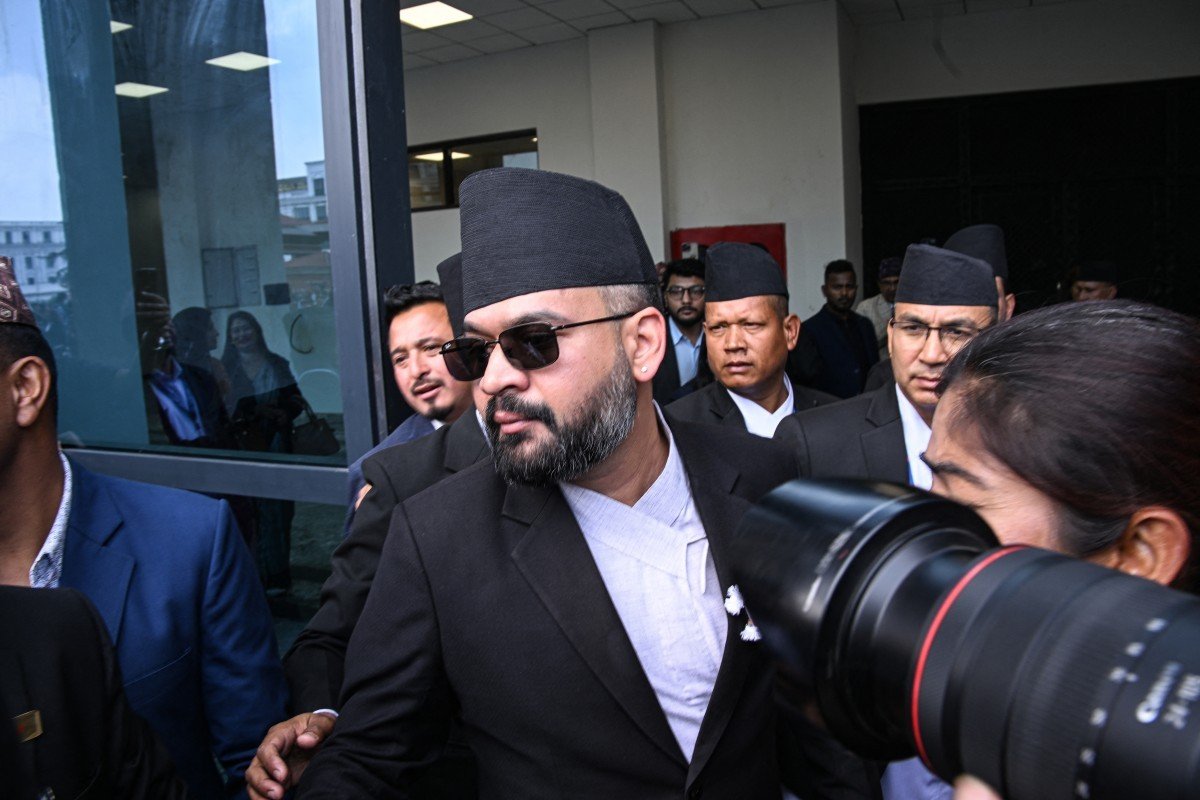
Nepal: rapper is the new prime minister, elected after protests from Gen Z The new prime minister of Nepal, Balendra Shah, takes office this Friday (27). ✅ Click here to follow g1’s international news channel on WhatsApp One of the country’s most popular rap artists, Shah takes office after his party won a landslide victory in general elections held earlier this month, the first since the Gen Z protests that toppled the government last year. Shah’s transformation from rapper to politician began in 2022. He was elected mayor of Kathmandu, the capital of Nepal, running independently, promising to clean the city’s streets and rivers in his campaign. Balendra Shah shows his victory certificate to his supporters REUTERS/Adnan Abidi The former artist was presented by the Rastriya Swatantra (RSP), a party just three years old, as a candidate for new prime minister shortly after joining it in December 2025. Often dressed in black and wearing sunglasses, Shah rarely spoke during the campaign and communicated with his supporters mainly via social media. His campaign focused on economic reforms, with promises to expand access to education and healthcare for the poorest Nepalis. In the elections, his party, the RSP, secured 125 of the 165 seats in direct elections and another 57 through proportional representation, totaling 182, almost two thirds of the total in Parliament. During the protests that ousted the former prime minister in September, Shah used his Instagram profile, where he has 1 million followers, to comment on the situation in the country. After the deaths of protesters, he called the then prime minister a “terrorist” who did not understand the “pain of losing a son or daughter”. A day later, with the resignation of Khadga Prasad Oli, he asked the youth to calm down: “Dear Generation Z, the resignation of your oppressors in politics has already happened! Now, please be patient. We need to be cautious! Now your generation will have to lead the country! Get ready!” Protesters set fire to Nepal’s main government administrative building in Kathmandu Anup Ojha / AFP Shah is 35 years old, has a degree in civil engineering and is the son of an Ayurvedic medicine practitioner and a housewife. According to an advisor, he developed his passion for poetry at an early age, which evolved into a career in rap, influenced by American artists such as Tupac Shakur and Curtis “50 Cent” Jackson. One of their songs, “Nepal Smiling,” begins with children’s voices singing, “I want to see Nepal laugh.” Shah then enters with a verse that imagines a fairer country: “May the country be a beautiful garden.” On another track called “Sacrifice”, his tone is much more incisive. “All the people defending the country are idiots. All the leaders are thieves… plundering the country,” he raps. Analysts believe the new prime minister’s majority in Parliament will give him room to implement reforms, but his limited experience and the challenge of managing his supporters’ expectations will be a challenge in the coming months. “Balen Shah has no experience in government management and lacks the complex knowledge needed to manage the state,” Hari Bahadur Thapa, a Kathmandu-based writer who writes about corruption and governance, told the Associated Press news agency. Ostentation on the networks led to dissatisfaction in Nepal Nepal was the scene of violent protests in September last year. Videos posted on social media acted as fuel to fuel the revolt that took the population to the streets. The target of the protesters’ indignation was the country’s authorities. Nepalis, especially the younger generation, accused politicians of corruption and blamed them for the poverty experienced in most parts of the country. Nepal’s ‘Nepo kids’: ostentation on social media fueled wave of protests in the country Videos and photos showing the privileged lifestyle of the children of the elite were shared on networks such as TikTok with the hashtag #nepokids – a term used online to define heirs of privilege. Posts by netizens of Nepali politicians’ children and grandchildren on luxurious vacations and wearing elegant clothes suggested that they profited from their family connections and condemned them as “hypocrites.” “Thousands of these videos are trending in Nepal’s digital ecosystem. The contrast between elite privilege and everyday hardships resonated deeply with Gen Z and quickly became a central narrative driving the movement,” Raqib Naik, executive director of the Center for the Study of Organized Hate, a Washington-based watchdog group that monitors online extremism and disinformation in South Asia, told The New York Times. Some of the images shared on social media of children of Nepali authorities displaying their privileges TikTok/Reproduction The government’s short-lived ban on social media further angered protesters, who saw it as an attempt to control criticism of inequalities. Among the most shared content were videos of Sayuj Parajuli, son of the former president of the Supreme Court, posing in sophisticated restaurants and next to high-end vehicles, and images of Saugat Thapa, son of the Minister of Justice, showing off brands such as Louis Vuitton and Cartier (see the video above). “Openly flaunting luxury cars and watches on social media. Aren’t we tired of them already?” says the caption of one of the videos posted. Protesters celebrate with the Nepalese flag after entering the Nepali Parliament complex during a protest against the government on September 9, 2025. REUTERS/Adnan Abidi Balendra Shah on March 26, 2026 PRAKASH MATHEMA / AFP
Source link
Nepal: rapper elected prime minister takes office this Friday
58
