
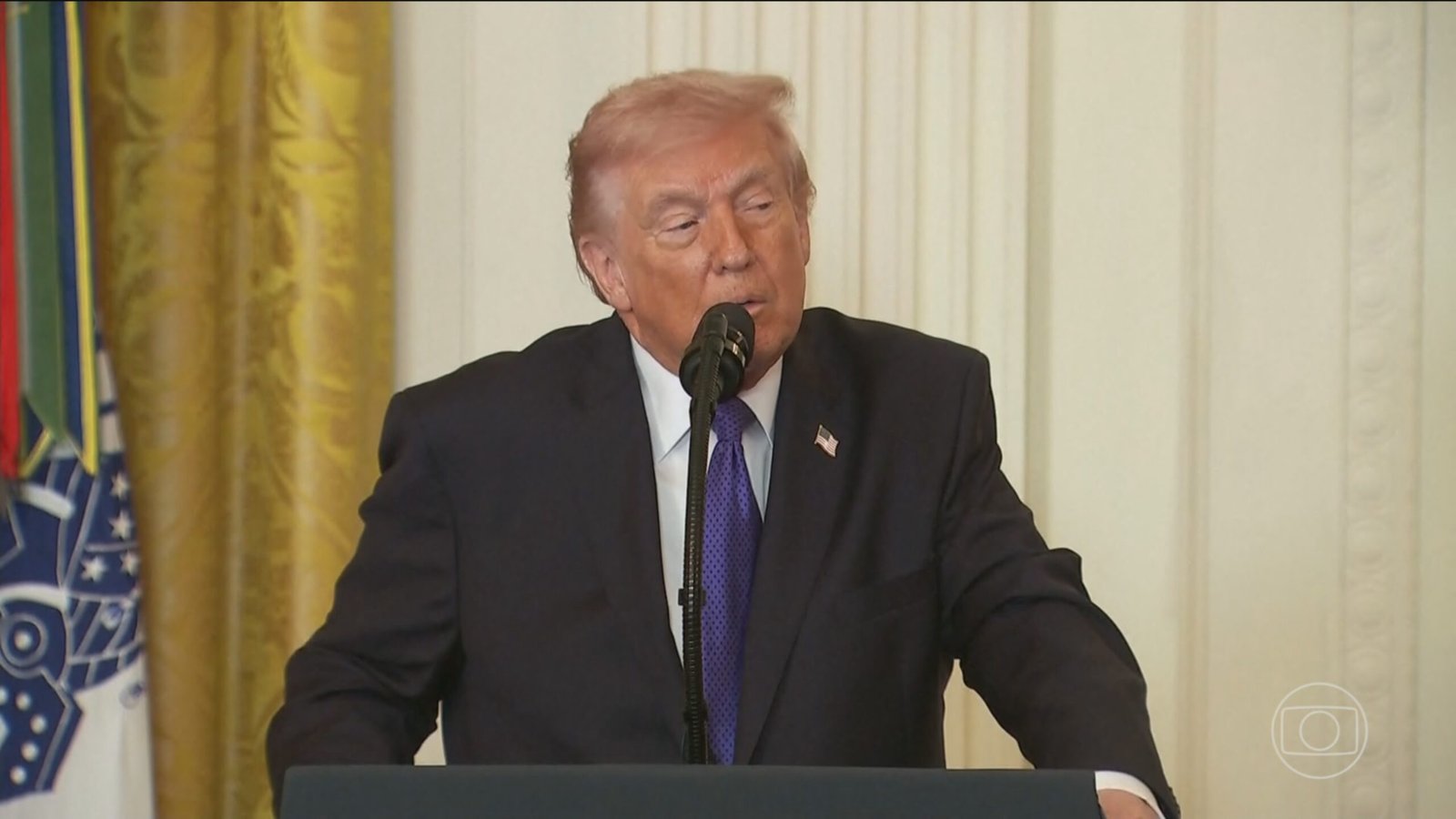
Renata Lo Prete interviews Oliver Stuenkel about Donald Trump’s government in the war in Iran The conflicting statements from US government officials — added to Donald Trump’s back and forth when explaining the war’s objectives — increase the tension surrounding the conflict with Iran beyond the Middle East board. The offensive exposes not only uncertainty about Washington’s next military steps, but also growing political concern within the United States, where the domestic costs of the escalation could put pressure on the White House and the president’s allies. For the professor of international relations at FGV and researcher at Harvard, Oliver Stuenkel, there is now a clear division within the Trumpist movement. In an interview with “Jornal da Globo”, Stuenkel highlights that there is a more nationalist and isolationist wing of the MAGA (Make America Great Again) movement, which includes the vice president, JD Vance. “Trump’s rhetoric during the campaign always came from the proposal to end what are known as ‘endless wars’ in the Middle East and other places in the world, such as Afghanistan, Libya and Iraq”, he states. Follow the coverage of the war in Iran in REAL TIME Trump says the war in Iran could last between 4 and 5 weeks or more Jornal Nacional/ Reproduction According to the researcher, an important part of the Trumpist base voted for the president precisely because they expected a “more restrained and less interventionist” stance, especially in the Middle East. At the same time, there is a more traditional and conservative Republican wing, represented by names in the media and senators such as Lindsey Graham and Ted Cruz, who defend a more offensive American presence in the region. “The newspaper ‘The Wall Street Journal’, for example, which tends to be on the right on the ideological spectrum, said today that it is essential that President Donald Trump does not withdraw quickly from Iran and that he maintains a strong presence in the region”, he notes. In Stuenkel’s assessment, the moment is particularly delicate for Vice President JD Vance, whose political trajectory was marked by criticism of American military interventions. “For the vice president it is very difficult, because his opposition to wars in the past has been an essential part of the criticisms against previous governments, especially Biden’s stance and the inability to resolve conflicts in the Middle East.” The professor claims that Trump’s decision to attack Iran creates a direct contradiction for Vance. “This explains why he initially took a very passive stance during the first days of the conflict.” “It is certainly a challenge, especially because he intends to be the successor to the MAGA movement in the next electoral cycle in the USA”, he analyzes. Israel First In less than 24 hours, Trump and the Secretary of State presented different versions of the decision to attack Iran. On Monday night (02), Marco Rubio stated that Washington was already expecting Israeli action and that this could trigger attacks against American forces. According to him, acting preventively was necessary to avoid further casualties. On Tuesday afternoon (3), the president presented another version. He said that the US already believed that Iran would attack first and stated that, if something happened, it was because he himself may have “forced Israel to act”, although both were ready. Hours later, Rubio went public again to align his message with Trump. The secretary stated that the president concluded that negotiations would not work and that the Iranian threat was “unsustainable”, leading to the direct decision to attack. For the researcher, the contradictory messages within the government reveal a lack of strategic cohesion. And opponents question whether the attack serves American national interests. “We are seeing a tug of war within the Trumpist coalition itself, which also explains what appears to be a lack of preparation when it comes to justifying the conflict,” he states. “This comes at a very difficult time for the Trump administration, which has low approval ratings and faces a complicated congressional election in November.” Impact on midterms Oliver Stuenkel highlights that the president’s supporters are already expressing frustration with the lack of clarity about the objectives of the conflict. “The questions are: why now? Is it a long-term conflict? Will there be ground troops sent? Will there be negotiations? Is it to overthrow the regime?”, he enumerates. “This makes the job easier for the opposition, which seeks to show that Trump did not think carefully about the next steps after the decapitation of the Iranian regime.” The immediate electoral impact, however, is still uncertain. “It seems to me that the political cost is not yet that great, because it will depend on the duration and the economic and human cost for the USA”, he assesses. The professor highlights that an increase in the number of American victims could change the scenario, due to society’s fatigue with prolonged conflicts. “There is concern that the geopolitical crisis will raise the cost of oil and lead to economic disruption. If the war ends up raising inflation even further, that could pose a big problem for Trump ahead of the November midterm elections.”
Source link
Military attack on Iran divides Donald Trump government’s electoral base
15

previous post