
Tuesday evening’s meeting of the Foxborough, Massachusetts, Select Board is still minutes from starting, but a local resident can’t keep himself from approaching the bench. He has an urgent question for the five members, who in effect serve as the town’s primary governing body. His tone isn’t one of anger, more of concern.
“Do you think we’re going to have the World Cup here?”
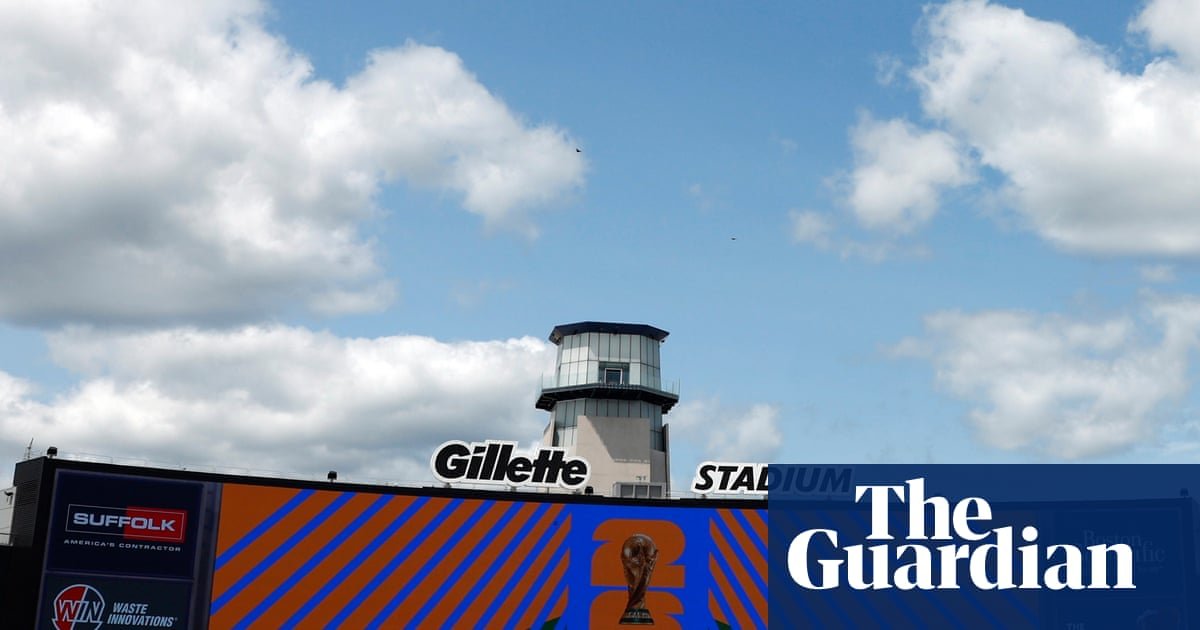
This board is used to dealing with smaller issues: sewer hookups, liquor licenses and zoning ordinances. Crucially, it also issues licenses for use of Gillette Stadium, the home of the NFL’s New England Patriots which is due to host seven World Cup matches this summer, including England’s second group game against Ghana and a quarter-final. As such, in the past few weeks, the board has found itself dealing with issues that are decidedly more global, having entered a firestorm involving the biggest sporting governance organization in the world.
The hearing that unfolds over the next two hours is heavy on legalese and contract terms, but it serves as a revealing window into the nuts-and-bolts negotiations that underpin the hosting of the world’s most popular sporting event. In this instance, hyperlocal politics has mixed with a global behemoth of a sporting organization used to getting its way, with a dysfunctional federal government uneasily linking the two.
“This board does not want to deny this license, by any means” a board member says at one point in the session. “But we will if we have to.”
Describing Foxborough as a suburb of Boston would be too generous, geographically. It’s as suburban to Boston as Baltimore is to Washington DC; entirely divorced from the hustle and bustle and old-world charm of Boston proper. Foxborough’s little town square feels quaint and colonial. Before the arrival of the Patriots in the 1970s, the town’s primary claim to fame was being the world’s largest manufacturer of straw hats, a boom that literally and figuratively went up in flames when the city’s biggest factory burned to the ground in the early 1900s.
Today’s Select Board members feel pretty salt of the earth. Stepahnie McGowan is a mother of two who has worked in a local restaurant for 22 years. Amy LaBrache sells insurance. There’s a chiropractor, too, and the director of the town’s recreation department. None wear suits or especially formal attire, offering their comments from behind a single long desk.
At issue are $7.8m in security expenses that remain unaccounted for as the town prepares to host matches in the 2026 World Cup. The money to pay that bill was due months ago from the federal government and the Boston World Cup planning committee, but it’s yet to arrive. Local residents are starting to worry they may be left on the hook.
The US government’s portion of that total is part of a promised Federal Emergency Management Agency (Fema) grant, but those funds have yet to be delivered, in part because of the ongoing partial federal government shutdown. There’s no end in sight to the federal funding impasse, which directly affects the Department of Homeland Security (DHS), which oversees Fema.
In the leadup to Tuesday’s meeting, Fifa representatives deferred to the city of Boston and the Kraft family – owners of the Patriots and Major League Soccer’s New England Revolution – on that question. Representatives from Boston’s host committee agreed that they’re contractually obligated to pay the expenses, but have yet to offer anything in the way of a solution.
The shortfall would be a massive expense for Foxborough itself. With a population of about 18,000, it would amount to a little over $1,000 per household, or some 10% of the town’s budget for the year. The Krafts typically cover the town’s security expenses surrounding athletic events and concerts at the stadium, but Fifa likes to exist on an island, and World Cup games aren’t covered by the family’s longstanding agreement with Foxborough.
It feels realistically impossible that the games will be affected in any tangible way – there is too much money at stake, and both Fifa and Boston’s host committee seem capable of footing the bill. The board also seems wholly within its rights to take this stand, given the economic disparity of the parties involved.
After an hour or so of unrelated town business, Bill Yukna, the chair of the select committee, casts a gaze towards the audience.
“I don’t see anyone from Boston 2026 or Fifa here,” he says flatly. Moments later, representatives of the Boston host committee arrive – CEO Mike Loynd and two attorneys representing the organization, who do all of the talking.
Things start out hopefully for the town of Foxborough when Gary Ronan – among the lawyers representing Boston 2026 – addresses the elephant in the room.
“Who is going to make sure that the town is not left holding the bag, and the federal grant money doesn’t come through?” Ronan asks rhetorically. “We want to give you a very clear answer to your question … who is going to backstop this obligation, if for whatever reason the federal money does not come through, is Boston Soccer 2026.”
Ronan continues. He claims that the host committee has a “substantial amount” of funding set aside for planning purposes. Maybe more importantly, he offers assurances to the board that the Krafts, legitimate billionaires, have offered to fund “any shortfalls” the host committee has that would keep it from meeting its obligations. The Krafts, Ronan says, will provide a commitment letter pledging those funds in the next day or two.
Ronan continues: if the town has any issues paying its police and fire department employees for their service at World Cup games, the host committee will cover those expenses, doing so within 48 hours. All of these details, Ronan says, can be written into the license itself, legally obligating the host committee to follow through.
So, problem solved, right? Not quite. As Ronan finishes his remarks, he mentions a final detail. The town has asked for a bevy of safety equipment, needed to secure the stadium and its surroundings. Ronan says it will be in place by 1 June – 12 days before Scotland and Haiti open the stadium’s World Cup proceedings. Nearly every member of the committee bristles at the suggestion.
“It’s not acceptable,” says Yukna. He’s joined in protest by Paige Duncan, the town manager. “This is building a plan in an extremely scary world,” she says, “getting scarier by the weekend.”
Whatever goodwill Ronan and the rest of the host committee earned with their promises has evaporated. So has their air of positivity. They’ve brought slides with visual aids, laying out the scale of collaboration between the town, host committee and Fifa. The next slide feels more like a threat.
“THE BOARD’S DISCRETION IS LIMITED BY MASSACHUSETTS STATUTES AND THE TOWN’S STADIUM REGULATIONS,” the slide reads in caps, before descending into legalese. The board’s authority, suggests Peter Tamm, another of the host committees lawyers, is limited to issues of safety, health and order, not municipal finance.
In short, it feels as if Boston 2026 is telling the town board itself that it is powerless to do anything, and that it has not done anything like this in the past with other events at the stadium. Without hesitation, Yukna taps the town’s lawyer, Lisa Mead, into the conversation.
“With all due respect,” says Mead, “the board has broad discretion on this license, on their determination of whether or not the applicant will be able to fill the public safety requirements and protect the health and welfare of those people attending the event. How they make that determination is fully at the discretion of the board, and their past practice on what they accept or do not accept … does not have an impact or restrain the board in any way.”
What the Select Board is doing feels comparable to the longtime resident of a small town who refuses to allow their home to be bulldozed and replaced by a shopping mall. There is unmistakenly some grandstanding here going on by both sides of the argument, but that feels distinctly American, too.
So does the final testimony, offered by the town’s police chief, Mike Grace. His frustration is clear as he launches into his remarks, which are centered around the host committee’s promise to deliver necessary equipment no later than 1 June, and the time crunch that will create.
“We are 99 days away from hosting the largest sporting event in the world,” says Grace, “and we can’t seem to find necessary funding for necessary equipment that’s been identified for over a year and a half of planning. Thousands of hours, 14 working groups throughout the Commonwealth of Massachusetts. Waiting until June 1st is unacceptable.”
Grace also offers a simpler plea: “Please don’t do that to me.”
Council meetings rarely attract media attention, but there are about a dozen or so cameras present here from every corner of the state, along with a handful of written press members. They all chase members of the host committee into the corridor outside the council chambers, but the members add little to the remarks made inside. Loynd abruptly ends his comments when a reporter asks him a simple question: why doesn’t Fifa just pay for this to begin with?
Back inside the chambers, Yukna reluctantly agrees to answer a few questions. He seems rankled by the assumption that his board can simply be cast aside by the host committee, at the behest of Fifa.
“You heard from our legal council,” he tells the Guardian, “that we have full authority and ability to make whatever decision is in the best interest of public safety and for the town. They can say whatever they want to say.”
Yukna doesn’t put much stock in the financial pledges offered by the host committee, either. There’s no resolution tonight, it seems, and there won’t be until 17 March, the next time the board meets. There will most certainly be a decision then, which will come in the form of an official vote on the stadium license.
Yukna, along with the other small-town board members, are also tired of the media attention.
“Quite honestly,” Yukna says before walking away, “I wish we weren’t into this at all. I wish we had resolved all of this a while ago, and I wish we could just move forward.”
