
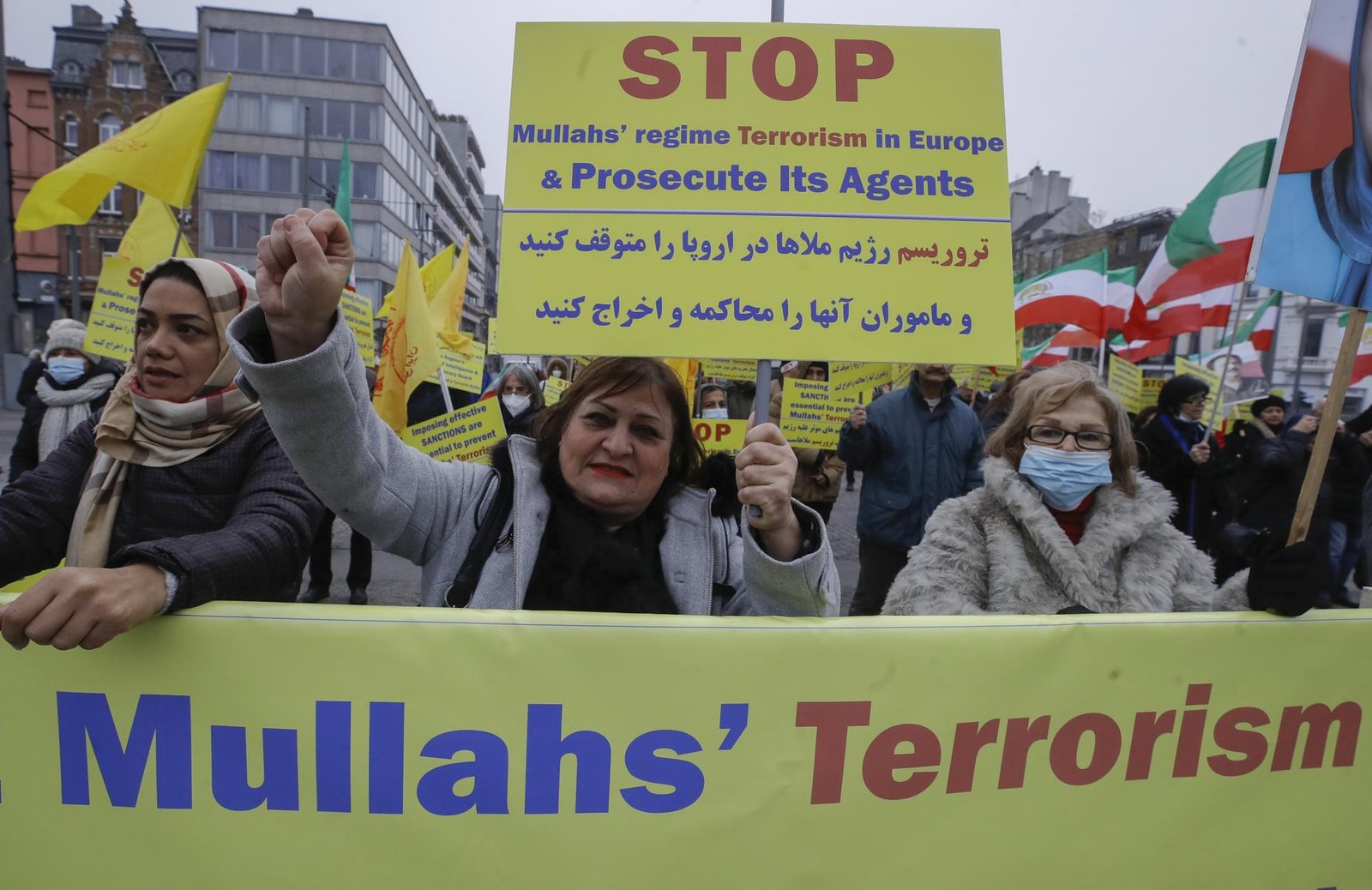
The Iranian regime may resort to the so-called “shadow war” to increase pressure on the United States and Israel after the military escalation that began on February 28, with American and Israeli attacks against Iranian targets. The assessment was made by security authorities and analysts from the area of international relations and defense.
According to these assessments, Tehran may try to reach American and Israeli interests outside the Middle East, through indirect actions such as attacks, sabotage, espionage, cyber attacks or operations conducted by intermediaries, with the aim of increasing the cost of war without attracting new actors to the battlefield. Nations in Europe and even the United States itself are considered possible targets for this type of strategy.
This pattern has already been observed in previous clashes involving Iran. During the so-called 12 Day War last year, when the United States and Israel struck the regime’s nuclear facilities, Western and Israeli security authorities had already warned of the risk of indirect retaliation from Iran outside the Middle East, including attacks against targets linked to the two countries, the USA and Israel, on European territory.
HAS People’s Gazetteprofessor Geni Emília de Souza, coordinator of the International Relations course at Cruzeiro do Sul Virtual, states that this type of action is part of the traditional strategy of the Islamic regime when it faces militarily superior adversaries. According to her, Iran often resorts to shadow warfare to increase the cost of the conflict without relying solely on conventional confrontation. Souza noted that this type of strategy tends to become more likely in moments of strong military pressure against the regime, as in the current scenario.
Investigations conducted by European authorities indicate that this type of operation has already been carried out by the Iranian regime on several occasions. In June 2018, security forces from Belgium, France and Germany foiled an attack on a meeting of opponents of the Islamic regime near Paris. According to the investigation, the attack had been organized clandestinely by agents linked to Tehran and would be carried out by intermediaries, in a typical model of indirect action. The plan, according to authorities, was coordinated by Iranian diplomat Assadollah Assadi, who was eventually convicted of terrorism by Belgian justice. He was released in 2023 during a prisoner exchange.
European authorities have also linked the Iranian regime to several clandestine attempts to assassinate dissidents in the Netherlands and Germany, in addition to several attacks against targets linked to the Jewish community on the continent. Security reports analyzed by the European Parliament (EP) also point out that, in recent years, Tehran has started to use shadow intermediaries and even criminal organizations more frequently to carry out operations abroad, precisely to make direct attribution to the Iranian regime more difficult.
According to Souza, the war in the shadows allows the Islamic regime to expand the scope of the ongoing confrontation without relying solely on the conventional battlefield, reaching the interests of adversaries in different regions. The analyst explains that this type of war is led by Iran’s Revolutionary Guard, especially the Quds Force, the unit responsible for coordinating external operations.
“Attacks carried out by intermediaries can function as instruments of political and symbolic deterrence, signaling that Tehran has the capacity to respond to military pressure even outside the conventional battlefield,” said Souza.
Europe on alert
In recent days, European authorities have started to investigate episodes that may already be related to the current context of war. In Belgium, an explosion damaged the facade of a synagogue in the city of Liège, and the case is being treated as a possible politically motivated attack.
In the United Kingdom, four men were arrested on suspicion of collaborating with the Iranian intelligence service after monitoring sites linked to the Jewish community. In Norway, police investigate an explosion recorded at the entrance to the United States embassy in Oslo. The hypothesis of terrorism is considered by the authorities, although the cause has not yet been confirmed.
Last week, the European police agency Europol warned that the level of terrorist threat in the European Union is high. According to the corporation’s spokesman, Jan Op Gen Oorth, the war in the Middle East could provoke attacks, sabotage and other actions by groups linked to Iran outside the conflict region, with European countries among the possible targets.
USA is also paying attention
In addition to Europe, security authorities in the United States have raised the level of surveillance in light of the possibility of indirect actions linked to the Iranian regime. According to a report from Los Angeles Timesfederal agencies began monitoring in recent days signs that could indicate the activation of clandestine cells associated with Tehran in American territory after the start of the war.
Radio transmissions with numerical codes detected by intelligence services are being analyzed, which, according to investigators, could be used to send instructions to agents or sympathizers of the Islamic regime outside the Middle East.
According to the publication, American security agencies have warned that Iran has sympathizers and even common criminals willing to carry out attacks outside the Middle East. Acts of this type would not be new, as the US Department of Justice has already accused members of Iran’s Revolutionary Guard of trying to hire assassins to kill American officials, such as John Bolton, former national security advisor during President Donald Trump’s first term. The Department has also investigated plans by the Iranian regime to attack Trump and Iranian dissidents living in the country.
Counterterrorism experts interviewed by the American newspaper say that the use of sleeper cells, lone wolves or groups allied in the US is part of the Iranian strategy in moments of direct confrontation with Western powers.
“Sleeper cells have always been a concern when it comes to Iran and its allies,” said Horace Frank, former chief of the Los Angeles police counterterrorism division. “This is not something new, but given the current situation, some of these groups may feel more pressure to act.”
