
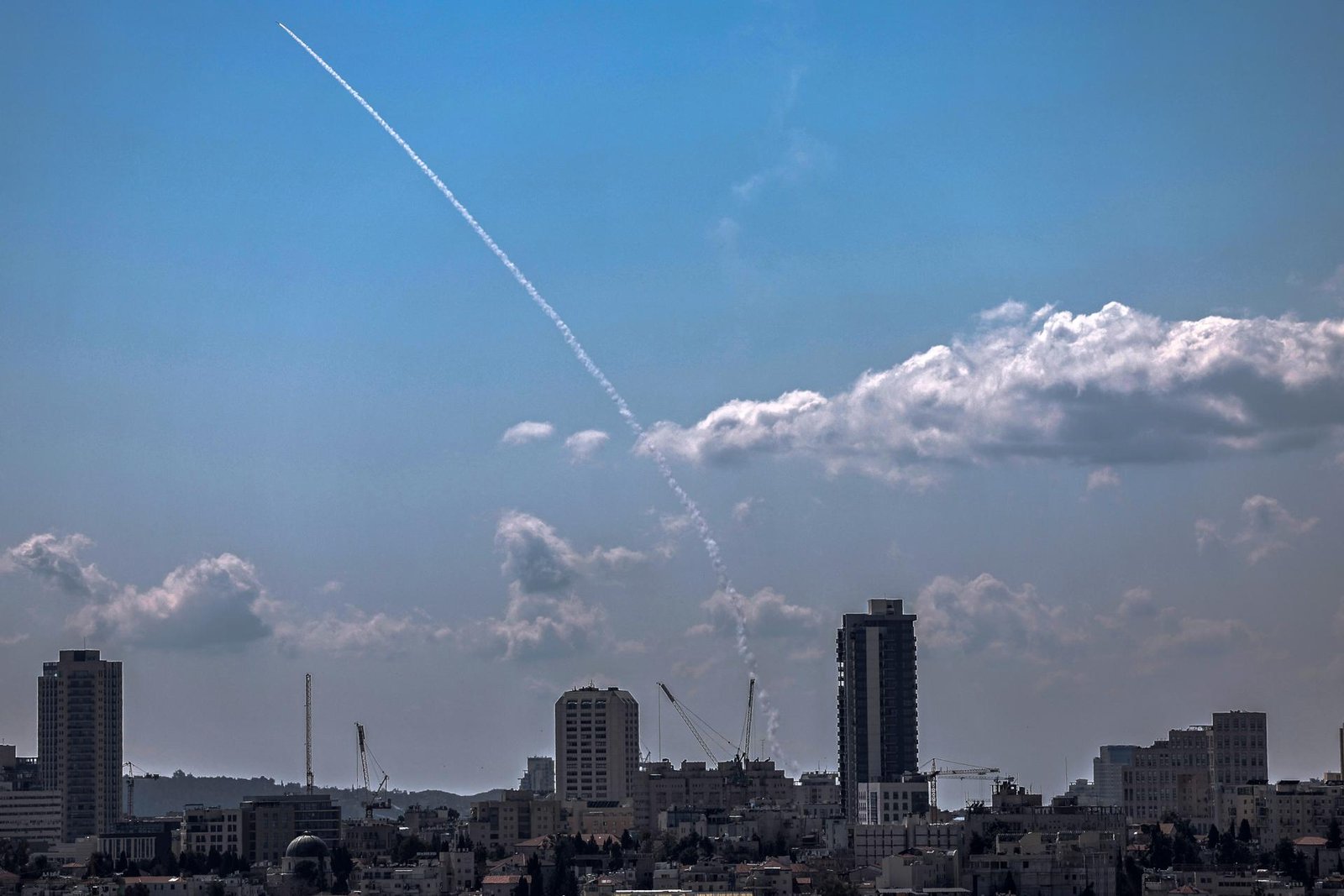
The joint US and Israeli forces continued bombings in different parts of Iran for the fourth consecutive day, including the capital Tehran, where the military targeted new strategic targets of the ayatollahs’ regime.
In turn, Iran has been betting on an escalation of attacks against countries in the region, with the massive use of low-cost drones, and on the economic pressure that the conflict causes, such as the blockage of the world’s main oil flow route, the Strait of Hormuz.
Despite the unquestionable military superiority of the USA, Iran has demonstrated a capacity for mobilization and operational control of its military resources, in addition to having begun to expose its action strategy.
In the last few hours, Iran’s Revolutionary Guard announced that it had launched a new wave of attacks on an American military base in Bahrain and the embassy in Saudi Arabia was hit by two drones, although Tehran has not yet claimed responsibility for these bombings. An Iranian drone also struck a location near the American consulate in Dubai, in the United States. United Arab Emirates.
Analysts assess Iran’s military strategy
Over the past four days, the Iranian Armed Forces have launched frequent attacks on Gulf countries that maintain military bases and can contribute logistically to Israel and the US, despite them having condemned the start of the regional conflict.
In addition to Israel, Bahrain and Saudi Arabia and the United Arab Emirates, Qatar, Kuwait, Jordan and Oman were reached by Iranian artillery. Civil structures such as airports, hotels and even a large natural gas plant, came under attack. More than a dozen people were killed.
Eduardo Galvão, specialist in political risk and professor of International Relations at the Brazilian Institute of Capital Markets (Ibmec) in Brasília, assesses that, by spreading the risk to other countries, especially those that host American bases or have a relevant logistical role, Iran increases the number of actors exposed to the cost of the conflict.
“By launching waves of drones, missiles and activating allied actors in the region [como o grupo terrorista Hezbollah]it forces the adversary to maintain intensive defensive systems, consume expensive interceptors, and operate under constant pressure. The logic is not to win militarily, it is to increase the cost of the conflict for the other side. This is strategic attrition, not fire superiority”, he assessed. He adds that, in strategic terms, the controlled escalation of these attacks by Iran could be a way of compensating for military inferiority.
One of the strategies used by Iran is the propaganda of its arsenal of drones and missiles. On Monday, the state news agency Fars released a video displaying a “fleet” of domestically produced unmanned aerial vehicles and missiles mounted on rocket launchers.
An analysis of the independent Center for Research and Strategic Dialogues on Global Security The Soufan Center (TSC), based in New York, cites the low cost of domestically produced drones and ammunition as strategic in depleting interceptor stocks and forcing the US and allied countries to use expensive defensive munitions to respond to the Iranian offensive.
According to the organization, a war of attrition aimed at depleting enemies’ anti-missile defense stocks could guarantee Iran’s survival amid the bombings.
But Iran’s strategy could backfire. For Ibmec-RJ International Relations professor José Niemeyer, this offensive against neighboring countries could place Iran in a delicate position in the Middle East. He cites Saudi Arabia, which was hit by drones this Monday, as a regional actor that competes with the Persian country for regional leadership and could be favored if the strategy proves to be a “miscalculation”.
Iran adds economic pressure to war
By expanding the conflict to other countries in the region, Iran also expands the global economic impact, especially via energy and maritime routes.
This Monday, the Iranian regime has threatened to attack and burn any vessel that tries to break the blockade and cross the Strait of Hormuz, amid the military escalation. The statement was made by Ebrahim Jabari, senior advisor to the commander of the Revolutionary Guards, and reported by Iranian state media.
The blockage of the world’s main oil and natural gas flow route, through which around 20% of these resources pass, directly affects the international market.
“This directly impacts the price of oil, causing Brent – one of the main global oil price references – and other types of oil to appreciate. We saw today that the price is already at US$83, an increase of 7%, and could reach up to US$100, however radical it may be, it is a real expectation”, says economist Igor Lucena, PhD in International Relations
The analyst also recalled that the impact of the blockade tends to put pressure on global inflation, as the increase in costs is passed on to the final consumer in fuel. Among the most affected are Gulf countries, such as Saudi Arabia, Qatar and the United Arab Emirates. Although these nations can resort to oil and gas pipelines, the alternative does not compare, in scale and efficiency, to transportation carried out by oil tankers.
According to the The Soufan Center (TSC), Israel is already feeling the costs of the conflict with the closure of airports, the suspension of commercial flights and widespread disruption to civilian life.
Natali Hoff, doctor and master in Political Science and professor of International Relations at the Pontifical Catholic University of Paraná (PUCPR), states that, by putting pressure on the global economy, Iran is also seeking to send a direct message to the President of the United States, Donald Trump, who is sensitive to fluctuations in the financial market and their impact on US domestic politics.
“As the price of oil fluctuates, due to the closure of the Strait of Hormuz and the increase in bombings in the Gulf countries, as this generates economic effects and financial fluctuations, there is a greater chance that Trump will feel pressured domestically.”
