
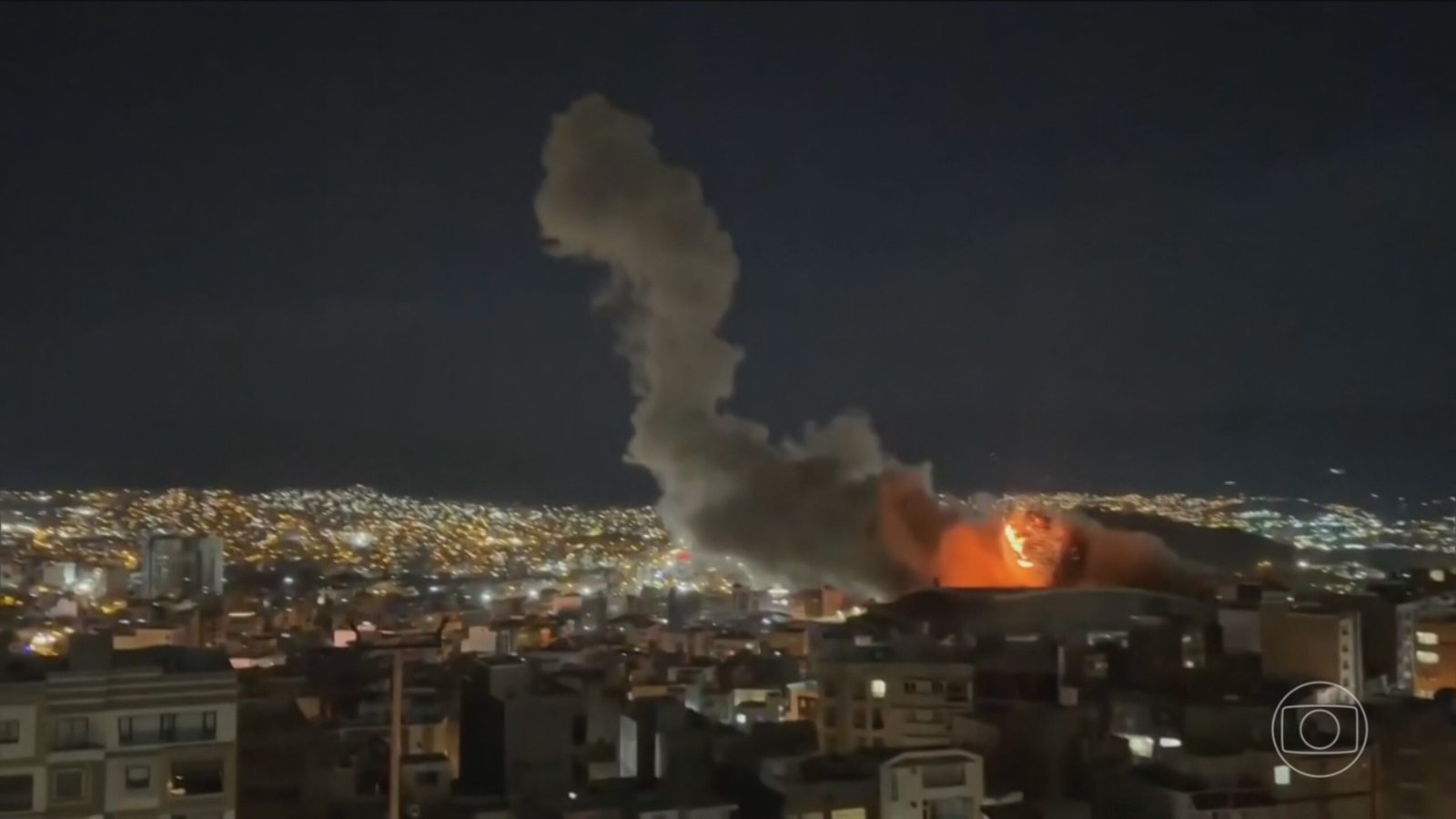
White House posts montage of attacks on Iran inspired by video game with hyped music The drastic effects of the first week of the war between the United States and Israel against Iran contrast with the lack of clarity in the objectives that led Donald Trump’s government to embark on this endeavor. The vehement expectation of the fall of the Ayatollahs’ regime, expressed at first by the American president with the bombings already underway, gave way to a range of contradictory messages transmitted in the following days by him and his advisors, revealing the lack of a consistent plan to attack Iran. The first results demonstrate that the regime has not fallen, nor does it show signs of being overthrown, and indicate that the conflict will continue beyond the “four or five weeks” predicted by Trump. US President Donald Trump REUTERS/Nathan Howard The head of the Pentagon, Pete Hegseth, lives up to the name change of his position from Secretary of Defense to that of War, by announcing that the military campaign is entering a new phase, with more devastating bombings. “If you think you’ve seen something, just wait. The amount of firepower that’s still coming, combined with Israeli forces, will multiply upon Iran,” said Hegseth, alongside Admiral Brad Cooper, head of US Central Command (Centcom). With more than a thousand victims and countless losses, the first week of the conflict profoundly altered the order of the Middle East and every day adds new actors to the main theater. Iran carried out retaliatory attacks on Gulf countries, angering the neighborhood, and fired missiles at Azerbaijan and Turkey. The US sank an Iranian warship off the coast of Sri Lanka, more than 3,000 kilometers away from the theater of war. Stock markets are in convulsions, and oil and gas prices have soared, with the Islamic Republic’s control over the Strait of Hormuz. War in Iran enters its 7th day with 20 countries involved in some way. But, for Trump, the warning of greater danger is internal, with the mid-term elections approaching in November, which will define whether he will maintain control of Congress. This perhaps explains the signals exchanged in the messages issued by the government. In his first public appearance, when Ayatollah Ali Khamenei was already dead, the president lowered his initial tone, which called for freedom for Iranians, and revealed that the successors considered by the White House to lead the country had also died. Secretaries Marco Rubio, of State, and Hegseth, began to outline more modest objectives, such as the destruction of the nuclear program, missile production and the Iranian Navy, ruling out the fall of the regime as a goal. Rubio, who reduced regime change to a hope rather than an objective, even admitted that the US entered the conflict in the wake of Israel. It was denied by Trump, with a very different explanation: that Iran would launch preventive attacks against the USA on its own. “We were negotiating with lunatics, religious fanatics, and I discovered that they would attack first,” alleged the president. The divergent messages of this first week seem to touch deeply on the unpopularity of a new external conflict for Americans, especially in the MAGA base that supports the president. Prominent figures, such as influencers Tucker Carlson, Megyn Kelly and Matt Walsh, exposed fissures in the movement and condemned the country’s involvement in Iran as a betrayal of the principles of the “America First” motto, widely propagated by Trump in his election campaigns. A prolonged, costly war with American military casualties will certainly expand this perception of discontent. THIS IS WORTH – infographic 7th day of war in Iran Editoria de Arte/g1
Source link
In one week, war in Iran produces drastic effects in the Middle East and contradictory messages from the US
22
