
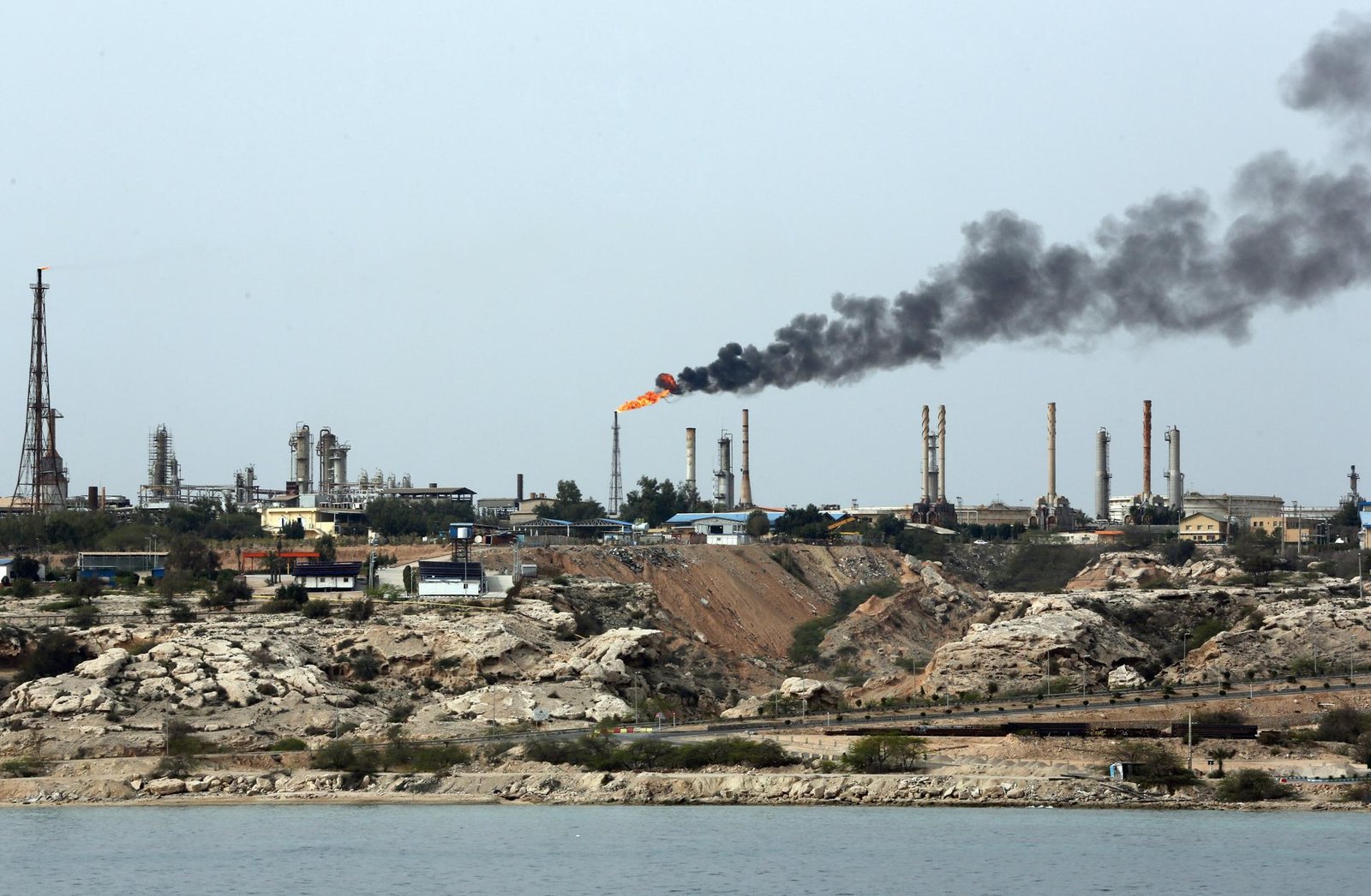
A discreet strip of land measuring just 20 square kilometers located in the Persian Gulf could become a strategic target in the US and Israeli military campaign to topple the structures that keep the Iranian regime standing.
Kharg Island is home to the country’s main oil installation, responsible for processing up to 90% of the oil that is exported. The withdrawal of Iranian control over the territory could bring down one of the economic pillars of the Revolutionary Guard, considered the “last guardian” of the regime.
Professor of International Business and International Relations at the Pontifical Catholic University of Paraná (PUCPR), João Alfredo Lopes Nyegray, explained to People’s Gazette that the island is the physical bottleneck connecting Iran to its main external cash flow.
“In terms of infrastructure, Kharg is home to one of the largest and most critical export terminals in the country; recurring estimates in energy sources indicate that a very high portion of Iranian crude oil leaves there. In addition to concentrating shipments, the island has a large storage capacity at the terminal itself, which allows Iran to ‘dampen’ flow fluctuations and organize shipments even under pressure, something that specialized services also detail when dealing with infrastructure and expansion of tanks in Kharg,” he said.
For the analyst, losing control of the island of Kharg would go far beyond losing a symbolic position in the Persian Gulf. In practice, it would mean transforming an already costly conflict into a potentially suffocating war.
Ricardo Caichiolo, professor of International Relations and director of Ibmec Brasília, states that Kharg has consolidated itself as the central pillar of Iran’s economic survival. Without the island, Tehran will face a commercial strangulation, which could paralyze the national economy, already deteriorated over the years by the numerous sanctions it faces.
“The island is the starting point of the ‘ghost fleet’ that circumvents Western sanctions to supply the Chinese market. Losing functional control of Kharg would mean, in practice, the immediate strangulation of Tehran’s foreign currency revenues. Without this financial flow, the State loses the ability to finance internal subsidies and maintain the public machinery, resulting in an unprecedented commercial isolation that would paralyze the national economy”, he assesses.
According to the company Kpler, which collects data and analysis for the global commodities market and maritime logistics, Iran drastically increased its oil production at the Kharg facility in the weeks leading up to the joint Israeli and US attacks, reaching record levels of four million barrels per day, something not seen since 2018, when President Donald Trump imposed new nuclear sanctions on the country.
What is the strategic importance of the island for the Iranian Revolutionary Guard?
The US and Israel have promised to intensify pressure on the Iranian regime this week. One of the strategic targets that military forces have targeted in the last seven days is the Iranian Revolutionary Guard, considered the “last guardian” of the Islamic regime.
The powerful paramilitary group linked to the Persian country’s leadership exerts profound influence on different sectors of Iranian society. The Revolutionary Guard runs its own navy and air force, functioning independently from Iran’s regular armed forces.
But the influence goes far beyond the military area, also encompassing intelligence, politics and economics. One of the country’s most important sectors receives special attention from this coercive force linked to the regime: oil and gas.
For Nyegray, the island of Kharg is the “cornerstone” of Iranian revenue and a major generator of resources for the Revolutionary Guard itself, one of the pillars of Iranian power capable of quelling internal uprisings when necessary.
The director of Ibmec Brasília, Ricardo Caichiolo, describes the relationship between the Revolutionary Guard and the island of Kharg as symbiotic. “The island operates under the direct surveillance of the Islamic Revolutionary Guard Corps, which not only guarantees the military security of the perimeter, but also coordinates clandestine logistical operations to circumvent international embargoes.”
Risks of an attack on Kharg
So far, the joint Israeli and US operation has not reached the island of Kharg and this may have a clear reason: the expected turbulence for global markets.
The start of the conflict a week ago triggered instability in oil prices. This Friday (6), Brent oil, which serves as a global reference, surpassed the level of US$92 per barrel and market expectations do not improve as the days go by.
An analysis of the think tank americano Center for Strategic and International Studies (CSIS) points out that a blockade or seizure of Kharg Island would have the capacity to generate a new wave of turbulence in the energy market and the global economy.
Action at Kharg could disrupt a flow of up to 1.6 million barrels per day of Iranian crude oil exports, all destined for China. The problem is that an interruption of this level anywhere in the world directly affects global prices.
According to CSIS, a US and Israeli blockade of Iran’s control over the island and the impacts of the decision would lead China to bid for replacement supplies, likely representing at least a $10 to $12 increase in the global price of crude oil.
In the case of attacks on infrastructure, the effects could be even more devastating. The price of oil would probably be affected more seriously than in the first hypothesis as damage to Iranian infrastructure would keep oil off the market for a long period, creating long-term instability.
Possible operation on the island is unlikely to topple the regime in the short term, analysts say
Analysts emphasize that there is no immediate way to say that the loss of control of this strip of land would lead to the overthrow of the Islamic regime. “[…] But it is certain that such an event would provoke an existential challenge. The inability to pay for the security apparatus and contain inflation, which was already at extremely high levels even before the attacks began, and which would certainly increase following the oil collapse, would weaken the regime’s support bases, making maintaining central power an extremely difficult task”, assesses Caichiolo.
Nyegray, in turn, differentiates the economic collapse that the seizure of the island could generate from the political collapse. “A shock in Kharg could dramatically reduce foreign exchange inflows and increase social stress, but regimes like Iran’s are designed to survive on repression, rationing and a war economy for surprisingly long periods.”
The analyst also points out that an attack that threatens the financial survival of the Revolutionary Guard could have a reverse effect and strengthen it in the short term. “[…] When the system goes into siege mode, the center of gravity shifts from the political to the security: more control, more repression, less space for dissent”, he explains.
For the professor, the fall of the Iranian regime would depend less on losing Kharg and more on a rare combination: fracture between elites (clergy, Revolutionary Guards and bureaucracy), inability to pay and control security forces, large-scale collapse of legitimacy and an opposition capable of filling the vacuum with coordination. “And that, historically, is not an automatic consequence of a single infrastructure hit.”
