
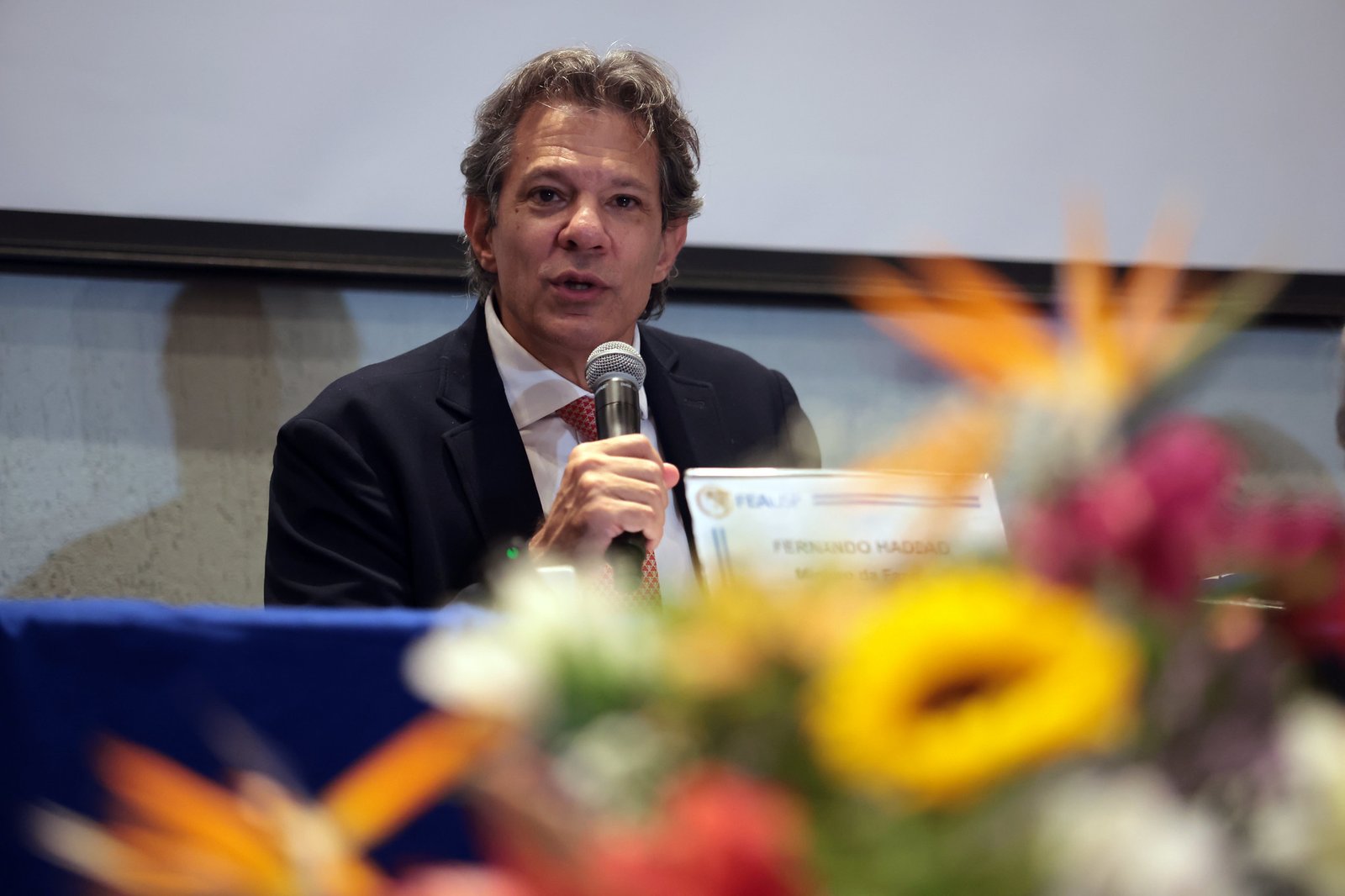
Finance Minister Fernando Haddad minimized the economic impact of the war in Iran on Brazil. In an interview given this Monday (2), before giving a master class at the University of São Paulo (USP), he said that the country is “in a good moment of attracting investment” and classified the tension in the Middle East as a “short-term turbulence” that should not “impact the economic variables” in Brazil.
Haddad chose to speak about the government’s expectation of a resolution to the war in Iran, refusing to assess the potential gain for Brazil from the increase in oil prices resulting from the conflict.
“No one is counting on this to take advantage, quite the opposite, Brazil hopes for a world of peace and tranquility”, declared the PT member, who is leaving the economic team and could run for governor of the state of São Paulo at the request of President Lula (PT).
After joint attacks by the United States and Israel, which culminated in the death of Iranian supreme leader, Ali Khamenei, the Islamic country decided to close the Strait of Hormuz, the flow route for around 30% of all the world’s oil.
Brazil produces around 4 million barrels of oil per day. Even so, it fluctuates between the 6th and 8th largest producer in the world, being responsible for around 5% of the global total.
Despite minimizing the impacts, the PT member defends attention to the situation. “At this point, we will monitor it with caution. And, eventually, be prepared for a worsening of the economic environment, as at this moment it is difficult to predict what will happen,” he said.
Itamaraty chose to condemn and express “grave concern” about the attack. “The attacks occurred in the midst of a negotiation process between the parties, which is the only viable path to peace, a position traditionally defended by Brazil in the region”, explains the organization.
With his pre-campaign for the Presidency started abroad and focused on international relations, senator Flávio Bolsonaro (PL-RJ) opined that, with Lula, Brazil is placed “on the wrong side of a serious conflict”.
