
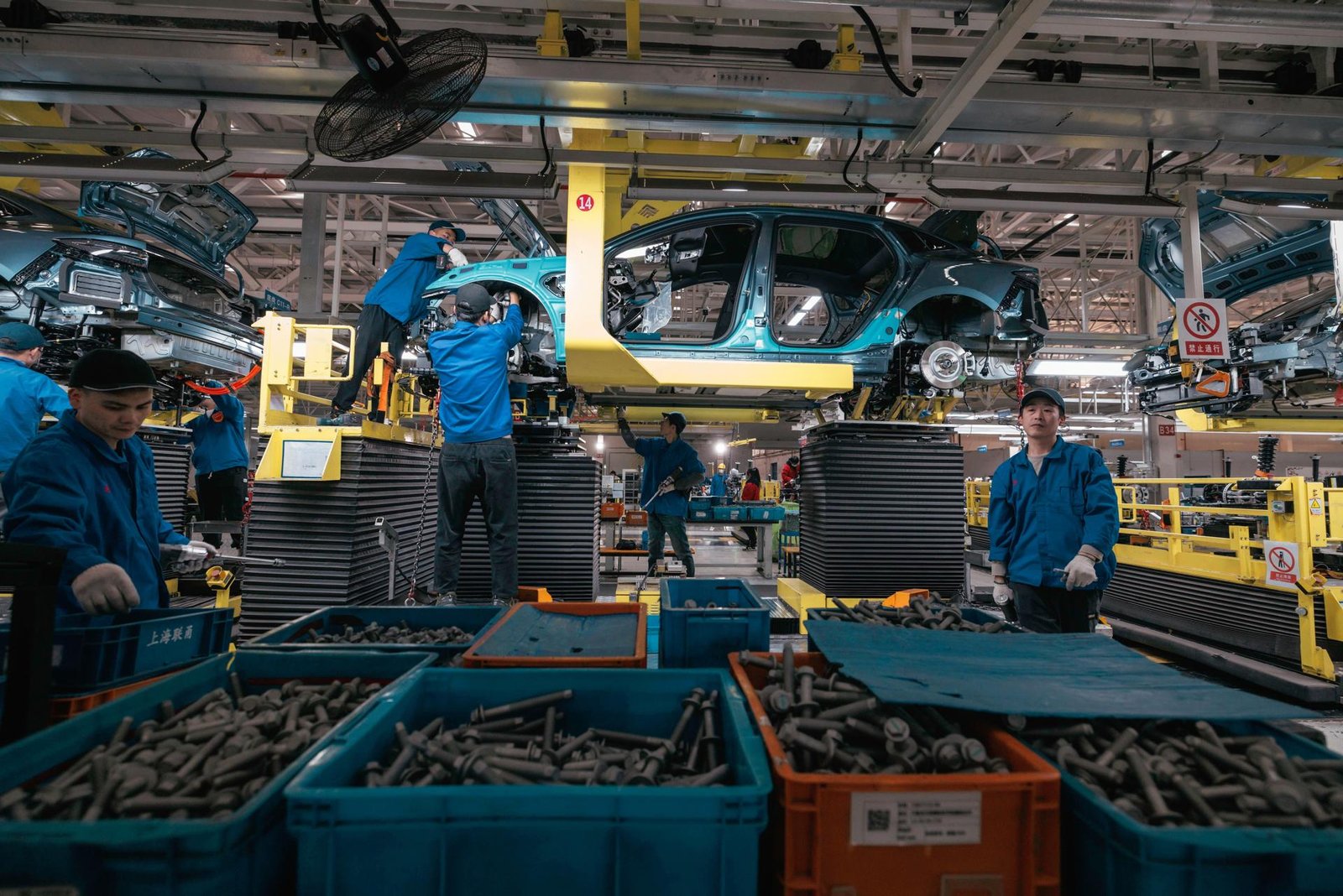
Growing in Brazil, where they represent an increasing share of new vehicle sales, electric and hybrid cars manufactured by automakers in China began to be treated by some countries of the North Atlantic Treaty Organization (NATO) and by Israel as a possible strategic risk, because of the fear of espionage associated with the ability of these vehicles to collect and transmit data.
Military reports and analyzes from study centers indicate that the technology embedded in these Chinese vehicles, such as cameras, sensors, microphones, GPS and permanent internet connection, can transform them into Sensitive intelligence collection platforms for China’s communist regime.
In February, Poland decided prohibit entry of Chinese electric vehicles on the country’s military bases due to the risk of espionage and data leaks. According to Polish defense authorities, the measure is preventive in nature and is in line with practices adopted by NATO member countries and other allies to guarantee “high standards of protection of military infrastructure”.
Polish authorities stated that Chinese cars equipped with intelligent systems they can automatically collect data and send it to external servers without full user control.
Last year, the United Kingdom, another NATO member, issued, through the Ministry of Defense, internal guidance recommending that military personnel avoid holding sensitive conversations inside vehicles manufactured in China.
As reported by the British newspaperThe Telegraphthe warning was made after reports from British intelligence indicated that electric cars, as they remain connected to the internet and have sensors, cameras and on-board communication systems, can transmit data that could eventually be accessed by authorities of the Chinese regime.
According to theTelegraphthe British government began classifying several vehicles with Chinese technology on board as possible points of security vulnerability, especially in military environments or in areas considered strategic in the country.
Paulina Uznańska, researcher specializing in relations between the European Union and China and the impact of Chinese technologies on the West, from think tank Polish Centre for Eastern Studies (OSW)states in study about cybersecurity that modern electric vehicles function as “smartphones over rhodes”being able to collect large volumes of data about people, infrastructure and movements.
According to the researcher, these vehicles use sensors, cameras, geolocation systems and permanent connection to external networks, which can create risks such as data leakage, espionage and even remote interference in situations of international conflict or crisis. In the study, Uznańska states that the Chinese regime itself considers foreign electric vehicles to be a sensitive technology for national security.
Nos USAaccording to the British newspaper Financial Times and the agency Reutersthe Pentagon included in February this year the automaker BYD, one of the largest Chinese manufacturers of electric vehicles in the world and which is currently expanding its presence in Brazil, including with factories in the country, in an update of the list of companies that have links with the People’s Liberation Army of China, the military force of the Chinese communist regime.
The inclusion appeared in document which was hidden days after being released, without public explanation until now. The designation is used by the US Department of War to identify companies that can participate in the Chinese regime’s so-called “civil-military fusion” program, which involves sharing technology from Chinese companies with the country’s defense forces.
HAS Financial TimesBYD stated that any US proposal to include it in the list of companies that have ties to the Chinese military would be “completely unfounded” and declared that it is not a Chinese military company nor does it participate in civil-military fusion programs.
A People’s Gazette contacted BYD in Brazil to comment on the matter and is awaiting their position. The space will be updated when there is a demonstration. The US War Department was also asked for a position on the list, but so far there has been no response.
Last year, the United States Department of Commerce released a rule to restrict the use of foreign technology in connected vehicles, alleging risks to national security. The rule prohibited the import and sale of cars that use certain software or electronic components originating in China or Russia when these systems are linked to connectivity or autonomous driving functions, such as telemetry modules, Bluetooth, Wi-Fi, GPS, cellular communication, satellite connection or automated driving software.
Outside of NATO, Israel also decided last year to ban electric vehicles manufactured in China from entering the country’s military bases due to a security risk, on the grounds that these models could pose an operational vulnerability in sensitive installations. At the time, the local press reported that Israeli authorities even tried to disable communication functions on Chinese vehicles, but concluded that it was not possible to guarantee total security.
Risk of sabotage and remote access
In analysis of Poland’s decision to bar Chinese cars from military installations, the Center on Cyber and Technology Innovation (CCTI), linked to the think tank American national security Foundation for Defense of Democracies (FDD), states that the concern of the United States and allies regarding Chinese cars is not limited to data collection at this time.
According to the CCTI, Western authorities also see a risk that these Chinese vehicles could be used for remote sabotage, since, according to the CCTI, electric models can incorporate connected systems capable of allowing external access to embedded software and functions.
Report published in 2023 by the company Dyami Security Intelligence, specialized in geopolitical risk analysis, warned that electric cars produced in China could act as technological “Trojan horses”, due to the large number of digital systems on board.
The report highlights that China’s National Intelligence Law obliges companies to cooperate with the country’s security services, which could allow the Beijing regime to request access to data or technologies considered strategic.
