
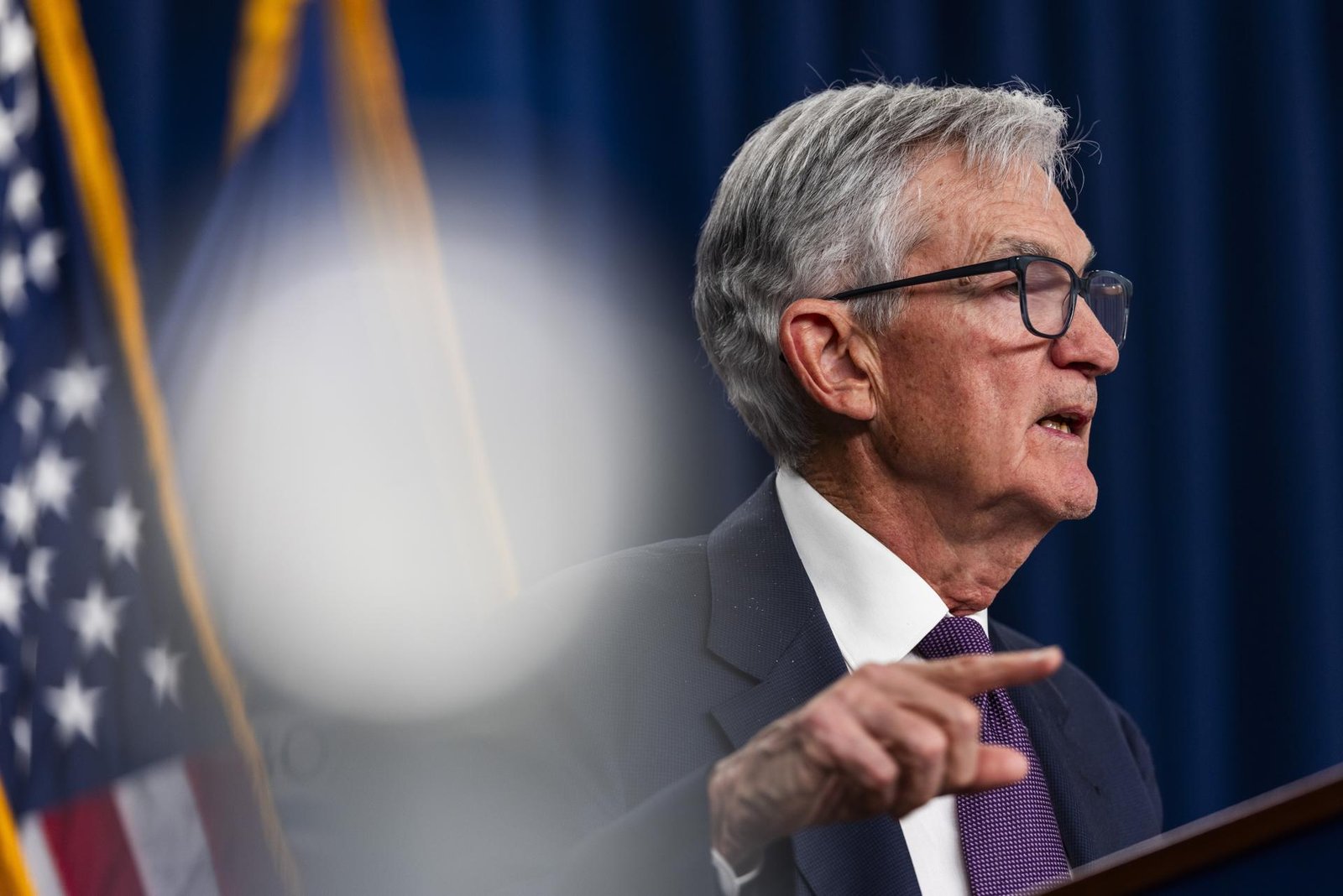
The US Federal Reserve (Fed) announced that interest rates will remain unchanged this Wednesday (18), keeping them in the range between 3.5% and 3.75%, although it stated that the repercussions of the war with Iran are “uncertain”.
The Federal Open Market Committee (FOMC) said in a press release issued at the end of its two-day monetary policy meeting that uncertainty about the economic outlook “remains elevated” and that “the impact of developments in the Middle East on the U.S. economy is uncertain.”
“Available indicators suggest that economic activity has been expanding at a solid pace,” says the statement released by the Fed. Regarding its dual mandate of achieving full employment and inflation around 2%, the central bank stated that “job creation has remained weak and the unemployment rate has changed little in recent months”, while “inflation remains somewhat elevated”.
The most recent inflation data for February showed underlying inflation at 2.5% year-on-year, while the labor market report revealed that 92,000 jobs were lost last month.
The Fed’s decision to keep interest rates unchanged is in line with market expectations, despite US President Donald Trump’s insistence that the central bank reduce the percentages.
Trump, who pressured Fed President Jerome Powell to ease monetary policy, called an emergency meeting in response to the crisis caused by the war and rising oil prices, in order to discuss an immediate cut in interest rates.
Powell, who has just chaired an FOMC meeting for the penultimate time, is expected to step down in May, and the US president has named Kevin Warsh, a former member of the Fed Board of Governors, as his successor.
Fed inflation projection for 2026 already reflects rising oil prices, says bank president
According to Fed President Jerome Powell, the slight price increase predicted by the bank for this year already reflects the impact of the rise in oil prices resulting from the war with Iran, but it is still too early to know the full extent of this impact.
Powell indicated at a press conference that the Fed has finalized its inflation projections, which indicate an increase of two-tenths of a percentage point, to 2.7%, in underlying inflation this year, and that these numbers “are certainly linked to developments in the Middle East and the price of oil.”
“The economic effects could be bigger, they could be smaller. They could be much smaller or much larger. We just don’t know,” he added.
Powell also pointed out that this slightly upward inflation projection is “a reflection of the slow progress (in terms of falling prices) that we have seen in relation to tariffs, progress that we are convinced will occur.”
