
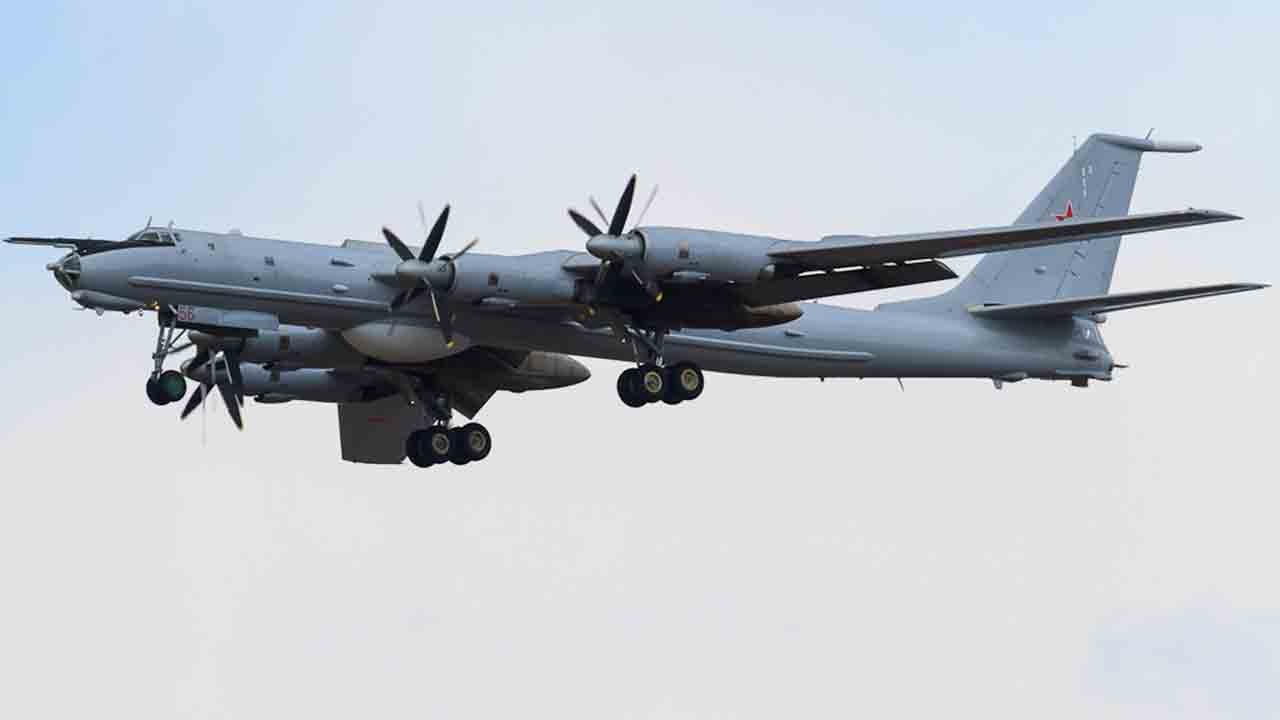
The North American Aerospace Defense Command (NORAD) stated that it detected and tracked two Russian Tu-142 military aircraft operating in the Air Defense Identification Zones (ADIZ) of Alaska and Canada on Wednesday, March 4, 2026.
According to a statement from NORAD Public Affairs, the command launched a comprehensive surveillance and interception operation to identify and track the Russian aircraft as they operated in international airspace.
The following resources were mobilized for the assignment:
- two F-35 fighter jets from the United States Air Force
- to F-22-jagerfly
- fire KC-135-tankfly
- one E-3 AWACS early warning aircraft
- two Canadian Air Force CF-18 fighter jets
- one CC-150 tanker from Canada

These resources were used to identify, monitor and intercept the Russian aircraft while operating in the North American air defense zones.
According to NORAD, the Russian planes remained in international airspace and did not violate the sovereign airspace of either the United States or Canada. The command emphasized that this type of Russian military activity in the ADIZ zones of Alaska and Canada occurs regularly and is not considered a direct threat.
What is an ADIZ?
The Air Defense Identification Zone (ADIZ) begins where a country’s sovereign airspace ends. It is an area in international airspace where aircraft must identify themselves in advance for reasons of national security.
NORAD’s defense system
NORAD operates a layered defense network that combines:
- surveillance satellites
- ground-based radars
- airborne radars
- fighter
This system makes it possible to detect and track aircraft approaching North America, and to take various operational measures when necessary.
The command stated that it remains fully prepared to use multiple response options to defend North American airspace.
+ The Singapore Air Force will receive three G550-MSAs for maritime patrol missions
Source and images: NORAD. This content was created with the help of AI and reviewed by the editors.
