
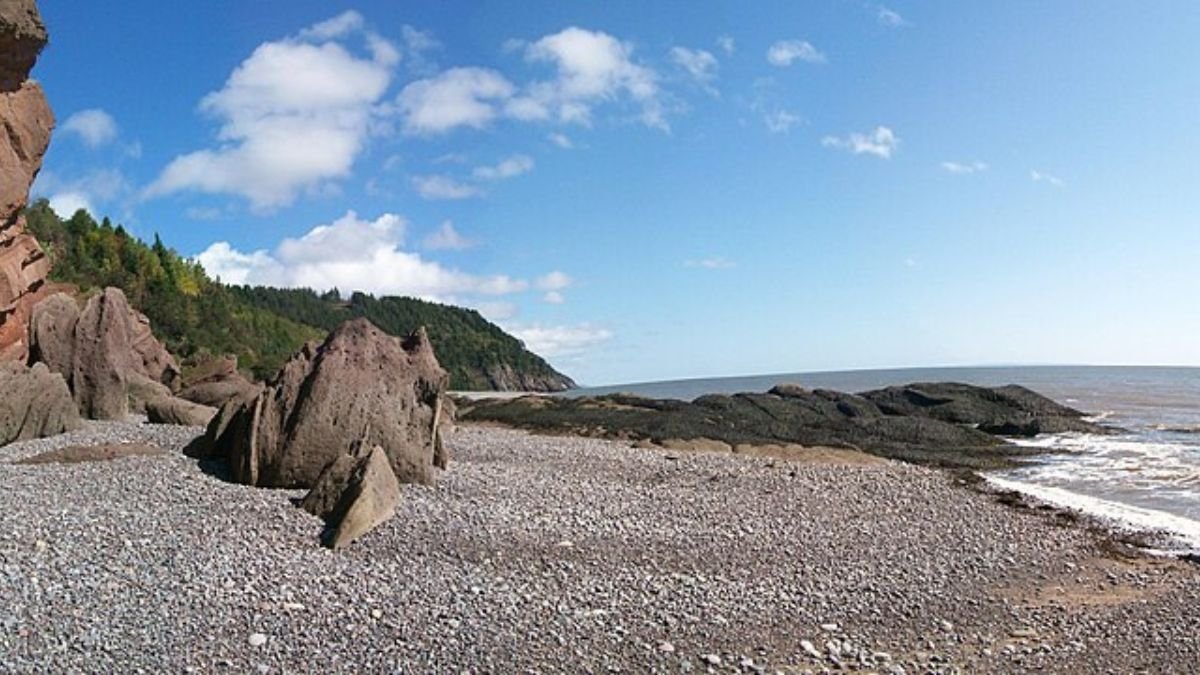
In the Bay of Fundy, located in Canada, the sea disappears twice a day. There, the tidal phenomenon reaches extreme proportions: the ocean recedes, exposes the ocean floor and, a few hours later, returns with enough force to once again cover the entire landscape.
Considered one of the natural wonders of North America, the region is known for recording the highest tides in the world. More than a geographic curiosity, it is one of the most impressive natural events on the planet.
At certain points, such as Burntcoat Head Park and Hopewell Rocks, the difference between high tide and low tide can be as much as 16 meters. This extreme contrast creates the impression of deep sea versus emptiness within a few hours.
What happens for the sea to disappear in the Bay of Fundy?
The tidal phenomenon in Canada follows the same physical principle that occurs on the rest of the planet: the gravitational attraction exerted mainly by the Moon, and to a lesser extent by the Sun, causes the periodic movement of water masses.
On average, there are two high tides and two low tides per day, with an interval of approximately six hours between them. However, in the Bay of Fundy this cycle is amplified by unique geographic features.
The funnel shape of the bay, combined with the phenomenon of natural resonance, intensifies the movement of the waters. This causes the sea level to rise and fall exceptionally.
This variation can reach around 16 meters, an impressive contrast when compared to most coastal regions on the planet. This means that what on other beaches would be a simple coastal variation, there becomes a radical transformation of the landscape.
The place that in the morning looks like an ordinary beach can, a few hours later, be submerged under dozens of meters of water. This intense alternation fuels the fascination of those seeking to understand where the sea “disappears”.
What can visitors see and do when the tide is low?
When the sea recedes, reveals a vast ocean floor composed of mud, sand, algae and rock formations shaped over millennia. Among the experiences most sought after by tourists are:
- walks on the ocean floor at Burntcoat Head Park;
- explore the iconic Hopewell Rocks formations;
- observe small crustaceans, molluscs and algae adapted to the tidal cycle;
- participate in guided tours for environmental interpretation;
- photograph natural patterns created by sediments and currents.
The phenomenon occurs all year round, but observation depends on rigorous planning. As the tides follow a predictable schedule, consulting the tide table is essential for anyone wishing to go on trips to see low tide.
Furthermore, any visit requires attention: the ground can be muddy, slippery and, in some places, unstable. Boat trips, marine life observation and coastal trails complement the experience for those looking for tourism in the Bay of Fundy with an ecological focus.
Ecological and scientific importance of the Bay of Fundy
When the tide recedes and reveals extensive areas of mud and sand, it is not just a visual change in the landscape, but the exposure of one of the most dynamic ecosystems on the planet.
These environments are home to a significant diversity of organisms adapted to extreme cycles of submersion and exposure, such as crustaceans, molluscs, aquatic insects and different species of algae.
From a scientific point of view, the exposed benches act as natural records of the interaction between ocean, climate and coastal geography. Over millennia, currents, winds and sedimentation processes have shaped these surfaces, creating patterns and textures in the soil.
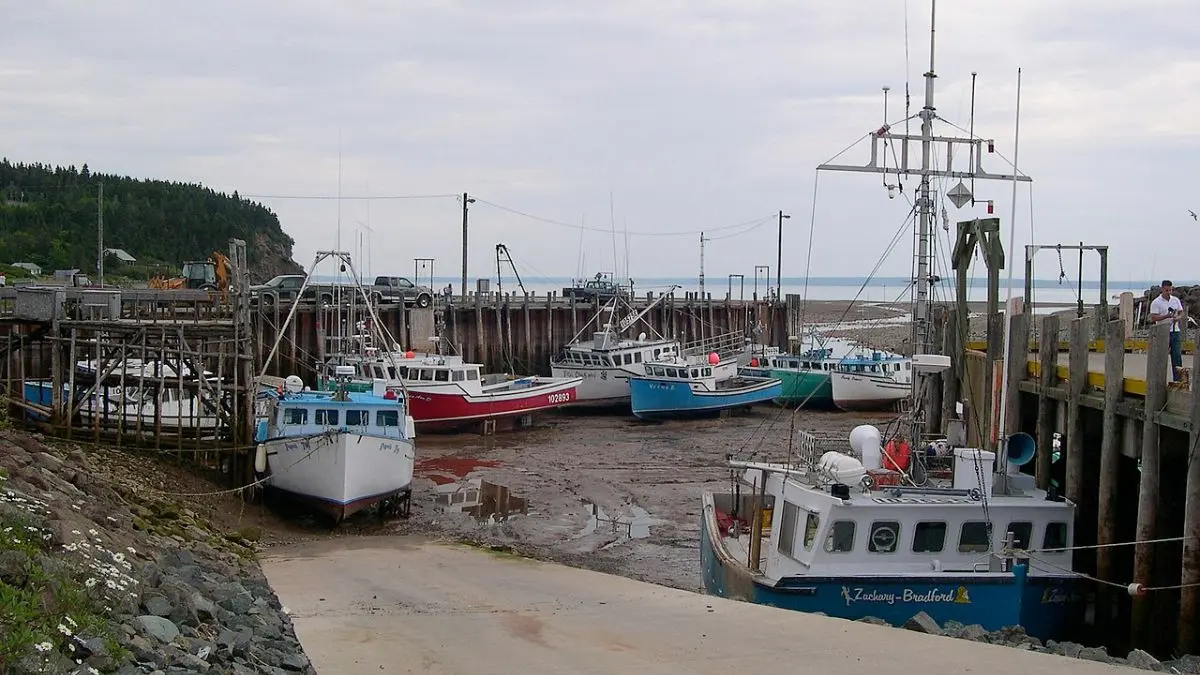 When the tide recedes, it reveals extensive areas of mud and sand. Photo: Wikimedia Commons (Photo: Wikimedia Commons)
To see the Bay of Fundy phenomenon is to witness a powerful reminder of the planet’s natural dynamics. The alternation between deep sea versus void is not a visual trick, but the precise result of the interplay between coastal geography, gravitational forces and natural resonance.
For travelers interested in nature, science and unusual experiences, the region offers more than beautiful landscapes: it provides the rare opportunity to walk on the seabed and observe, in real time, the transformation of one of the most extraordinary ecosystems in the world.
