
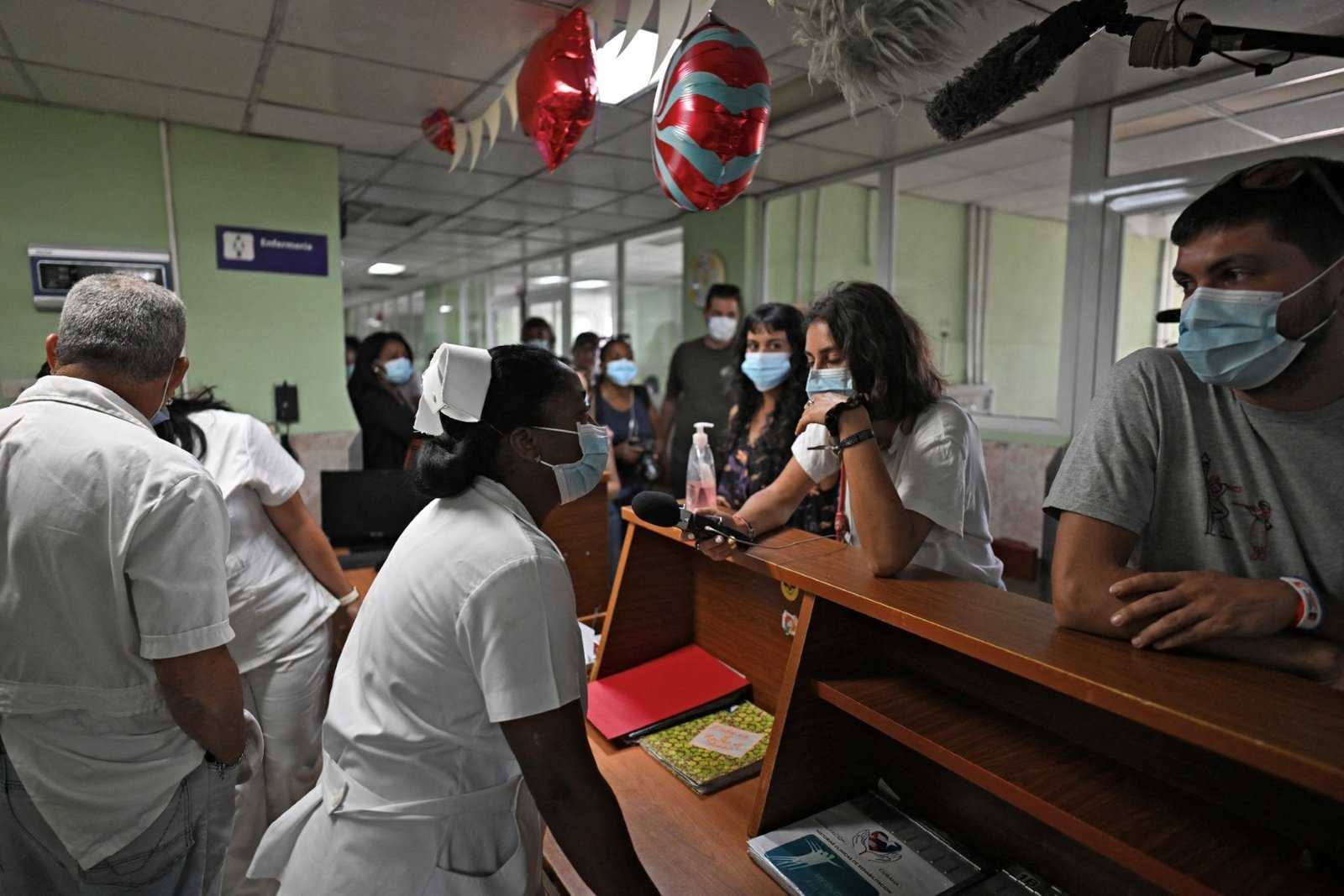
Members of the medical team at the William Soler Cardiocentric Pediatric Hospital — beneficiary of humanitarian aid brought by the Nuestra América flotilla from Mexico — speak with flotilla delegates in Havana, March 24, 2026 Photo by Yuri Cortez / AFP Doctors at Cuba’s main cardiopediatric hospital face dramatic dilemmas as the fuel blockade imposed by the United States puts further pressure on the island’s fragile healthcare system: deciding which children receive life-saving treatment first and which ones will have to wait. 📱Download the g1 app to see news in real time and for free During a visit by AFP journalists to the William Soler pediatric cardiocenter, in Havana, mothers wearing masks remained next to their children in dimly lit rooms, lit only by natural light. Cuban hospitals have been facing shortages of resources and aging equipment for years, but the situation has worsened since US President Donald Trump imposed a de facto oil blockade on the island in January. Satellite images show blackout in Cuba after power supply collapse; PHOTO Cardiologist Herminia Palenzuela, 79 years old, stated that the hospital, the only one of its kind in the country, needs to make “very difficult” decisions. Children with less severe cases are “at the bottom of the list, simply waiting” for resources. READ ALSO: Satellite images show blackout in Cuba after collapse in energy supply UN proposes aid plan to Cuba by sending fuel to contain energy crisis The hospital cares for newborns, children and pregnant women diagnosed with critical heart disease. “Resources are always reserved for these types of patients because they are the ones who could die at any time,” said Palenzuela. A woman takes care of her son at the William Soler Pediatric Cardiology Center — one of the beneficiaries of humanitarian aid brought by the Nuestra América flotilla from Mexico — in Havana Photo by Yuri Cortez / AFP The cardiocenter has 100 beds, but not all of them are used, as doctors need to ration equipment and supplies for patients at imminent risk. “We would like to operate more, but resources do not allow it,” added the doctor. With daily blackouts – including two national outages last week – the government prioritizes hospitals, equipped with generators. Still, difficulties persist: some professionals walk kilometers to work due to lack of transportation. “Dramatic levels” The center’s director, Eugenio Selman, stated that the shortage of medicines and equipment is an old problem, linked to the American embargo, but that the current situation has reached “dramatic levels”. The crisis was worsened by the interruption of Venezuela’s oil supply following the fall of Nicolás Maduro in January. Yaima Sánchez, mother of a boy with tachycardia, was able to get care because a device was available. “I come with the hope that the doctors will help me with whatever they have,” he said, highlighting that the equipment is not always available or works due to a lack of batteries. According to the Ministry of Health, more than 96,000 Cubans, including 11,000 children, are awaiting surgery amid the reorganization of the system. “Which is fair” On Wednesday, the hospital received medicines, food and hygiene products sent by an international convoy that brought 50 tons of humanitarian aid to the island. “The situation is clearly difficult” and “that’s why we do what is right: bring help”, said Italian activist Martina Steinwurzel. The UN coordinator in Cuba, Francisco Pichón, announced an emergency plan worth 94.1 million dollars (R$496.78 million) to allow the import of fuel and maintain essential services. “If the current situation continues and fuel reserves are exhausted, we fear a rapid deterioration, with possible loss of life,” he warned.
Source link
Crisis in Cuba makes doctors choose which children receive hospital care
5

previous post