
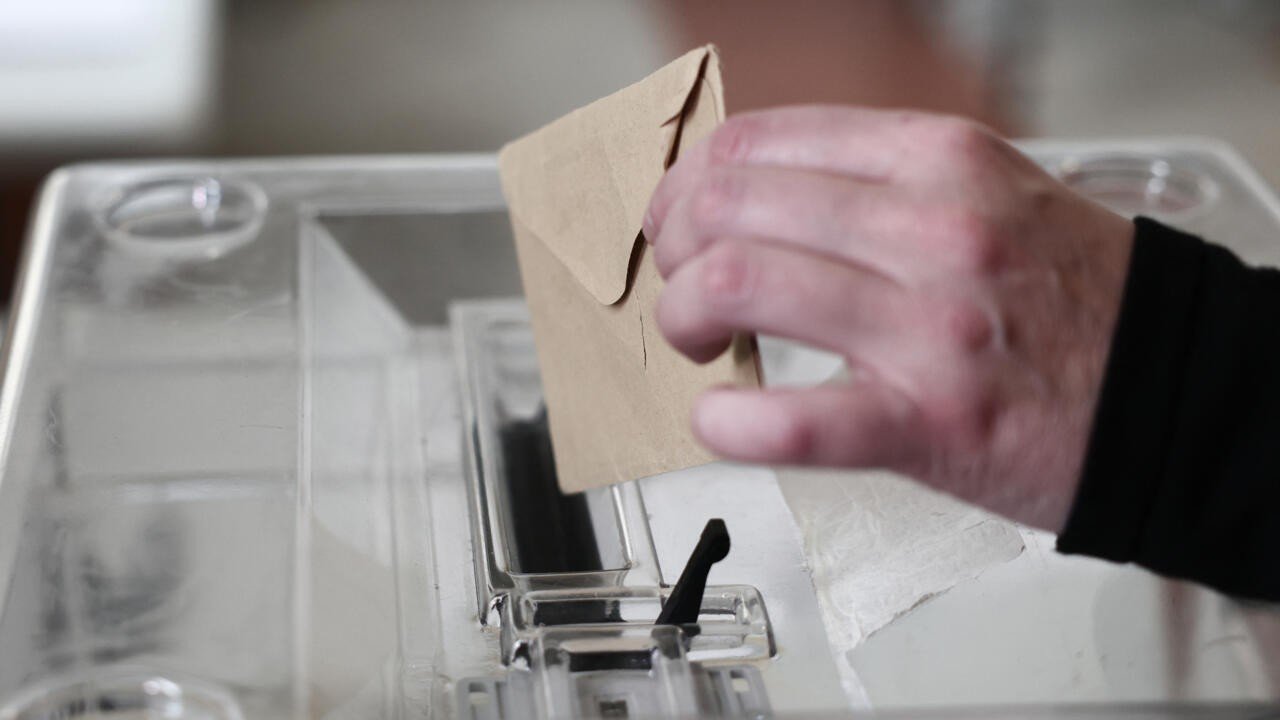
Illustrative image shows the moment of voting, with the paper envelope, in the French ballot boxes, in the 2026 municipal elections Thibaud Moritz/AFP In a municipal election in the interior of France, two candidates draw attention with names that resemble well-known figures from international politics. Charles Hittler evokes the Nazi dictator Adolf Hitler (1889–1945), while Antoine Renault-Zielinski refers to the Ukrainian president Volodymyr Zelensky. ✅ Follow the g1 international news channel on WhatsApp The dispute takes place in Arcis-sur-Aube, a city with less than three thousand inhabitants, and gained international repercussion due to the coincidence. Despite this, the campaign is focused on local themes, such as security, public services and rural tourism. Despite the coincidence, the dispute does not involve extreme ideologies. As in many small French towns, the candidates are residents without strong ties to national parties — the so-called sans étiquette (without etiquette) — and they present practical proposals. In Arcis-sur-Aube, voters prioritize issues such as maintenance of public services, local commerce, transport and security. Charles Hittler, acting mayor, is officially classified as Divers droite (varied right), a label used in municipal elections to indicate candidates who tend to traditional right-wing positions, but who are not part of national parties and do not represent extremist ideologies. Hittler’s campaign emphasizes accumulated “administrative experience”, “maintaining security” and the continuity of already implemented local policies, without resorting to radical ideological discourses. Antoine Renault-Zielinski, in turn, appears as an independent candidate, without a defined party label, and is betting on proposals aimed at local economic development, “valuing rural tourism” and strengthening “community activities”. Zielinski’s pragmatic profile does not clearly fit into national ideological spectrums, and the campaign focuses on concrete actions that directly impact residents. Among them, Annie Soucat, third placed in the first round, could play a decisive role in the second round. READ ALSO Fire and blocked toilets force the US to withdraw the world’s largest aircraft carrier from operations against Iran Mauro Vieira refutes US report on alleged Chinese bases in Brazil Cable car cabin falls from mountain in Switzerland with a person inside; watch video Nazi occupation Adolf Hitler and Heinrich Himmler search SS troops Associated Press The weight of historical memory in France adds another layer to the narrative. The Nazi occupation during World War II is still strongly remembered and studied, marked by museums, memorials, ceremonies and school programs that preserve the memory of the population’s suffering. Names like Hittler immediately evoke this dark past, and any reference, however casual or phonetic, sparks attention and debate, even in a small-scale municipal election. France maintains an active collective memory of occupation and liberation, and everyday events—including local elections—can tap into this historical heritage in unexpected ways. Arcis-sur-Aube, moreover, has its own historical weight: it was the scene of a Napoleonic battle in 1814, reminding us that clashes, even if today only symbolic or electoral, are part of local tradition. The attention generated by the curious surnames does not change the fact that, for local voters, the election is about the efficient management of the village. Ultimately, the result of the second round in Arcis-sur-Aube should be defined not by the historical curiosity evoked by surnames, but by each candidate’s ability to convince voters about the city’s future. Still, the dispute has already secured a unique place in the news — remembering that, in politics, even coincidences can tell a good story. See the videos that are trending on g1
Source link
Coincidence of names draws attention in election in France: Hittler and Zielinski compete for mayor
25
