
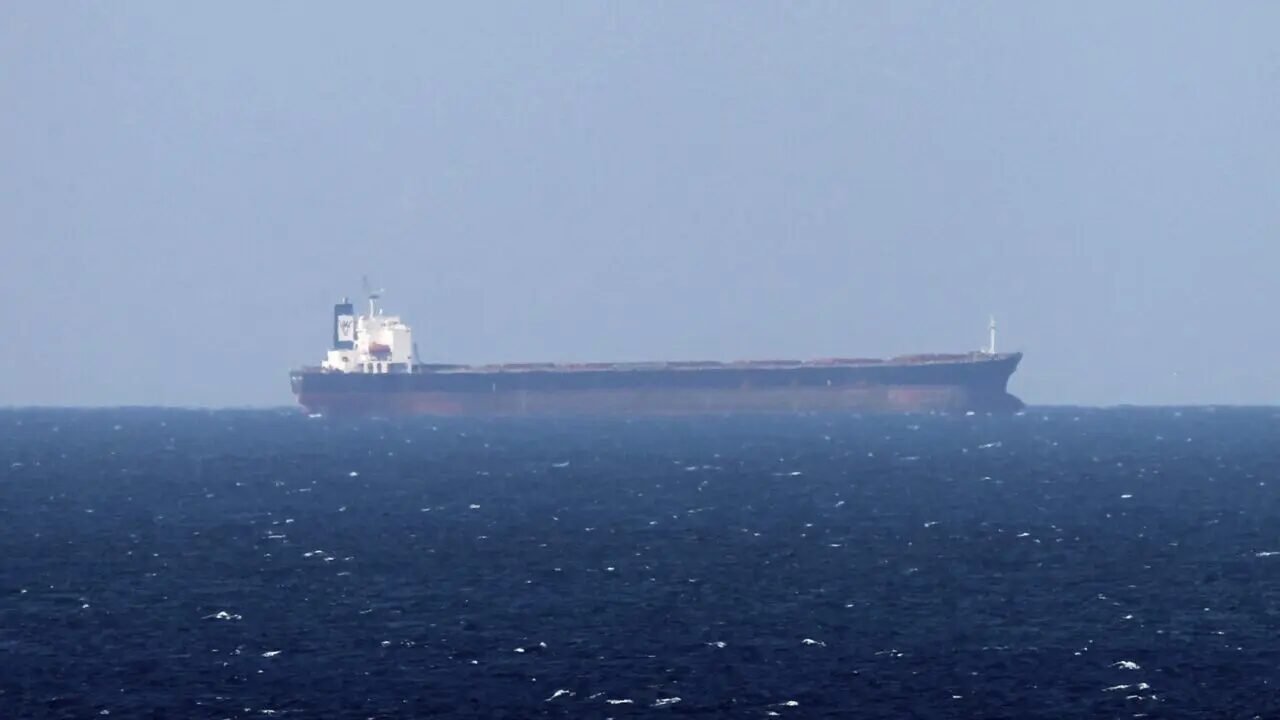
The Strait of Hormuz, one of the world’s main oil routes, has been closed for security reasons. The Iranian state agency Tasnim released the information this Sunday (1st). Around 150 oil tankers are anchored in the Persian Gulf.
The strait passes through the territorial waters of Iran and Oman. The vessels are clustered in the open sea and off the coasts of major Gulf oil producers such as Iraq and Saudi Arabia, as well as Qatar, one of the largest global exporters of liquefied natural gas (LNG).
“The Revolutionary Guard has warned several vessels that due to unsafe conditions around the strait resulting from US and Israeli military aggression and Iranian responses, passage through the strait is currently unsafe,” Tasnim quoted the Guard as saying.
According to the agency, Iran struck 14 US bases in the region. The attacks occurred in retaliation for the offensive by the United States and Israel. Oman’s maritime security center reported that an oil tanker, called “Skylight”, was attacked about five nautical miles off the coast of Masandam. Four people were injured.
Blockage in Strait of Hormuz threatens up to a quarter of global oil
According to the US Energy Information Administration, a blockage in the Strait of Hormuz could hold back 20% to 25% of the world’s oil exports. The volume exceeds 20 million barrels per day. The blockade tends to cause an immediate spike in commodity prices. Brent could surpass US$100 per barrel. Furthermore, around a fifth of world trade passes through the area.
Most of the oil that passes through the strait goes to Asia. Half of China’s supply, the largest global importer, comes from the region. In Japan, the share reaches 90%. The United States Maritime Administration has advised commercial ships to avoid the Persian Gulf. The recommendation includes the Strait of Hormuz.
A 2025 report from the US Energy Information Administration found few alternatives for moving oil if the strait is closed.
Saudi Arabia and the United Arab Emirates have limited pipeline infrastructure to bypass the Strait of Hormuz. However, most of the Gulf’s oil does not have alternative routes to leave the region.
With information from EFE.
