
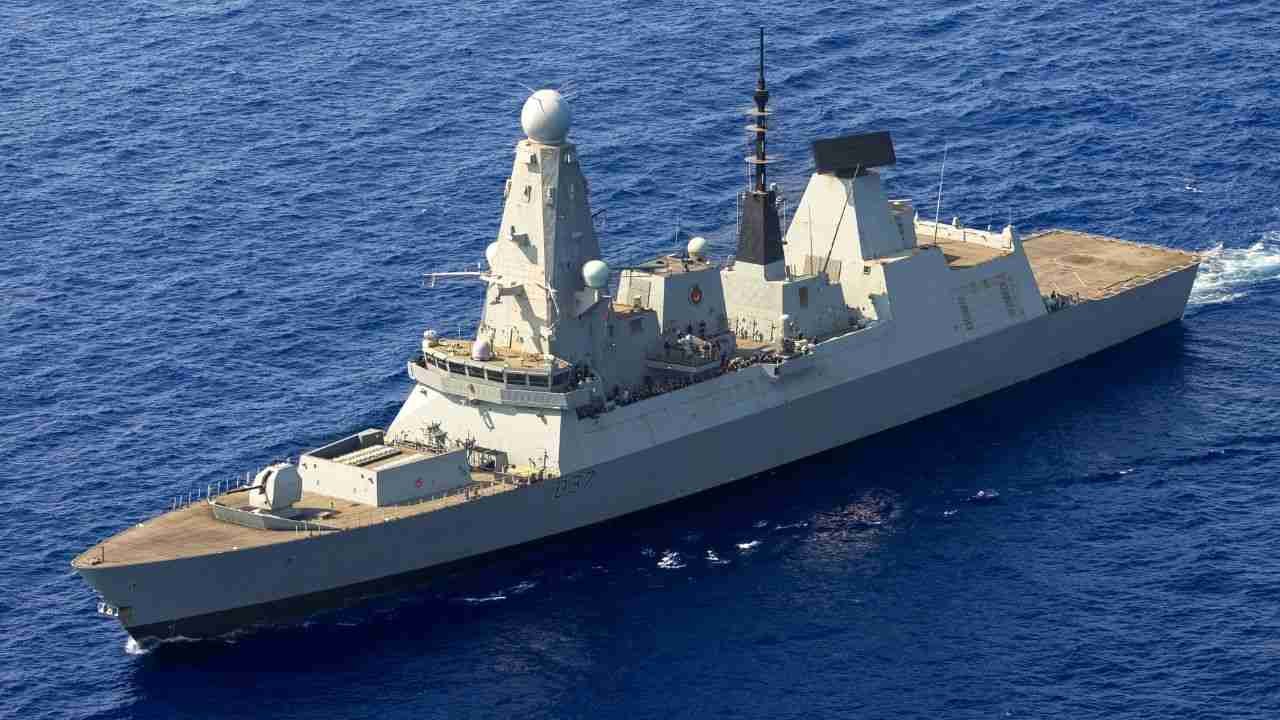
The United Kingdom’s Royal Navy has begun studies to incorporate unmanned surveillance ships capable of detecting aerial threats in real time.
The initiative, linked to the HORUS Projectseeks to accelerate the acquisition of systems that expand monitoring capabilities against drones, fighters and cruise missiles in increasingly contested maritime environments.
The focus of the program is on speed and the use of mature technologies. The Ministry of Defense intends to select solutions available on the market and put them into operation within a short period of time, between four and six months, prioritizing suppliers capable of delivering reliable systems at a fast pace.
The proposal relies on a distributed network of sensors installed on unmanned platforms, forming a “system of systems”. This approach makes it possible to expand surveillance coverage at a lower cost, in addition to integrating the data collected with more advanced weapons systems, increasing the efficiency of naval operations.
+Russian Su-30 fighter violates Estonian airspace for the first time in 2026
Another central point is the autonomy of these platforms, which must remain in operation for up to 90 days without the need for on-site maintenance. The expectation is to reduce risks to crews and reduce dependence on manned resources, while maintaining continuous surveillance over large maritime areas.
Source: UK Defence Journal | Photo: @RoyalNavy | This content was created with the help of AI and reviewed by the editorial team
