
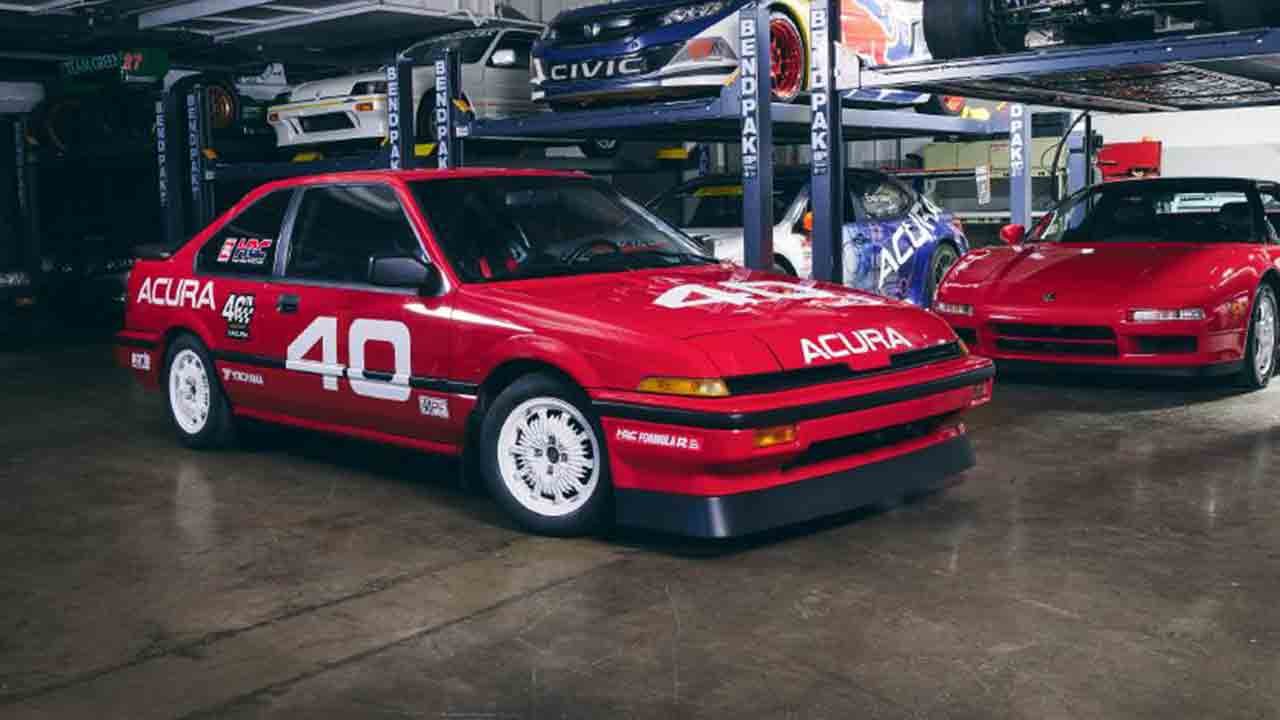
The brand, founded in 1986 as the first Japanese luxury division in the United States, marks its history with a tribute to the racing Integra that helped shape the brand’s legacy on the track.
On March 27, 2026, Acura marked the 40th anniversary of its debut in the North American market, where it established itself as the first Japanese luxury brand launched in the United States. To mark the occasion, the manufacturer presented the Acura Integra 40 Racer, a special project inspired by the model’s first generation and created as a tribute to the brand’s first racing car.

Acura was officially launched on March 27, 1986 with two models that would define the brand’s identity: the Legend sedan and the sporty Integra. The aim was to offer a new standard for luxury with a focus on innovation, quality, reliability and driving pleasure, at a time when the premium segment was largely dominated by European manufacturers.
As part of the celebration, the brand chose to revisit its motorsport history with Integra 40 Racera modern interpretation of Comptech Integra number 48. The original car played an important role in building Acura’s sporting image by winning consecutive manufacturer and driver titles in the IMSA International Sedan Series between 1987 and 1990.

The anniversary model was developed by Honda Racing Corporation US (HRC US) and will make its public debut at the 51st Acura Grand Prix of Long Beach, a symbolic race for the brand in its hometown.
According to Mike Langel, Acura’s assistant vice president of national sales, the 40th anniversary represents not only a look back at the past, but also a strengthening of the brand’s commitment to innovation, performance and customer relations.
The Acura Integra 40 Racer has received a complete track-specific upgrade. The powertrain includes the rebuilt original D16A1 engine, a five-speed manual transmission, Monsoon ECU, coil-on-plug conversion, stainless steel 4-2-1 exhaust manifold, custom Borla exhaust system, and a Torsen differential brake.

As for the chassis and brakes, the project uses Tein coilovers, adjustable panhard bars, manual steering, manual brake conversion, Carbotech brake pads, braided steel brake hoses, 14-inch Mugen rims and Yokohama ADVAN A050 semi-slick tires.
The interior is also adapted for competition use, with a custom-made roll cage from Blackbird Fabworx, OMP racing seats and six-point seat belts.
The exterior of the car has Rio Red Metallic paint, while the lightened interior and engine compartment are done in Quartz Silver.

Acura’s history
Acura’s story began to take shape in the early 1980s, when American Honda identified an opportunity among American consumers seeking more sophisticated and performance-oriented products. Since such vehicles did not fit with Honda’s traditional image, the company created a new division focusing on luxury and sportiness.
Known internally as Channel 2, the initiative took official form on April 1, 1984, when Honda announced that it would market luxury cars. In the same year, the consulting company NameLab in San Francisco was engaged to create a name that reflected the brand’s core values: precision and quality. The result was the name Acura, derived from the Latin root “acu”, associated with the idea of precision.
The strategy proved successful. During the first year, Acura expanded its dealer network from 60 to 150 sales locations in the United States. Just 12 months later, the brand was already the best-selling sports luxury importer in the country, helping to redefine the premium segment and opening the door for other Japanese manufacturers in the years that followed.
Four decades after its debut, Acura uses the legacy of its first models and its motorsport history to strengthen the identity it has built in the market: a combination of luxury, technology and performance that marked its entry into the United States and continues to guide the brand’s future development.
+ Fastport eQuad: Honda launches a solution for deliveries in urban areas
Source and images: Acura. This content has been created with the help of KI and reviewed by the editors
