
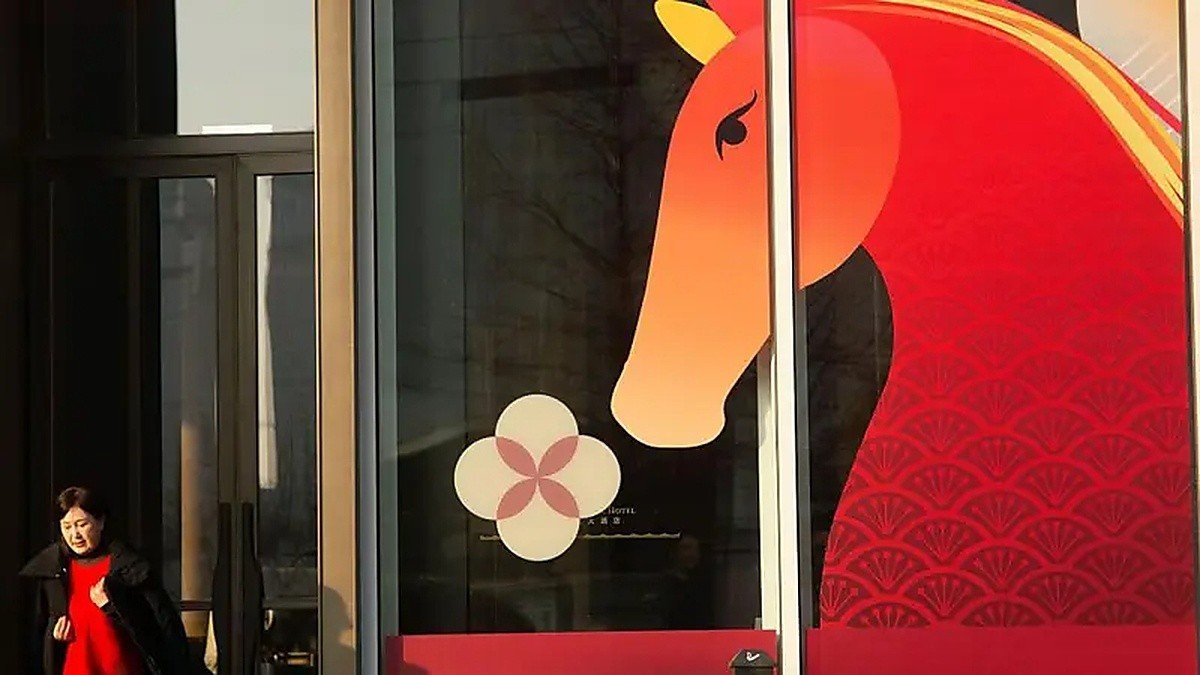
For many Chinese, the date goes far beyond a simple turn of the calendar Getty Images via BBC Cities across China are preparing to welcome the Lunar New Year on February 17, when the zodiac sign will transition from the Year of the Snake to the Year of the Horse. Horse-themed decorations are already seen in shopping malls, festive messages are spread across billboards, and horse emojis and red envelopes — a symbol of prosperity and traditionally used to give money during the celebration — dominate cell phone screens. The Lunar New Year, also known in China as the Spring Festival, is celebrated over a period of 15 days, and ends with the Lantern Festival. For many Chinese, the occasion goes far beyond a simple turn of the calendar. It’s a time when everyone comes together to send blessings and renew expectations for the year that begins. But what’s behind the Lunar New Year traditions, and why has this year’s sign attracted so much attention? How the Chinese zoodiac works To understand the Year of the Fire Horse, it is necessary to clear up two very common misunderstandings. Unlike the Gregorian calendar, the Chinese zodiac year does not begin on January 1st. It follows a traditional lunisolar calendar, based on the cycles of the Moon. Boats decorated with illuminated horse-shaped lanterns Getty Images via BBC Therefore, Lunar New Year can fall between January 21 and February 20, usually on the second new moon after the winter solstice. In practice, this means that saying that “2026 is the year of the Horse” is only valid from the beginning of the new lunar year. The second mistake is to think that the zodiac repeats itself every 12 years. This is true only for the animal in the cycle, but the complete traditional system of trunks and branches repeats itself every 60 years. This happens because each year combines one of the 12 animals of the zodiac with one of the 10 elements — the Yin and Yang versions of Metal, Water, Wood, Fire and Earth. Only after six decades does the same combination appear again. This year’s combination is called Bing Wu, which unites the Fire element in its Yang form with the Horse sign. What does the Fire Horse represent? The Year of the Fire Horse is seen as a powerful combination in the Chinese zodiac. While Yang Fire symbolizes energy, initiative and passion, the horse is associated with independence and movement. In Chinese culture, expressions that refer to horses often convey ideas of quick success, protagonism and continuous drive — especially in professional contexts. Christian Yao, senior lecturer at the School of Management at Victoria University of Wellington, New Zealand, told the BBC that expressions using horses will likely appear frequently in speeches, presentations and email subjects in the workplace throughout 2026. According to him, this type of language in the workplace has become a subtle governance tool, through which employees are encouraged to incorporate characteristics associated with the Fire Horse, such as proactivity and agility. See the videos that are trending on g1 The commercialization of the Chinese zodiac Although it has roots in ancient traditions, the Chinese zodiac is today widely incorporated into contemporary culture, appearing in urban spaces, online and in brand campaigns. In several cities across China, Lunar New Year celebrations have increasingly turned into grand visual spectacles. Commercial areas, transport stations and emblematic buildings began to incorporate zodiac symbols in their installations and lighting designs. Materials containing images of horses are often associated with professional achievements Getty Images via BBC Zodiac images have become a common element on commercial packaging. Many brands have launched Year of the Horse-themed gift boxes, while red colors and motifs linked to the animal appear in marketing campaigns for luxury products, cosmetics and the food and beverage sector. The Year of the Horse has also gained prominence in artificial intelligence and the technology sector, being seen as a period in which AI will bring economic growth and greater confidence in investments. Financial reports already make mentions of the Chinese zodiac, such as “capital accelerating in the Year of the Horse” and “AI industry gallops by leaps and bounds”, while analysts argue that global economic uncertainty could create growth opportunities presented by the Fire Horse. The Lunar New Year exodus In China, millions of workers only travel to their hometown once a year, with the Lunar New Year being the main event for family reunions. This year, during the holiday, a record 9.5 billion trips between regions of the country are expected. This annual exodus is often described as the world’s largest human migration. Although the horse symbolizes efficiency and speed, for many travelers the festive period brings to light problems in the Chinese transport system, with scarce tickets, high travel costs and long journeys for service sector workers. On social media, some users have questioned who really benefits from the promise of opportunities and progress associated with the Fire Horse. A factory in China accidentally sewed a smiling horse doll upside down, creating what Internet users dubbed a “crying horse.” The mistake went viral Getty Images via BBC Young people joke about being “lame horses trapped in ticket buying apps”, while others say they are not moving forward on their own, but are being dragged along by circumstances. Many young professionals now use images of animals as a way to describe their professional lives. In corporate and institutional settings, they repeat slogans about speed, drive and “galloping success” in the Year of the Horse. On the other hand, they describe themselves as “niuma” – literally “bull-horse”, a slang used to refer to someone overworked, treated like a pack animal. “The coexistence of these two languages captures the most common tension in the Chinese workplace today: the need to maintain an inspiring narrative in public while admitting burnout and powerlessness in private,” says Yao.
Source link
Year of the Fire Horse: what the arrival of this powerful Chinese zodiac combination means
41
