
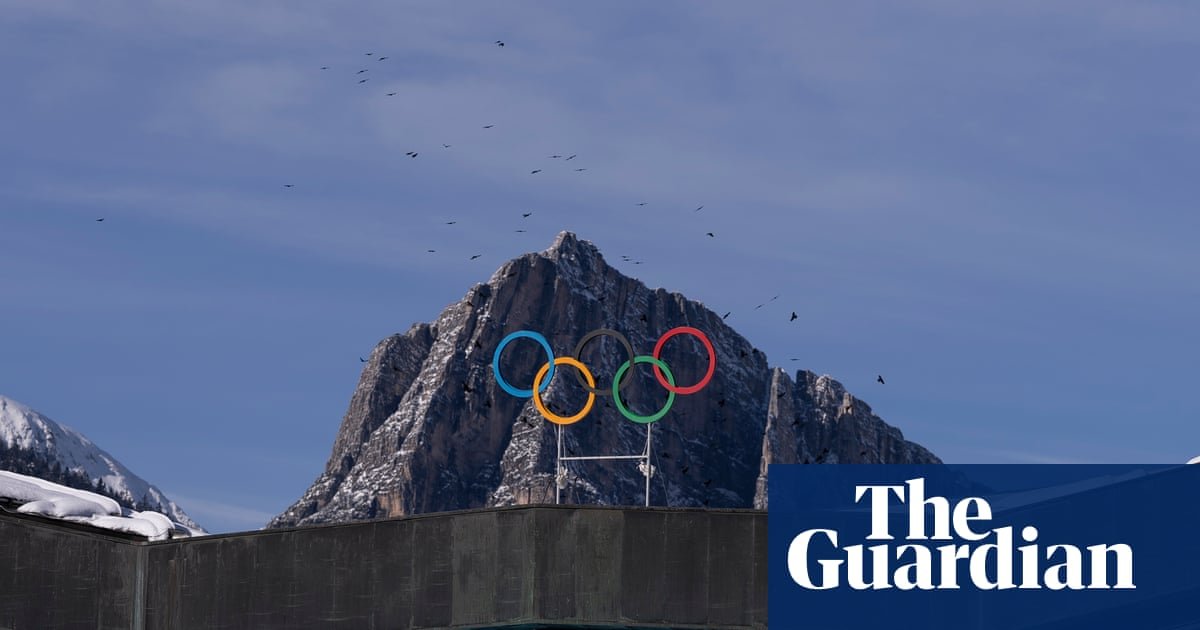
The Winter Olympics are back – and this time they’re zigzagging across northern Italy. Milano Cortina 2026 will be the most spread-out Winter Games ever staged, jumping from Milan’s arenas to the Dolomites’ classic Alpine slopes. With returning superstars, brand-new events and Italy leaning hard into its Olympic heritage, these Games may feel like they’ve arrived quietly – but there is a lot going on. From how and when to watch, to who matters and why these Olympics could look very different, here are your most pressing questions answered.
Wait – there’s an Olympics happening?
Yes. The 2026 Winter Olympics officially start on Friday and run through 22 February. Given where they land in a crowded sports calendar – with Super Bowl LX on Sunday, the Premier League in full swing and the Australian Open having just finished – and considering it’s been less than 18 months since the Paris Summer Games ended, it’s easy to see how the Games might have snuck up on some fans.
When do the Winter Olympics start?
The Games officially begin on Friday with the opening ceremony, though several competitions will already be under way before then, including curling, ice hockey, luge, ski jumping, snowboarding and figure skating. As the Winter Olympics have grown – with longer schedules, more athletes and heavier broadcast demands – starting certain events early has become the only way to fit everything into the official Games window.
Who is hosting the Winter Olympics?
Italy is hosting the 2026 Winter Olympics. The Games are officially branded Milano Cortina 2026 and are spread across northern Italy, with Milan serving as the primary city host and Cortina d’Ampezzo anchoring the mountain events.
What are the main Winter Olympics venues and locations?
These Olympics are spread across northern Italy, with events clustered by geography and sport. Milan will host most of the indoor ice competitions – including ice hockey, figure skating and speed skating – and will also stage the opening ceremony. Cortina d’Ampezzo is the centerpiece for alpine events, hosting alpine skiing along with the sliding disciplines. Snowboarding and freestyle skiing will take place in Livigno. Biathlon events are based in Antholz, while ski mountaineering will be contested across multiple Alpine mountain courses designed for uphill-and-downhill racing.
This feels unusually spread out. Is it?
Yes. Organizers have described it as the most geographically dispersed Winter Olympics ever. The upside is scenery and sustainability; the downside is complicated travel and logistics for athletes, media and fans.
Why Italy, and why now?
Italy last hosted the Winter Olympics in Turin in 2006, while Cortina d’Ampezzo hosted in 1956 – the first Winter Games broadcast to an international audience. Milano Cortina leans heavily into that history while emphasizing existing venues, iconic mountain settings and fewer purpose-built stadiums.
Where can I watch the opening ceremony?
The opening ceremony takes place on 6 February at the San Siro stadium in Milan. In the US, it will air live on NBC and stream on Peacock, with primetime replays later that evening. In Australia you can watch on the Nine Network and Nine Now or stream it on Stan Sport. The BBC and CBC are the host broadcasters in the UK and Canada respectively. And, of course, the Guardian will be live blogging the ceremony – and the entire Games – for the next few weeks.
Will Céline Dion be performing again?
No, sorry to say. Instead, Mariah Carey is scheduled to headline. She will be joined by pianist Lang Lang, mezzo-soprano Cecilia Bartoli, tenor Andrea Bocelli, pop star Laura Pausini, and actors Pierfrancesco Favino, Sabrina Impacciatore and Matilda De Angelis. Organizers say the ceremony’s theme, Armonia (Italian for “harmony”), will focus on Italian culture, history and the country’s connection to the Olympic movement.
Where can I watch the Winter Olympics 2026 online?
Peacock is the main streaming destination in the US, offering live feeds, replays and event-specific streams across all sports.
Will the time difference be an issue for audiences in North America?
Not really. Italy is six hours ahead of the US east coast, meaning many finals will air live in the morning or early afternoon and replay in prime time. It’s a much friendlier schedule than the past two Winter Games in Asia.
How do I find the Winter Olympics 2026 schedule?
The timings for every Winter Olympic event can be found here.
How is Team USA looking?
The US has named a 232-athlete roster with an almost even gender split (117 men, 115 women). Ages range from 15-year-old freeskier Abby Winterberger to 54-year-old curler Rich Ruohonen.
What are the big US storylines heading in?
Besides Mariah Carey? Lindsey Vonn is attempting a remarkable comeback at 41 on her favorite mountain with a completely ruptured ACL, while Mikaela Shiffrin chases redemption after a difficult Beijing Games. Speed skater Jordan Stolz is targeting a rare treble in the 500m, 1000m and 1500m. Ilia Malinin, America’s Quad God, is hotly tipped to win figure skating gold on the strength of his quadruple Axel, the dangerous four-and-a-half-revolution jump no other skater in history has landed in competition. The US women’s figure skating team dubbed the Blade Angels – led by Amber Glenn, Alysa Liu and Isabeau Levito – is chasing the country’s first women’s singles gold since 2002.
Who else should casual fans recognize?
Chloe Kim, a two-time Olympic gold medalist and one of the Games’ biggest crossover stars, is bidding for a historic third straight halfpipe gold amid injury concerns. Jessie Diggins and Alex Ferreira are also multiple-time medalists. Speed skater Erin Jackson, who became the first Black woman to win gold in any individual event at the Winter Games by winning the 500m in Beijing, will be defending her title.
How about non-US stories?
The return of NHL players for the first time since 2014 means global superstars such as Connor McDavid, Sidney Crosby and the deep European powers will turn the Olympic tournament into something closer to a Stanley Cup-level competition. On home ice, Italy have multiple emotional centerpieces: ice dancers Charlene Guignard and Marco Fabbri chasing a long-elusive Olympic medal in what is likely their final Games, and short-track legend Arianna Fontana attempting an extraordinary double by racing both short track and long track.
Elsewhere, Norway’s Johannes Høsflot Klæbo arrives chasing cross-country immortality with a potential multi-gold sweep. In sliding sports, the married skeleton duo of Belgium’s Kim Meylemans and Brazil’s Nicole Silveira are both realistic medal threats for nations that have never reached the Olympic podium in the event. And in curling, Italy’s defending mixed-doubles champions Amos Mosaner and Stefania Constantini return to compete in Cortina, at a historic venue, with the pressure and opportunity of defending gold in front of a home crowd.
Which countries usually dominate the Winter Olympics?
A small group of countries consistently dominates the Winter Games. Norway leads historically, driven by cross-country skiing, biathlon and Nordic combined, where medal opportunities are plentiful. Germany excels across biathlon and sliding sports like luge and bobsleigh. The United States thrives in alpine skiing, snowboarding and freestyle events, often peaking with generational stars. Canada is strongest in ice sports, particularly hockey and speed skating. Austria, Sweden and Switzerland round out the usual suspects, reflecting how climate, culture and deep development systems shape Winter Games success.
What sports are in the Winter Olympics?
There are 16 Winter Olympic disciplines, including alpine skiing, biathlon, bobsleigh, cross-country skiing, curling, figure skating, freestyle skiing, ice hockey, luge, Nordic combined, short track speed skating, skeleton, ski jumping, ski mountaineering, snowboarding and speed skating.
What is ski mountaineering?
Ski mountaineering blends uphill endurance racing with downhill speed. Athletes climb steep alpine terrain using skins attached to their skis, then descend at race pace. Long popular in Europe, it enters the Olympic program for the first time in 2026.
Anything new within familiar sports?
New medal events include dual moguls in freestyle skiing, men’s and women’s doubles in luge (replacing the open doubles event), team alpine combined for men and women, women’s large hill ski jumping, plus a mixed team relay in skeleton.
What events should casual fans prioritize?
Downhill skiing, figure skating, snowboard halfpipe and speed skating have typically been the blue-riband events, at least from the American perspective. And, later, ice hockey once the knockout rounds begin.
Is the Winter Olympics hockey rink really smaller than the NHL?
Yes – slightly. The main hockey rink in Milan is smaller than a standard NHL surface, which could lead to faster play, tighter spacing and more physical games, particularly in the medal rounds.
Is Russia in the Winter Olympics?
Yes – but only in limited form. Russian athletes are allowed to compete only as Individual Neutral Athletes.
What does neutral status actually mean?
Neutral athletes cannot compete under Russia’s flag, wear national symbols or hear their anthem if they win. Team sports such as hockey are excluded entirely, meaning no Alexander Ovechkin or other Russian NHL stars. Athletes must also pass strict eligibility checks set by the International Olympic Committee, including showing they have not publicly supported the war in Ukraine or had ties to military or security services.
Russian officials have suggested as many as 15 to 20 could qualify, though far fewer have been approved so far. The total is expected to be lower than the 15 who competed at the Paris Olympics.
What’s the Olympic village like?
Milano Cortina 2026 will not have a single Olympic village. Instead, organizers are using a decentralised, six-village model spread across northern Italy, reflecting the wide geographic spread of venues. Athletes will be housed in villages in Milan, Cortina d’Ampezzo, Livigno, Bormio, Predazzo and Anterselva, using a mix of new construction, temporary structures and existing hotels.
The largest purpose-built site is in Milan’s Porta Romana district, where a new village will later be converted into student housing. In Cortina, athletes will stay in a temporary village of 377 mobile homes housing about 1,400 people, located north of town. The units are compact and functional, with shared facilities and exposure to alpine weather, and will be dismantled after the Games. Most teams plan to use the villages, though Norway has opted to house its athletes in hotels instead.
Do they really have a lot of sex in there?
Yes, but it’s more mundane than the legend suggests. The Olympic Village has a long-running reputation as a hookup hotspot, and there’s some truth to it: thousands of young, elite athletes in close quarters, away from home, riding adrenaline highs. Organizers don’t discourage it – free condoms are a standard fixture – but the reality is less Caligula and more college dorm during finals week. Many athletes are exhausted, intensely focused on competition or sleeping at odd hours, and teams often impose curfews, room rules and monitoring, especially before events.
Milano Cortina’s decentralized setup may further temper the lore. With athletes split across six villages – from dense urban Milan to remote alpine bases – there’s no single social epicenter. Some competitors avoid the Village entirely until they’re finished competing, others bring partners or family, and most are far more concerned with recovery, routines and avoiding illness than living out the stereotype. Sex happens, but for most Olympians it’s a side note, not the point.
How much do tickets cost for the Winter Olympics?
Prices vary widely. Some early-round events start at under €30, while high-demand events such as figure skating finals and hockey medal games can cost several hundred euros.
Will ICE agents be at the Winter Olympics?
Yes, but with limits. A small unit from US Immigration and Customs Enforcement will have a security support role at the Milan–Cortina Winter Olympics, US and Italian officials have confirmed. ICE agents from its investigative arm, Homeland Security Investigations (HSI), will assist the US State Department’s Diplomatic Security Service and liaise with Italian authorities on threats such as transnational crime.
They will not carry out immigration enforcement or police operations, and all security remains under Italian control. Italian officials stressed the agents will work from operations rooms – including a US-run centre at the Milan consulate – rather than patrol streets or venues.
The confirmation has sparked protests and political backlash in Italy, with critics calling ICE’s presence unacceptable. Several local leaders and opposition parties have launched petitions opposing the deployment. Italian ministers have sought to calm tensions, emphasising that ICE’s role is advisory and investigative, not operational.
So, bottom line – why should I care?
Because Milano Cortina brings together star power, history and real competitive stakes in a way the last Winter Games in Beijing – staged largely in empty venues because of Covid – simply couldn’t. This is shaping up to feel like a full, proper Olympics again.
